
Pests and Diseases
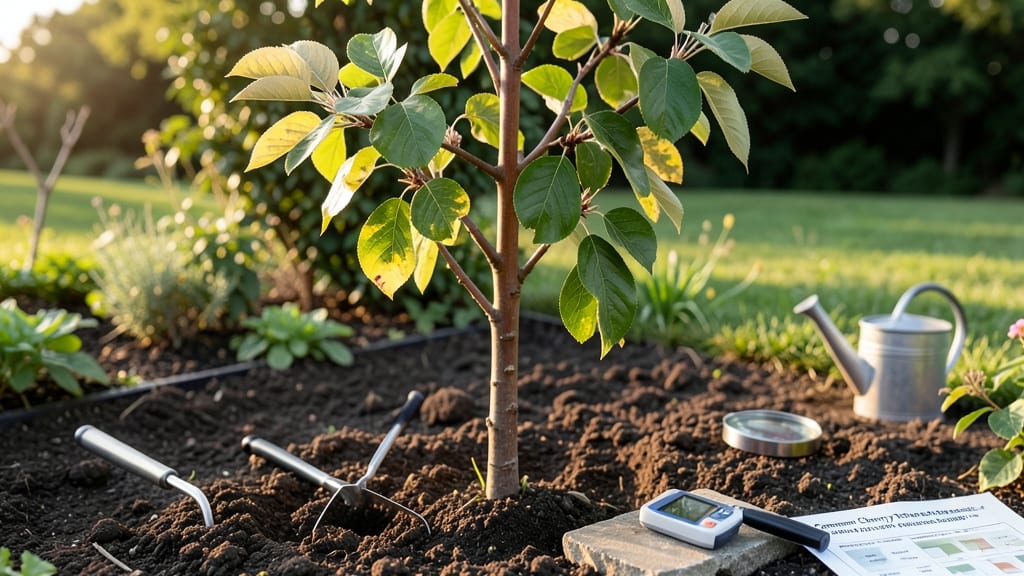
Your cherry tree’s leaves turning yellow and falling off aren’t just a seasonal nuisance—they’re a cry for help. 🌿 I’ve watched this happen with my own tree, and the fix depends on whether it’s thirst, disease, or something more serious lurking in the roots.
The good news? Most causes have clear solutions once you know what to look for.
First, check the soil moisture and texture—dry, compacted earth or waterlogged roots can strangle your tree’s nutrient flow. Then inspect the leaves: yellowing with brown spots? Likely fungal. Yellowing with curled edges?
Could be pests like spider mites or aphids. My tree’s issue turned out to be a simple iron deficiency, fixed with a targeted soil amendment in just a few weeks.
You’ll likely see results within 2-4 weeks of addressing the root cause—whether that’s adjusting watering, applying fertilizer, or pruning affected branches. The key is acting fast before the tree weakens further. For stubborn cases, a soil test reveals exactly what’s missing.
This works for both sweet and sour cherry trees, whether you’re dealing with a young sapling or a mature specimen. Let’s get your tree back to its vibrant green self before the problem spreads deeper.
Root Causes Behind Leaf Loss
When your cherry tree’s leaves start turning yellow and dropping prematurely, it’s usually a sign that something’s off—whether it’s environmental stress, nutrient deficiencies, or unseen invaders. Understanding the why behind the problem is the first step to saving your tree.
Below, we break down the most common culprits, complete with science-backed explanations and actionable insights to help you diagnose the issue accurately.
Cherry trees are sensitive to their surroundings, and extreme conditions—whether hot, cold, dry, or waterlogged—can trigger leaf discoloration and premature drop. Here’s how environmental factors play a role:
- Temperature extremes:
Cherry trees (especially ornamental varieties like Prunus serrulata) thrive in USDA zones 5–8. Sudden temperature swings—like late spring frosts or scorching summer heat—can shock the tree. Cold damage disrupts cell membranes, causing leaves to turn yellow or brown before falling.
Heat stress, on the other hand, leads to chlorosis (yellowing between veins) as the tree struggles to photosynthesize efficiently.
Actionable fix: Mulch the base of the tree with 2–4 inches of organic material (like wood chips) to regulate soil temperature. In frost-prone areas, use frost cloths or drip irrigation to protect young leaves.
- Water woes:
Both overwatering and drought stress can cause leaves to yellow and drop. Overwatering leads to root suffocation and anaerobic conditions, where roots can’t absorb oxygen, while drought causes wilting and nutrient transport breakdown.
Actionable fix:
- Check soil moisture 2–3 inches deep—it should feel like a damp sponge, not soggy or bone-dry.
- Water deeply once or twice a week (depending on climate), ensuring water penetrates 6–12 inches into the soil.
- Avoid wetting foliage to prevent fungal diseases.
- Sunburn or light exposure:
Young cherry trees or those transplanted suddenly may develop sun scorch—crispy, yellow-edged leaves on the tree’s south or west side. This happens when leaves aren’t acclimated to full sun.
Actionable fix: Gradually introduce trees to sunlight over 1–2 weeks (a process called hardening off). For established trees, provide afternoon shade if your climate is extremely hot.
Yellowing leaves often signal a lack of essential nutrients. The pattern of discoloration can pinpoint exactly what your cherry tree needs:
| Symptom | Likely Deficiency | How to Fix |
|---|---|---|
| Uniform yellowing (pale green/yellow leaves) | Nitrogen (N) | Apply a balanced fertilizer (e.g., 10-10-10) in early spring. Use compost or manure for organic options. |
| Yellowing between veins (chlorosis) | Iron (Fe) or Magnesium (Mg) |
|
| Yellowing with brown spots or dead patches | Potassium (K) or Phosphorus (P) | Use a low-nitrogen, high-potassium fertilizer (e.g., 5-10-10) in late summer to prepare for winter. |
Pro tip: 🌡️ Conduct a soil test before fertilizing—overdoing it can harm roots and worsen the problem!
Not all leaf loss is environmental—sometimes, tiny invaders or pathogens are to blame. Here’s how to spot them:
- Spider mites and aphids:
These sap-sucking pests cause yellow stippling (tiny yellow dots) and sticky honeydew on leaves. Severe infestations lead to premature drop.
Actionable fix:
- Blast leaves with a strong water spray to dislodge pests.
- Use neem oil or insecticidal soap (apply in early morning or evening to avoid harming bees).
- Introduce beneficial predators like ladybugs or lacewings.
- Leaf spot fungi (e.g., Cercospora or Alternaria):
Fungal infections create dark spots with yellow halos, often on older leaves. Wet foliage and poor airflow encourage spread.
Actionable fix:
- Prune infected branches and dispose of them in the trash (not compost).
- Apply copper fungicide or baking soda spray (1 tbsp baking soda + 1 quart water + a few drops of soap) every 7–10 days.
- Improve air circulation by thinning dense foliage.
- Bacterial leaf spot (Xanthomonas):
This causes water-soaked yellow/brown spots that ooze when wet. It’s highly contagious and can kill branches if untreated.
Actionable fix:
- Remove and burn infected leaves/branches immediately.
- Apply copper-based bactericide every 2 weeks during wet seasons.
- Avoid overhead watering to reduce spread.
Pro tip: 🔍 Magnify suspicious spots with a hand lens—fungal spots often have a fuzzy texture, while bacterial spots may appear greasy.
Problems below the soil surface can manifest as leaf issues above ground. Here’s what to watch for:
- Compacted or poorly draining soil:
Cherry trees hate waterlogged roots, which starve them of oxygen and lead to root rot. Symptoms include yellowing leaves, stunted growth, and a foul-smelling soil.
Actionable fix:
- Test soil drainage—dig a hole 12 inches deep and fill it with water. If it doesn’t drain in 6 hours, amend soil with sand or perlite.
Fixing Yellowing Cherry Tree Leaves
If your cherry tree’s leaves are turning yellow and dropping prematurely, don’t panic—there’s a solution for nearly every cause. Below, we’ve broken down practical fixes tailored to the most common issues, along with prevention tips to keep your tree thriving.
Let’s get your cherry tree back to its vibrant, healthy self!
Symptoms: Yellowing leaves (especially lower ones), soggy soil, wilting despite water.
How to Fix It: 🔥 Step 1: Check the Soil
- Stick your finger 2–3 inches deep into the soil. If it feels damp or muddy, your tree is overwatered.
- Test drainage: Fill a shallow container with soil from your tree’s root zone. Add water—if it drains slowly (over 30+ minutes), your soil is compacted or clay-heavy.
🍳 Step 2: Adjust Watering Habits
- Water deeply but less frequently—aim for 1–1.5 inches per week (including rain).
- Space out waterings: Wait until the top 2–3 inches of soil are dry before watering again.
- Use a moisture meter if you’re unsure—it takes the guesswork out of watering.
👨🍳 Step 3: Improve Drainage
- Amend heavy soil with compost or sand (50/50 mix) to loosen it.
- Raise the tree’s base slightly by adding a 1–2 inch layer of gravel under the root zone (if planting new) or mulch around the base (but keep mulch 6+ inches away from the trunk).
- Install French drains if water pools around the roots.
🌡️ Prevention Tips:
- Plant cherry trees in well-draining soil (avoid low spots where water collects).
- Water in the morning to reduce evaporation and fungal risks.
- Avoid overhead watering—use drip irrigation or soaker hoses instead.
Symptoms: Crispy yellow edges, dry soil, leaves curling or falling.
How to Fix It: 💡 Step 1: Deep Water Immediately
- Water slowly and deeply until the soil 12–18 inches down is moist (use a soil probe to check).
- Repeat every 2–3 days until the tree recovers (you’ll see new leaves emerge).
🌧️ Step 2: Mulch Properly
- Apply 2–4 inches of organic mulch (wood chips, straw) around the base (but not touching the trunk).
- Mulch retains moisture and regulates soil temperature.
🎯 Step 3: Adjust Future Watering
- Young trees (1–3 years): Water 2–3 times per week in dry spells.
- Mature trees: Water 1–2 times per week, but deeply.
- Signs of recovery: New leaves should appear within 1–2 weeks if the roots aren’t severely damaged.
✨ Prevention Tips:
- Group plants together to create a microclimate that retains moisture.
- Use drought-resistant mulch (like cedar chips) if you live in a hot, dry climate.
- Monitor weather forecasts—increase watering before heatwaves.
Symptoms: Yellow spots with dark borders, white powdery patches, or leaf drop.
How to Fix It: 🔪 Step 1: Remove Affected Leaves & Debris
- Prune infected branches (sterilize tools with rubbing alcohol between cuts).
- Rake up fallen leaves and dispose of them in the trash (not compost).
🧴 Step 2: Apply Fungicide
- Neem oil (1–2%) or copper fungicide—spray early in the morning on a dry, wind-free day.
- Reapply every 7–14 days until new growth appears.
- For severe cases: Use systemic fungicides like Myclobutanil (follow label instructions).
🌿 Step 3: Improve Airflow & Light
- Prune dense branches to allow sunlight and air circulation.
- Space trees 15–20 feet apart if replanting.
💡 Prevention Tips:
- Water at the base (avoid wetting leaves).
- Water early in the day so foliage dries quickly.
- Plant resistant varieties (e.g., ‘Stella’ or ‘Montmorency’ cherries tolerate disease better).
Symptoms: Yellowing leaves, sticky residue (honeydew), tiny webs, or sawdust-like frass.
How to Fix It: 🐜 Step 1: Identify the Pest
- Aphids: Tiny green/black bugs clustered on new growth.
- Spider mites: Fine webbing on undersides of leaves.
- Borer larvae: Sawdust-like frass at the base of the trunk.
🚿 Step 2: Blast Off Pests
- Strong water spray: Use a hose nozzle to knock off aphids and mites (do this in the early morning).
- Insecticidal soap or neem oil—spray every 5–7 days until pests are gone.
🌳 Step 3: Treat Borers
- For adult borers: Apply borax or systemic insecticide (like Imidacloprid) to the base of the trunk.
- For larvae: Drill small holes into the trunk and inject beneficial nematodes or Bt (Bacillus thuringiensis).
🔥 Prevention Tips:
- Encourage natural predators (ladybugs, lacewings) by planting companion flowers (marigolds, dill).
- Inspect trees regularly—catch infestations early.
- Use reflective mulch (like aluminum foil) to deter mites.
Symptoms: Yellowing between leaf veins (iron/chlorosis), stunted growth, or pale new leaves.
How to Fix It: 📊 Step 1: Test Your Soil
- Get a soil test kit (available at garden centers) to check pH and nutrient levels.
- Ideal pH for cherries: 6.0–7.0 (too alkaline? Add sulfur).
💪 Step 2: Fertilize Correctly
- Iron deficiency? Apply chelated iron (like Ironite) or Epsom salt (1 tbsp per gallon of water, sprayed on leaves).
- Nitrogen deficiency? Use a balanced fertilizer (10-10-10) in early spring.
- Zinc deficiency? Sprinkle zinc sulfate around the base and water deeply.
🍎 Prevention Tips:
- Mulch annually with compost to slowly release nutrients.
- Avoid over-fertilizing—too much salt can burn roots.
- Plant cover crops (like clover) in fall to boost soil health.
Final Note: Most yellowing issues can be reversed with quick action—start with the most likely cause, and your cherry tree should bounce back in 2–4 weeks. If problems persist, consult a local arborist for a deeper diagnosis! 🌿💚
Frequently asked questions
1Why do cherry tree leaves turn yellow in patches rather than all at once?
Patchy yellowing often signals localized stress. Fungal infections like leaf spot create dark spots with yellow halos, while pests such as spider mites cause tiny yellow stipples where they feed. Check leaf undersides for webbing or sticky honeydew—these are key clues.
2Can overwatering really cause leaves to yellow and drop?
Overwatering suffocates roots by creating anaerobic conditions, preventing nutrient uptake. Look for yellowing lower leaves, soggy soil, and a foul smell—classic overwatering signs. Let soil dry 2-3 inches deep between waterings to fix this.
3How do I tell if my cherry tree needs iron or just more water?
Iron deficiency shows as yellowing between veins (chlorosis) while water stress causes crispy yellow edges. Stick your finger in the soil—if it's dry 12+ inches down, water first. If soil is moist but leaves stay yellow, test for iron with a soil pH kit (cherries prefer 6.0-6.5).
4Will pruning help my cherry tree recover from yellow leaves?
Pruning helps only if you remove infected/damaged branches first. Cut back 1/3 of the canopy to improve airflow, but avoid heavy pruning during stress. Focus on thinning dense areas—this reduces fungal spread and helps new growth.
5How long until I see improvement after treating my cherry tree?
With proper care, you should see new green leaves within 2-4 weeks. Nutrient fixes (like iron) work fastest, while fungal issues may take 4-6 weeks to fully resolve. Monitor progress and adjust treatments if yellowing persists beyond this timeframe.
- Test soil drainage—dig a hole 12 inches deep and fill it with water. If it doesn’t drain in 6 hours, amend soil with sand or perlite.