
Trees
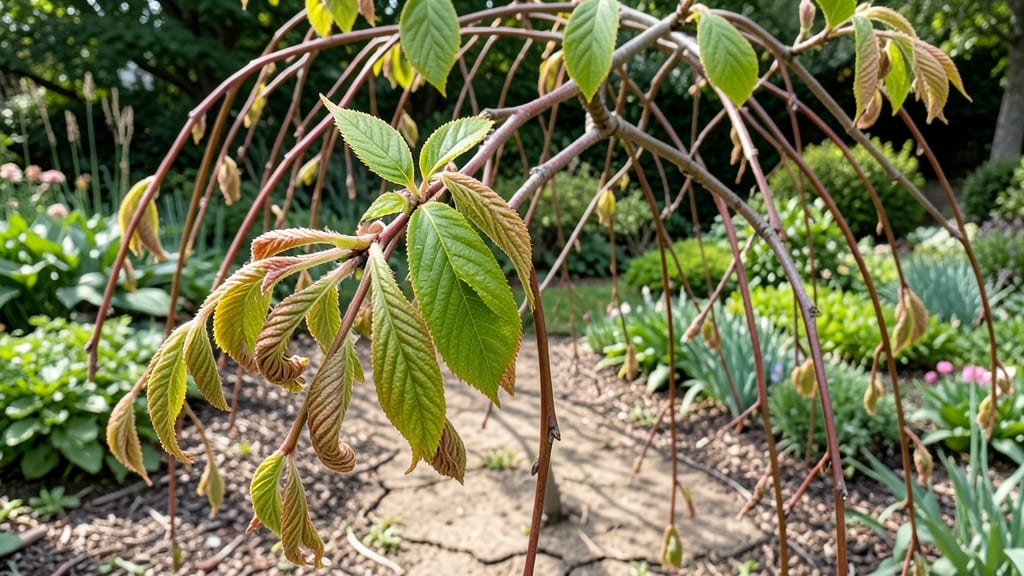
Your weeping cherry tree’s leaves curling isn’t a death sentence—it’s a wake-up call. 🌿 I’ve nursed back more stressed trees than I can count, and the secret often lies in a simple cold therapy trick that resets stressed foliage faster than anything else.
The first step is figuring out what’s really causing the curl: is it pests hiding on the undersides, a fungal infection clinging to the branches, or just last summer’s heat finally catching up?
Most gardeners overlook the simplest fixes first. Start by inspecting the leaves up close—look for tiny webs (spider mites), sticky residue (aphids), or white powder (powdery mildew). If you find nothing, the problem might be environmental: too much wind, inconsistent watering, or compacted soil starving the roots.
My trees bounce back fastest when I combine a good soak with a 10-minute cold shower for the foliage—it’s like hitting reset on overstressed leaves.
Once you’ve identified the issue, the fix is straightforward. For pests, a neem oil spray or hose blast works wonders. Fungal problems respond to copper fungicide or a baking soda mix (1 tbsp per gallon of water).
The key is consistency—trees don’t recover overnight, but with weekly check-ins and proper care, you’ll see those leaves unfurl into vibrant green again within 2-3 weeks.
Prevention is where the real magic happens. Mulch heavily in spring to lock in moisture, prune for airflow, and water deeply but infrequently—weeping cherries hate soggy feet but love steady hydration. If your tree’s been struggling for years, consider a soil test to rule out nutrient deficiencies.
Trust me, a little cold therapy and TLC can turn a wilting mess into a showstopper by next season.
Underlying Causes Explained
When your weeping cherry tree’s leaves start curling, it’s often a distress signal from the tree itself. Understanding the root causes—whether environmental, biological, or seasonal—helps you take precise action.
Below, we break down the most common triggers, backed by science, so you can diagnose and address the issue like a pro.
Weeping cherry trees (Prunus serrulata) are stunning but sensitive to their surroundings. Sudden shifts in temperature, humidity, or water availability can cause leaves to curl as a protective response. Here’s what’s likely happening:
- Temperature Fluctuations:
Cherry trees thrive in USDA zones 5–8 but can suffer from thermal shock when exposed to rapid temperature swings—like a cold snap followed by warm sunshine.
Cold damage disrupts cell membranes, causing leaves to curl inward to minimize water loss. Action: Monitor your local weather forecasts and protect young trees with burlap wraps during frost warnings.
- Wind or Salt Burn:
Strong winds desiccate leaves by increasing transpiration (water evaporation), while road salt (common in urban areas) creates a hypertonic environment around roots, preventing water uptake.
Curling is the tree’s way of reducing surface area to conserve moisture. Action: Use windbreaks or mulch heavily to retain soil moisture, and rinse leaves with water if salt exposure is suspected.
- Improper Watering:
Both overwatering (leading to root rot and oxygen deprivation) and underwatering (causing wilting and cellular dehydration) trigger curling. The tree’s leaves may pucker or twist as a response to hydraulic stress. Action: Water deeply 1–2 times per week (depending on climate) and ensure the soil is well-draining.
A simple soil moisture meter can help.
Weeping cherry trees are prone to specific pests and pathogens that feed on or infect leaves, leading to curling as a defense mechanism. Here’s how to spot the culprits:
| Pest/Disease | Symptoms Beyond Curling | Scientific Cause | Action Steps |
|---|---|---|---|
| Spider Mites | Tiny webs on undersides of leaves, stippling (white/yellow dots), and a bronzing effect. | These pests pierce cells to feed on sap, injecting toxins that disrupt chlorophyll production and cause curling. | Spray leaves with neem oil or introduce predatory mites like Phytoseiulus persimilis. |
| Japanese Beetles | Skeletons of chewed leaves, scalloped edges, and frass (black fecal pellets). | Adult beetles skeletonize foliage, while larvae (grubs) feed on roots, both stressing the tree. | Handpick beetles into soapy water or apply milky spore to the soil. |
| Powdery Mildew | White, powdery fungal growth on leaf surfaces, often in shaded or humid areas. | The fungus Erysiphe clogs stomata (leaf pores), disrupting gas exchange and causing curling. | Improve airflow with pruning and apply baking soda spray (1 tsp baking soda + 1 quart water + drop of soap). |
A weeping cherry tree’s leaves may curl if it’s malnourished, particularly lacking key nutrients that support cell structure and function. Here’s what to watch for:
- Nitrogen (N) Deficiency:
Yellowing between leaf veins (chlorosis) paired with curling often signals nitrogen starvation. Nitrogen is critical for protein synthesis and leaf expansion. Action: Apply a balanced fertilizer (e.g., 10-10-10) in early spring, following package rates.
- Potassium (K) Deficiency:
Curling leaves with brown edges or scorching may indicate low potassium, which regulates water and nutrient transport. Action: Use a potassium-rich amendment like greensand or wood ash (sparingly).
- Micronutrient Imbalances (e.g., Magnesium, Iron):
Yellowing between veins (iron) or purple stems (magnesium) can cause curling as the tree struggles to produce chlorophyll. Action: Conduct a soil test and amend with chelated micronutrients if needed.
Not all leaf curling is a cause for alarm. Some changes are natural responses to the tree’s life cycle or seasonal shifts:
- Transitional Stress (Spring/Fall):
As weeping cherry trees flush new growth in spring or prepare for dormancy in fall, leaves may curl temporarily due to hormonal shifts (e.g., ethylene production). Action: Avoid pruning during these periods to reduce stress.
- Age-Related Changes:
Mature weeping cherry trees may develop senescent curling as leaves age, especially in hot summer months. This is normal and doesn’t require intervention. Action: Focus on removing only truly damaged leaves to maintain aesthetics.
💡 Pro Tip: Keep a symptom journal to track when curling occurs (e.g., after watering, pest outbreaks, or temperature drops). Patterns will help you pinpoint the exact cause faster next time!
Revive Your Tree’s Health Now
Cold weather can leave your weeping cherry tree’s leaves curling like a sad paper crane, but don’t worry—most of these issues are fixable with the right care. Below, we’ve mapped out practical solutions for each common cause, from quick fixes to long-term prevention. Let’s get those branches perky again!
If your tree’s leaves are curling due to sudden cold snaps or frost, it’s likely suffering from cold stress. Here’s how to nurse it back to health:
🔥 Step 1: Protect from Further Chill
- Cover young or vulnerable trees with frost cloth or burlap before nightfall if freezing temps are forecasted. Secure it loosely to avoid damaging branches.
- Avoid watering before frost—wet leaves freeze faster.
If the ground is already frozen, skip watering until temperatures rise above freezing.
🍳 Step 2: Warm Up the Roots
- Mulch heavily (3–4 inches of organic mulch like wood chips) around the base to insulate roots.
Keep mulch 6 inches away from the trunk to prevent rot. - Use a heat lamp or string lights (safely!) near the tree on extremely cold nights to create a microclimate.
🌡️ Step 3: Gradual Acclimation
- If your tree is newly planted, harden it off slowly by exposing it to colder temps for 1–2 hours daily before winter. This helps it toughen up naturally.
✨ Pro Tip: If leaves are already damaged, don’t prune them—let the tree shed naturally. Pruning frost-damaged leaves can stress the tree further.
Curling leaves can also signal root stress from soggy soil or poor drainage. Here’s how to drain the drama:
👨🍳 Step 1: Check the Soil
- Stick your finger 2 inches into the soil—if it’s damp, your tree is getting too much water. Weeping cherries hate soggy roots.
- Test drainage by digging a small hole near the tree.
If water pools after 30 minutes, you’ve got a drainage issue.
🥘 Step 2: Adjust Watering Habits
- Water deeply but infrequently—once a week (or less in winter) is usually enough unless it’s extremely dry or hot.
- Water at the base, not over the leaves, to prevent fungal diseases.
🔪 Step 3: Improve Soil Drainage
- Amend heavy clay soil with compost or sand to improve aeration.
- Consider raised beds if your yard is notoriously waterlogged.
💡 Pro Tip: If your tree is in a container, ensure it has drainage holes and use a well-draining potting mix (like a 50/50 blend of soil and perlite).
If pests like spider mites, aphids, or scale insects are to blame, act fast before they move on to other plants.
🔥 Step 1: Inspect for Pests
- Flip over leaves—look for tiny webs (spider mites), sticky residue (aphids), or white fluffy spots (scale).
- Check the undersides of leaves and new growth first.
🍳 Step 2: Blast Them Away
- Spray with water (forceful stream from a hose) to knock off soft-bodied pests like aphids.
- Use neem oil (mix 1 tbsp per quart of water + a drop of dish soap) for a natural, organic treatment.
Spray early in the morning to avoid harming bees. - For severe infestations, apply insecticidal soap (follow label instructions).
🌡️ Step 3: Prevent Future Outbreaks
- Encourage natural predators like ladybugs and lacewings by planting companion flowers (e.g., marigolds, dill).
- Prune and dispose of heavily infested branches to stop the spread.
🎯 Pro Tip: If fungal diseases (like powdery mildew) are causing curling, prune for airflow and apply baking soda spray (1 tbsp baking soda + 1 quart water + a drop of soap).
Keep your weeping cherry tree thriving year-round with these easy maintenance habits:
| Season | Task | Why It Helps |
|---|---|---|
| Spring | Apply balanced fertilizer (10-10-10) | Boosts growth and cold hardiness. |
| Summer | Mulch annually (2–3 inches) | Retains moisture and regulates soil temp. |
| Fall | Deep water before frost | Ensures roots stay hydrated through winter. |
| Winter | Wrap young trees in burlap | Protects from windburn and cold snaps. |
Final Thought: Most curling leaves are a temporary setback, not a death sentence. With the right care, your weeping cherry will bounce back—and next winter, it’ll be stronger and more resilient. 🌳✨
(Need more help? Drop a comment below—we’re happy to diagnose your tree’s specific needs!)
Frequently asked questions
Why do weeping cherry tree leaves curl in spring?
Spring curling often happens due to transitional stress as your tree adjusts to warmer temperatures after winter dormancy. The hormonal shift (ethylene production) causes temporary leaf curling. This is normal and usually resolves within 2-3 weeks without intervention. Avoid pruning during this period to reduce additional stress.
How can I tell if my tree's curling leaves are from pests vs. environmental stress?
Check the leaf undersides for tiny webs (spider mites), sticky residue (aphids), or white powder (powdery mildew). Environmental stress causes uniform curling with no visible pests. For pests, use a neem oil spray; for environmental issues, adjust watering and mulch heavily to retain moisture.
Is it safe to prune curled leaves from my weeping cherry?
Only prune leaves that are brown, crispy, or completely dead. Healthy green curled leaves can still recover. Pruning healthy foliage stresses the tree further. Wait until new growth appears before removing any leaves. Use clean, sharp pruners to avoid spreading potential diseases.
Can cold therapy (like cold showers) really help curled leaves?
Yes! A 10-minute cold shower (using a hose) can reset stressed leaves by reducing transpiration and shocking the tree into recovery mode. Do this in the early morning on mild days (50-60°F). Combine with proper watering and mulching for best results. This works particularly well for leaves curled from heat stress or drought.
How often should I fertilize a weeping cherry with curling leaves?
Apply a balanced fertilizer (10-10-10) once in early spring to support new growth. If your tree shows signs of yellowing between veins (nitrogen deficiency) or brown edges (potassium deficiency), conduct a soil test first. Over-fertilizing can worsen curling by burning roots—always follow package instructions.