
Pests and Diseases
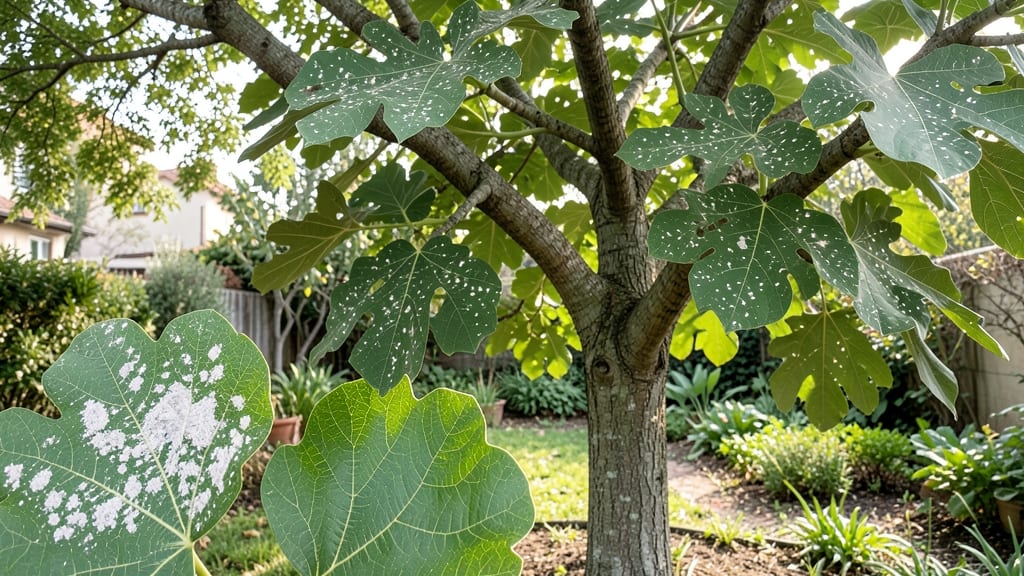
White spots on fig tree leaves mean your tree is sending an SOS—often from powdery mildew or another fungal infection. 🌿 I’ve seen this turn a lush fig tree into a sad, powdery mess if ignored, but with the right moves, you can restore those leaves to vibrant green in weeks.
The key is catching it early and acting fast with organic treatments that won’t harm your tree (or your conscience).
Most white spots start as tiny dots that spread like confetti, often on the undersides of leaves first. Powdery mildew leaves a chalky residue, while other fungi might cause yellowing or leaf drop.
Check for these clues: fuzzy white patches, distorted growth, or black spots underneath—those are your red flags. The good news? Figs are tough, and with proper care, they bounce back stronger than ever.
You’ll tackle this with simple, non-toxic sprays (neem oil or baking soda mix work wonders) and better airflow around your tree. Prune crowded branches, water at the base—not the leaves—and space plants to let sunlight dry things out.
Within 10-14 days, you’ll see those spots fading, and new growth will emerge clean and healthy. The secret? Consistency—don’t skip treatments just because the spots seem gone.
If the problem spreads to the trunk or fruit, or if your tree looks really stressed (wilting, dropping leaves), it’s time to call in a pro. But for most home gardeners, this is a fixable issue—one that’ll teach you to spot trouble before it takes over.
Let’s get those leaves back to their glossy best.
Root Causes Behind Leaf Spots
White spots on fig tree leaves rarely appear by accident—they’re usually a cry for help from your plant. Understanding the why behind these spots is the first step to restoring your tree’s health.
Let’s break down the most common culprits, backed by science, so you can diagnose the issue with confidence.
---
Fungi are the #1 cause of white spots on fig leaves, thriving in warm, humid conditions. These microscopic invaders disrupt your tree’s ability to photosynthesize, leading to weakened growth and even leaf drop.
#### Key Fungal Culprits: - Powdery Mildew – The most common fungal offender, Erysiphe or Oidium species, coats leaves in a chalky white film.
It spreads via wind and spores, blocking sunlight and clogging pores. - **Leaf Spot Fungi (e.g., Cercospora, Septoria) – These create small, circular white or gray spots with darker borders, often surrounded by yellow halos.
They thrive in wet foliage and can spread rapidly in shaded or overcrowded trees. - Anthracnose** – A more aggressive fungus (Colletotrichum spp.) that causes sunken, white-to-brown spots with dark edges. It attacks young leaves and fruit, weakening the tree’s defenses.
#### Why It Starts Here: Fungi love three things: 1. High Humidity (60%+ moisture triggers spore germination). 2. Poor Airflow (dense foliage or tight plantings trap moisture). 3. Stress (overwatering, nutrient deficiencies, or physical damage create entry points).
💡 Pro Tip: Fungal spores can lie dormant in soil or old leaves for years—removing fallen debris is critical!
---
Not all white spots are fungal. Some are pest byproducts, like honeydew or egg sacs, that create secondary issues.
#### Common Pests & Their White Marks: - Whiteflies – Tiny, winged insects that excrete sticky honeydew, attracting sooty mold (a black fungal growth that looks like white spots from a distance). - Mealybugs – Cottony white clusters on leaves or stems, which weaken the tree and invite fungal infections. - Spider Mites – While they don’t leave white spots directly, their silky webbing can resemble powdery mildew, and their feeding causes stippled, discolored patches.
#### Why Pests Trigger Spots: Pests damage leaf tissue, creating wounds where fungi or bacteria can enter. Their waste (honeydew) also feeds secondary microbes, turning white residue into a full-blown problem.
🔥 Warning: If you see ants crawling on your fig tree, they’re likely farming whiteflies—disrupt their trail with sticky barriers or organic sprays!
---
Sometimes, white spots aren’t caused by pathogens at all—they’re symptoms of environmental abuse.
#### Common Triggers: - Overwatering or Poor Drainage – Soggy roots lead to root rot, which stresses the tree and makes leaves susceptible to fungal attacks.
White spots may appear as edema (blister-like growths from waterlogged cells). - Nutrient Deficiencies – Lack of magnesium (Mg) or calcium (Ca) causes interveinal chlorosis (yellowing between veins), which can mimic fungal spots.
White crusts may form if soil minerals are imbalanced. - Sun Scorch or Hail Damage – Physical trauma exposes leaves to secondary infections.
White patches may develop where the epidermis is broken. - Chemical Burn – Overuse of fertilizers (especially high nitrogen) or pesticides can create white, necrotic spots as the leaf tissue dies.
#### How to Spot the Difference: | Cause | Spot Appearance | Other Signs | |---------------------|-----------------------------------|------------------------------------------| | Fungal Infection | Powdery, fuzzy, or greasy coating | Spreads rapidly; yellow halos | | Pest Damage | Sticky residue or webbing | Live insects or ant trails | | Environmental Stress| Irregular, dry, or crusty patches| Wilting, stunted growth, or root rot smell |
🌡️ Quick Test: Check the underside of leaves—fungi often start there, while pests leave visible trails or eggs.
--- Less common but still possible, bacteria (like Pseudomonas) or viruses (transmitted by aphids) can cause white, water-soaked spots that eventually turn brown and crusty.
#### Red Flags: - Oozing lesions (pus-like fluid) = bacterial infection. - Mosaic patterns (light/dark green patches) = viral infection. - Rapid leaf drop after spots appear.
#### Why It’s Tricky: Bacterial/viral diseases often spread systemically, meaning the tree may already be compromised before you see spots. Prevention (sterilizing tools, removing infected leaves) is key.
✨ Silver Lining: Figs are less prone to viral diseases than some other trees, but if you suspect this, quarantine the plant immediately.
Fixing White Spots Naturally
Now that you’ve identified the cause of those pesky white spots on your fig tree leaves, it’s time to roll up your sleeves and get to work! The good news? Most of these issues can be tackled with organic, garden-friendly solutions—no harsh chemicals required.
Below, we’ve mapped out step-by-step fixes tailored to each culprit, along with prevention tips to keep your fig tree thriving long-term.
---
If your fig tree is battling fungal infections like powdery mildew, rust, or leaf spot, act fast to prevent the disease from worsening.
#### 🔥 Step 1: Prune and Remove Infected Leaves - 👨🍳 Cut away any leaves, branches, or fruit showing white spots, discoloration, or powdery residue. - 🗑️ Dispose of them in a sealed trash bag (not your compost pile!) to prevent spores from lingering. - ✂️ Sterilize your pruners with rubbing alcohol or a 10% bleach solution (1 part bleach to 9 parts water) to avoid cross-contamination.
#### 🌿 Step 2: Apply a Fungicide Spray (Organic Options) Mix one of these DIY fungicides in a spray bottle and apply early in the morning (when humidity is lower) for best results: - 🍋 Baking Soda Spray: 1 tsp baking soda + 1 tbsp vegetable oil + 1 tsp mild soap + 1 gallon water.
Shake well before spraying. - 🌿 Neem Oil Solution: 1 tbsp neem oil + 1 tsp dish soap + 1 quart water. Spray every 7–10 days until symptoms disappear. - 🍄 Milk Spray (Lactobacillus): 1 part milk to 9 parts water.
Spray directly on leaves (test a small area first).
💡 Pro Tip: For severe cases, repeat treatments every 5–7 days until new growth appears free of spots.
#### 🌡️ Step 3: Improve Airflow and Light - ✨ Thin out dense foliage to allow sunlight and air to circulate. - 🌳 Space plants at least 3–4 feet apart to reduce humidity buildup. - 🌞 Ensure 6+ hours of sunlight daily—fig trees hate soggy, shaded conditions.
#### 🚫 Prevention for Next Season - 🌱 Plant resistant varieties like ‘Brown Turkey’ or ‘Celeste’ if fungal issues persist. - 🌧️ Water at the base (avoid overhead sprinkling) and water early in the day so leaves dry quickly. - 🍂 Mulch with straw or wood chips (2–3 inches deep) to regulate soil moisture.
---
If sap-sucking pests (like spider mites, aphids, or whiteflies) are causing white spots or stippling, here’s how to evict them:
#### 🕷️ Step 1: Blast Off Pests with Water - 💦 Use a strong hose spray (or a gentle jet from a watering can) to knock off mites and aphids. - 🌿 Repeat every 2–3 days until pests are gone.
#### 🍃 Step 2: Introduce Beneficial Insects - 🐞 Ladybugs, lacewings, or predatory mites love munching on pests. Buy them from garden centers or attract them with neem oil sprays. - 🌼 Plant companion flowers like marigolds or dill nearby to lure helpful bugs.
#### 🧴 Step 3: Spray Homemade Pest Repellents - 🥛 Soapy Water: 1 tsp mild castile soap + 1 quart water. Spray directly on pests (avoid healthy leaves). - 🌿 Garlic-Chili Spray: Blend 2 cloves garlic + 1 chili pepper + 1 quart water.
Strain and spray weekly. - 🍋 Citrus Peel Tea: Steep orange or lemon peels in hot water, strain, and spray (pests hate the scent!).
#### 🌡️ Step 4: Control Environmental Stress - 💧 Avoid overwatering—pests thrive in stressed, weak plants. - 🍂 Prune regularly to keep the tree open and airy.
#### 🚫 Long-Term Pest Prevention - 🌱 Rotate crops if growing figs in containers (pests build up in the same soil). - 🌿 Use reflective mulch (like aluminum foil) around the base to deter crawling insects. - 🌞 Keep the tree healthy with balanced fertilizer (too much nitrogen = soft, pest-loving leaves).
---
If white spots are due to calcium deficiency, sunburn, or environmental stress, focus on soil health and protection.
#### 🥛 Step 1: Amend the Soil - 🌱 Add crushed eggshells or oyster shell grit (for calcium) to the soil around the base. - 🍂 Mix in compost or well-rotted manure to improve nutrient balance. - 💧 Flush the soil with water to leach out excess salts (if using tap water).
#### 🌿 Step 2: Shield from Harsh Conditions - ☀️ For sunburn: Provide afternoon shade with a lightweight shade cloth (30–50% coverage). - 🌧️ For windburn: Plant near a windbreak (like a fence or hedge). - 🌡️ For temperature stress: Mulch heavily in winter (for cold climates) or summer (for heat-prone areas).
#### 💡 Pro Tip - 📊 Test your soil (kit from garden centers) to check pH and nutrient levels. Fig trees prefer slightly acidic to neutral soil (6.0–7.0 pH).
#### 🚫 Prevention Tips - 🌱 Choose the right location: Figs need full sun (6+ hours) but may need afternoon shade in hot climates. - 💧 Water deeply but infrequently—figs hate soggy roots. - 🍂 Fertilize lightly in spring with a balanced organic fertilizer (10-10-10 or compost tea).
---
If your fig tree is severely infected (e.g., large patches of dead leaves, oozing sap, or wilting), consider consulting a local arborist or extension service. Some fungal diseases (like fig rust) may require targeted fungicides beyond DIY fixes.
--- 🎯 Final Thought: Most white spot issues are preventable with proper care! Once you’ve treated the problem, monitor your tree weekly and adjust your routine based on what works best. A happy fig tree = juicy, blemish-free fruit for you! 🍈✨
Frequently asked questions
Are white spots on fig leaves always a sign of disease?
Not necessarily! While fungal infections like powdery mildew are the most common cause, white spots can also result from pest activity (like honeydew from whiteflies) or environmental stress (such as calcium deficiency or sunburn). Always check the undersides of leaves—fungi often start there, while pests leave sticky residue or visible insects.
How quickly should I expect to see improvement after treating fungal spots?
With consistent organic treatments (like neem oil or baking soda sprays), you should notice new growth appearing clean within 10-14 days. However, existing spots may take 3-4 weeks to fully disappear as the leaves naturally fall off. The key is to keep treating every 5-7 days until you see fresh, spot-free foliage.
Can I still harvest fruit from a fig tree with white spots?
It depends on the severity. If the spots are only on leaves and the tree looks otherwise healthy, the fruit is likely safe to eat. However, if you see white spots on the fruit itself or the tree appears stressed (wilting, excessive leaf drop), it's best to remove and discard the fruit to avoid potential contamination. Always wash any produce thoroughly before eating.
Why does my fig tree keep getting white spots even after treatment?
This usually happens when the underlying conditions aren't addressed. Fungal spores thrive in high humidity and poor airflow, so check if your tree needs more sunlight or pruning. Also, dormant spores in old mulch or soil can reinfect—always remove fallen leaves and sterilize pruning tools. Consider resistant varieties if this is a recurring issue.
Is it safe to use chemical fungicides on my fig tree?
While chemical fungicides can be effective, they're not recommended for home gardeners unless absolutely necessary. Many contain harmful residues that can linger on fruit. For organic growers, neem oil or copper-based sprays (used carefully) are safer alternatives. Always follow label instructions and consider organic methods first to protect pollinators and soil health.