
Watering
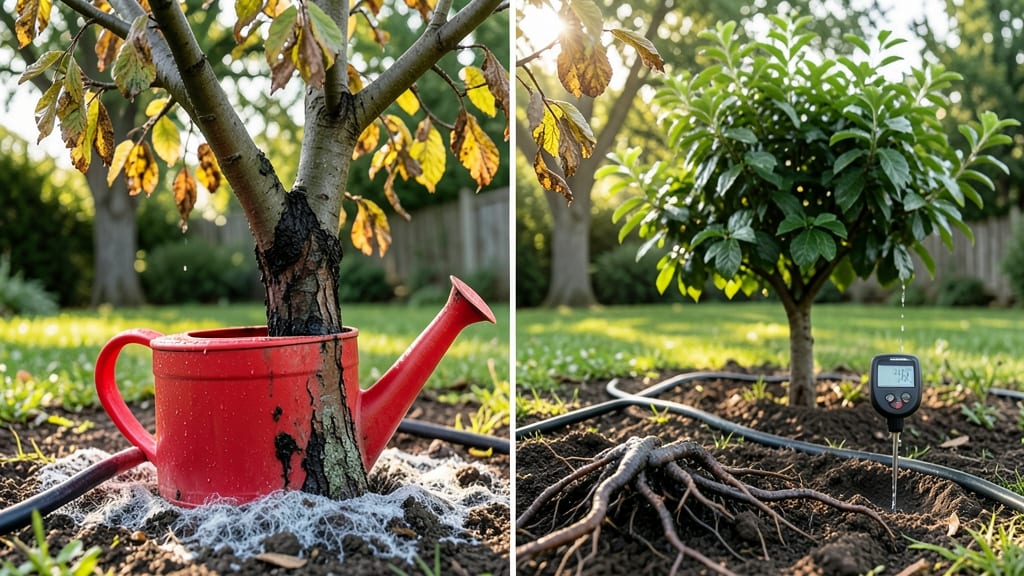
The cherry tree overwatering signs—drooping leaves and mushy roots—aren’t just a warning; they’re a cry for help. 🌳 Overwatering turns lush canopies into sad, soggy messes, but the good news?
You can fix it before it’s too late. The first step is spotting the signs early: yellowing leaves, wilting branches, and that telltale foul smell near the base.
Root rot is the silent killer here, thriving when soil stays soggy for days. I’ve seen cherry trees go from vibrant to struggling in just two weeks if watering isn’t adjusted. The key is checking soil moisture—stick your finger in the top 2-3 inches; if it’s damp, wait.
Drainage matters too: raised beds or amended soil with compost can make all the difference.
Once you’ve stopped the water torture, let the tree recover with shallow, infrequent watering. Prune back any mushy roots you find, and consider a fungal treatment if you spot mold. Within a few weeks, you’ll see new growth pushing through—proof your tree is bouncing back.
Prevention is simpler than fixing: water deeply but less often, especially in clay soil. Mulch helps too, keeping moisture balanced without smothering roots. With these tweaks, your cherry tree will be thriving again in no time.
Root Causes of Overwatered Cherry Trees
Overwatering your cherry tree isn’t just a gardening mistake—it’s a silent killer that disrupts the delicate balance of soil, roots, and oxygen. Understanding why it happens is the first step to saving your tree.
Let’s break down the science behind this common issue, so you can prevent it before it’s too late.
---
Cherry trees thrive in well-draining soil, but if your garden bed is heavy with clay, compacted, or lacks organic matter, water pools around the roots instead of draining away. Here’s what’s really happening:
- Clay Soil Traps Water: Clay particles pack tightly, creating tiny air pockets that fill with water instead of allowing oxygen to reach the roots.
Without oxygen, roots suffocate and rot—even if the soil looks moist. - Compacted Soil Blocks Flow: Foot traffic, machinery, or poor soil structure can compress the soil, turning it into a waterlogged sponge.
Roots struggle to absorb nutrients or breathe, leading to stunted growth or death. - Lack of Organic Matter: Soil rich in organic material (like compost) holds moisture without becoming waterlogged. Without it, water sits stagnant, inviting fungal diseases like Phytophthora, which attacks cherry tree roots.
💡 Pro Tip: Test your soil’s drainage by digging a 12-inch hole, filling it with water, and timing how long it takes to drain. If it’s still soggy after 6 hours, amend with perlite, sand, or compost to improve airflow.
---
Many gardeners assume cherry trees (especially young ones) need frequent watering—but cherry trees are surprisingly drought-tolerant once established. Here’s why you might be drowning them:
- Frequency Over Depth: Light, daily watering keeps the topsoil wet but leaves lower roots thirsty for oxygen.
Cherry trees need deep, infrequent watering (1–2 inches per week) to encourage strong root growth. - Ignoring Seasonal Needs: Spring and fall are critical for root development, but summer heat can trick you into overwatering.
A general rule: Water when the top 2–3 inches of soil are dry. Stick your finger in—if it’s damp, wait! - Automatic Irrigation Gone Wrong: Drip systems or sprinklers left on timers can deliver way more water than needed, especially during rainy periods.
Always check soil moisture before relying on automation.
⚠️ Warning: Overwatering in hot weather can lead to sunscald—when leaves burn from excess moisture + intense sunlight. Mulch 3–4 inches around the base (but keep it away from the trunk) to regulate temperature and retain moisture without drowning roots.
---
Sometimes, nature itself conspires against your cherry tree. Here’s how weather and landscape play a role:
- Poor Site Selection: Planting in low-lying areas or depressions means water pools around the roots after rain. Cherry trees need slightly elevated spots with a gentle slope to allow runoff. - Heavy or Prolonged Rain: Even well-draining soil can’t handle weeks of downpours.
If your area gets 2+ inches of rain in a short period, the roots may not recover without intervention. - Shallow Root Systems in Containers: Potted cherry trees (like dwarf varieties) are especially vulnerable.
Small pots fill with water quickly, and roots have no escape. Always use containers with drainage holes and a well-draining potting mix.
🌡️ Climate Check: In humid regions (like the Southeast U.S.), cherry trees are more prone to overwatering because the air itself holds moisture, slowing evaporation. Adjust your watering schedule accordingly.
--- When roots sit in soggy conditions, opportunistic fungi like Armillaria (honey fungus) or Rhizoctonia move in, breaking down root tissue. Signs include: - Mushrooms at the base (a red flag for Armillaria). - Black, mushy roots when dug up. - Sudden wilting despite moist soil.
🔥 Prevention: Space cherry trees properly (15–20 feet apart) to improve airflow, and avoid wounding the trunk, which gives fungi entry points.
--- Even well-meaning gardeners make these blunders: - Using the Wrong Mulch: Thick layers of wood chips or grass clippings can smother roots and trap moisture.
Stick to 2–3 inches of shredded bark or straw. - Planting Too Deep: Burying the graft union (visible bump on the trunk) or planting the root flare underground strangles the tree.
The flare should sit just above soil level. - Skipping Soil Tests: If your soil’s pH is off (too acidic or alkaline), roots can’t absorb water efficiently. Test and amend with lime (for acidic soil) or sulfur (for alkaline soil) as needed.
--- 🎯 Key Takeaway: Overwatering is rarely about too much water—it’s about too little oxygen, poor drainage, or ignored environmental clues. By addressing soil structure, watering habits, and site conditions, you’ll give your cherry tree the dry-but-moist balance it craves.
Revive Your Cherry Tree Now
Overwatering can feel like a silent killer for your cherry tree, but the good news is that with the right steps, you can nurse it back to health—even if the damage seems severe.
Below are practical, step-by-step solutions tailored to the most common signs of overwatering, from yellowing leaves to root rot. Each fix includes actionable tips to stop the damage fast and prevent future mishaps.
---
If your cherry tree’s leaves are turning yellow, drooping, or curling, it’s likely suffering from oxygen deprivation in waterlogged soil. Here’s how to correct it:
#### 🔥 Step 1: Pause Watering Immediately - Stop adding water until the soil dries out. Overwatering compounds the problem by suffocating roots further. - Test the soil: Stick your finger 2–3 inches deep—if it’s soggy, wait before watering again.
#### 🍳 Step 2: Improve Soil Drainage - Aerate the soil: Use a garden fork to loosen compacted areas around the tree’s base (avoid damaging roots). - Add organic matter: Mix in compost, perlite, or coarse sand to improve drainage.
Aim for a 1:1 ratio of soil to amendment in the top 6–12 inches. - Raise the tree (if needed): If your tree sits in a low spot where water pools, mound soil or gravel around the base to create a slight slope.
#### 👨🍳 Step 3: Prune Damaged Foliage - Trim yellow or brown leaves with clean pruning shears to redirect the tree’s energy to healthy growth. - Focus on lower branches first, as these are often the most affected.
#### 💡 Prevention Tip: 🔥 Water deeply but infrequently. Cherry trees prefer 1–1.5 inches of water per week (including rain), delivered 2–3 times per week rather than daily shallow watering.
---
Root rot is a silent emergency—if you see black, mushy roots or a foul smell near the base, act fast.
#### 🔪 Step 1: Remove Affected Soil - Dig carefully around the tree’s root zone (avoid cutting roots) and remove the top 4–6 inches of soggy soil. - Discard the contaminated soil—do not compost it, as spores can survive.
#### 🌡️ Step 2: Disinfect the Area - Sprinkle fungicide (like copper fungicide or hydrogen peroxide) over the exposed roots and surrounding soil to kill pathogens. - Let the area dry completely for 24–48 hours before replanting.
#### 🎯 Step 3: Repot or Replant with Fresh Soil - Refill the hole with a mix of well-draining potting soil and perlite (50/50 ratio). - Water lightly only after the soil is fully settled to avoid compacting it again.
#### ✨ Prevention Tip: 🌡️ Monitor soil moisture with a moisture meter or your finger. If the soil stays damp for more than 2–3 days, it’s time to adjust your watering schedule.
---
If your cherry tree is growing slowly or leaves are brown at the edges (a sign of nutrient leaching from waterlogged soil), follow these steps:
#### 📊 Step 1: Flush the Soil - Water the tree thoroughly to push out excess salts and chemicals that build up in overwatered soil. - Let it drain completely, then wait 3–5 days before watering again.
#### 💪 Step 2: Fertilize Smartly - Use a balanced, slow-release fertilizer (like 10-10-10) to replenish nutrients. - Avoid liquid fertilizers until the soil dries out—they can burn roots in waterlogged conditions.
#### 🍎 Step 3: Mulch Correctly - Apply 2–3 inches of organic mulch (wood chips or straw) 3 inches away from the trunk to retain moisture without suffocating roots. - Keep mulch dry—wet mulch traps moisture and worsens rot.
#### 🎯 Prevention Tip: 🔥 Choose the right pot or planting spot. If your cherry tree is in a container, ensure it has drainage holes. For in-ground trees, plant on a slight mound to encourage runoff.
---
If your tree is completely wilting, oozing sap, or falling apart, it may need intensive intervention:
1. Prune aggressively: Remove all dead or dying branches to reduce the tree’s water demands. 2. Apply root stimulator: Use a mycorrhizal fungus or seaweed-based root booster to encourage healthy root regrowth.
3. Consider a root aeration service: For large trees, a professional can deep-aerate the soil to break up compaction. 4. Watch for pests: Overwatered trees attract fungal pests like aphids or scale. Treat with neem oil if needed.
--- Final Thought: Recovery takes time, but with consistent care, your cherry tree can bounce back—especially if you adjust your watering habits and improve drainage. 🌟 Keep an eye on progress, and soon, you’ll see fresh green leaves and stronger growth!
Frequently asked questions
How often should I water my cherry tree to avoid overwatering?
For established cherry trees, water deeply 1-2 times per week (about 1-1.5 inches total), letting the top 2-3 inches of soil dry out between waterings. Young trees may need slightly more frequent watering, but always check soil moisture with your finger—if it's damp, wait!
Can I save a cherry tree with root rot from overwatering?
Yes, but act fast! Remove the top 4-6 inches of soggy soil, trim any black/mushy roots, and replant with a 50/50 mix of well-draining soil and perlite. Apply a fungicide like copper spray, then water lightly only when the soil is dry. Recovery takes 4-6 weeks of careful monitoring.
Why do my cherry tree leaves turn yellow but the soil feels dry?
This "dry rot" happens when roots suffocate from poor drainage despite dry surface soil. Check deeper—if the lower 6+ inches are compacted or waterlogged, aerate with a garden fork and amend with compost or sand. Yellow leaves on dry soil often mean root-bound stress from old, compacted soil.
What's the best mulch to prevent overwatering in cherry trees?
Avoid thick organic mulch (like wood chips) that traps moisture. Instead, use 2-3 inches of straw or shredded bark, keeping it 3 inches away from the trunk to allow airflow. Invasive mulch creates a "moisture blanket" that worsens rot—especially in clay soil.
How do I know if my potted cherry tree is getting too much water?
Watch for yellowing leaves, wilting despite wet soil, or a sour smell from the pot. Tap the container—if it feels heavy with water or condensation forms on the sides, it's overwatered. Let the top 1 inch dry out between waterings, and always use pots with drainage holes.