
Pests and Diseases
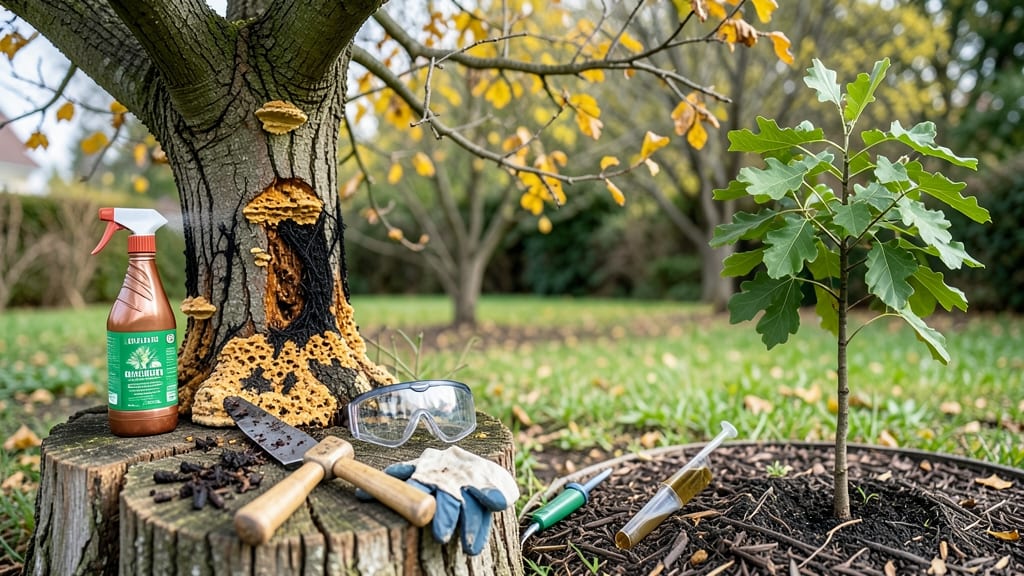
When your tree’s bark splits open like a cracked egg, revealing spongy brown rot inside, tree fungus and rot treatment specialists will tell you it’s a crisis. 🌳 I’ve watched heart rot turn a 50-year-old oak into a hazard in just two seasons—and the wrong treatment can make it worse.
The good news? Targeted action stops the spread, saves the tree’s structure, or at least buys time before removal becomes the only option.
Most rot starts unseen in the roots or trunk, fueled by moisture and decay fungi like Armillaria or Fomes. You’ll spot it too late when mushrooms pop up at the base or the tree leans dangerously.
The first step is identifying the type—heart rot (dry, brown) vs. wet rot (mushy, smelly)—because that dictates whether you prune aggressively or focus on drainage and fungicides.
Your toolkit should include copper-based fungicides for active infections, pruning shears sterilized with bleach, and a moisture barrier like gravel around the trunk. For severe cases, a specialist can inject fungicides deep into the wood or install cables to support weakened structures.
The goal isn’t always saving the tree—sometimes it’s preserving the roots for new growth.
Prevention is simpler: improve airflow with strategic pruning, fix irrigation leaks, and mulch away from the trunk. If you’re dealing with a mature tree, call an arborist before the rot reaches the center—because once it does, even the best treatment can’t bring it back.
Root Causes Of Tree Decay
Fungal infections and wood rot don’t strike trees out of nowhere—they’re usually the result of a perfect storm of environmental stress, poor tree health, or human activity. Understanding these triggers is the first step in preventing or treating decay before it’s too late.
Below, we break down the primary reasons trees fall victim to fungus and rot, backed by science and actionable insights.
Waterlogged soil is a fungus’s dream playground. When trees sit in soggy conditions—whether from heavy rainfall, poor drainage, or irrigation gone wrong—they become prime targets for wood-decay fungi like Armillaria (honey fungus) or Phellinus weirii (larch case canker).
- Why it happens: - Oxygen deprivation: Roots suffocate in waterlogged soil, weakening the tree’s defenses.
Fungi thrive in low-oxygen environments because they can break down cellulose and lignin (the structural components of wood) without competing for oxygen. - Spore germination: Fungal spores, often dormant in soil, germinate when moisture levels rise.
Some species, like Heterobasidion annosum, can spread via root grafts between trees, turning a single infected tree into a neighborhood-wide epidemic. - Bark wounds: Excess moisture softens bark, making it easier for fungi to penetrate through cracks or insect boreholes.
- Actionable fix:
- Improve soil drainage with gravel, sand, or French drains around the root zone.
- Avoid overwatering—trees need 1–1.5 inches of water per week, but drainage is key.
- Plant trees in well-draining soil (e.g., avoid clay-heavy areas unless amended).
A tree’s bark is its first line of defense. When it’s compromised—whether by lawnmowers, construction equipment, or even animal damage—fungi and rot-causing pathogens sneak in like unwelcome guests at a buffet.
- Why it happens:
- Bark stripping: Even small wounds expose the cambium layer (the tree’s growth engine), allowing fungi like Ceratocystis (which causes oak wilt) to invade.
- Root damage: Compacted soil or construction activity can sever roots, creating entry points for root-rotting fungi such as Phytophthora.
- Sun scald & frost cracks: Sudden temperature swings (common in urban areas) can split bark, leaving gaps for infection.
- Actionable fix:
- Protect young trees with tree wraps or mulch barriers to shield bark from lawn equipment.
- Prune correctly—use clean, sharp tools and make cuts at the branch collar to prevent tearing.
- Monitor construction sites—ensure roots are shielded with root barriers or protective mats during excavation.
Some of the worst tree-killing fungi hitch a ride on insects. Bark beetles, termites, and borers don’t just eat wood—they create tunnels and galleries that fungi exploit to spread rapidly.
- Why it happens:
- Bark beetles (e.g., Dendroctonus species): These pests introduce blue-stain fungi (Ophiostoma) into the tree’s vascular system, blocking water flow and causing Dutch elm disease or pine wilt.
- Termites & carpenter ants: Their tunnels aerate wood, making it easier for dry rot fungi (Serpula lacrymans) to colonize.
- Sap-sucking insects: Aphids and scale insects weaken trees by siphoning nutrients, leaving them vulnerable to secondary fungal infections.
- Actionable fix:
- Inspect trees annually for sawdust-like frass (beetle droppings) or hollow-sounding wood.
- Use targeted pesticides (e.g., neonicotinoids for beetles) or beneficial nematodes to control pests before fungi move in.
- Remove infested branches immediately—do not compost—and dispose of them in sealed bags.
A tree under stress is like a person with a compromised immune system—it’s far more susceptible to infections. Drought, nutrient deficiencies, or disease can leave trees defenseless against fungal invaders.
- Why it happens: - Nutrient deficiencies: Lack of nitrogen, phosphorus, or potassium weakens cell walls, making them easier for fungi to break down.
For example, magnesium deficiency (common in acidic soils) increases susceptibility to anthracnose. - Drought stress: Trees that don’t get enough water close off resin ducts, reducing their ability to pitch out (seal off) fungal infections. - Competing vegetation: Overcrowded roots or aggressive ground covers (like ivy) steal resources, leaving trees malnourished and prone to rot.
- Actionable fix:
- Test soil annually and amend with compost or slow-release fertilizers (e.g., osmocote).
- Water deeply but infrequently to encourage deep root growth (1–2 times per week in dry climates).
- Remove competing plants within a 10-foot radius of the tree’s drip line.
From improper pruning to pollution, human interference often accelerates tree decay. Urban trees, in particular, face unique stressors that make them 3x more likely to develop fungal diseases.
- Why it happens:
- Pollution & acid rain: Sulfur dioxide and nitrogen oxides damage leaf cuticles, making trees more vulnerable to foliar fungi like Rhizoctonia.
- Compacted soil: Heavy foot traffic or paved surfaces restrict root growth, leading to oxygen starvation and root rot.
- Improper mulching: Volcano mulching (piling mulch against the trunk) creates moisture traps, inviting fungi like Armillaria.
- Chemical overuse: Excessive herbicides or fungicides can disrupt beneficial microbes, allowing harmful fungi to dominate.
- Actionable fix:
- Use permeable pavers or rain gardens to reduce soil compaction.
- Mulch correctly—keep it 3–4 inches deep and 2–3 inches away from the trunk.
- Choose pollution-tolerant species (e.g., ginkgo, sycamore, or hackberry) for urban areas.
Rising temperatures, unpredictable weather patterns, and invasive species are changing the game for tree health. Fungi that once thrived in specific climates are now spreading into new territories.
- Why it happens: - Warmer winters: Many fungi, like Hymenoscyphus fraxineus (ash dieback), survive colder months in tree bark.
Warmer winters mean longer infection windows. - Heavy rainfall events: Flash floods can introduce spores from distant sources, overwhelming local tree defenses. - Invasive species: Non-native trees (e.g., London planetree) often lack natural resistance to local fungi, leading to epidemic outbreaks.
- Actionable fix:
- Diversify your landscape with native, resilient species (e.g., oak, hickory, or serviceberry).
- Monitor weather alerts—after heavy storms, inspect trees for new lesions or conk growth.
- Support local arborists who understand region-specific fungal threats.
Fixing Fungal Rot in Trees
Fungal rot and tree diseases don’t have to mean the end for your beloved trees. With the right approach—whether you’re tackling early signs or advanced decay—you can restore health, slow progression, or even save the tree entirely.
Below, we break down practical, step-by-step solutions tailored to the most common causes of rot, from overwatering to wounds and pests. Plus, we’ll share prevention tips to keep your trees thriving long-term.
Cause: Overwatering, poor drainage, or compacted soil suffocates roots, creating the perfect breeding ground for fungi like Phytophthora or Armillaria.
How to Fix It:
- 🌧️ Stop the Water Overload
- Reduce irrigation immediately. Let the soil dry out between waterings—stick your finger 2–3 inches into the soil; if it’s damp, wait.
- Pro Tip: 💡 Use a moisture meter to avoid guesswork. Aim for soil that’s moist but not soggy.
- 🚧 Improve Drainage
- Dig a shallow trench around the tree’s drip line (the edge of its canopy) to redirect excess water.
- Amend the soil with organic matter (compost or coconut coir) to loosen compacted areas. Avoid heavy clay amendments—they can worsen retention.
- 🌿 Fungal Treatment
- Apply a systemic fungicide (like copper-based or phosphite-based treatments) to the soil. Follow label instructions for dosage.
- For severe cases, consult a tree fungus and rot treatment specialist for soil injections of mycorrhizal fungi or beneficial microbes to outcompete pathogens.
- 🌳 Prune Strategically
- Remove any wilted, yellowing, or dead branches—these signal advanced rot. Use sterilized pruning tools to prevent spreading spores.
Prevention:
- Install French drains or swales in low-lying areas.
- Plant trees in well-draining soil and avoid over-mulching (keep mulch 3–4 inches away from the trunk).
- Choose native or drought-tolerant species if your area has heavy clay or poor drainage.
Cause: Open wounds (from storms, improper pruning, or pests), weak structural wood, or decay-causing fungi like Fomes or Ganoderma.
How to Fix It:
- 🔪 Assess the Damage
- If the rot is limited to a small section, you may be able to remove the infected wood with a chainsaw (sterilize the blade first!).
- For large cavities, a specialist can cavity treatment with fungicides or sealants to slow spread.
- 🛡️ Protect the Tree
- Apply a wound dressing (like Tanglefoot Tree Wound Pruning Seal) to fresh cuts to deter fungal entry.
- Avoid over-pruning—only remove dead, diseased, or crossing branches. Never remove more than 25% of the canopy in one session.
- 🌱 Boost Tree Health
- Fertilize with a balanced, slow-release fertilizer (like 10-10-10) to strengthen the tree’s defenses.
- Deep-water during droughts to encourage root growth and resilience.
- 🚨 When to Call a Pro
- If the rot is extensive (e.g., large hollow sections or mushrooms growing at the base), a certified arborist can perform cavity treatments or recommend structural support (like cabling) to prevent breakage.
Prevention:
- Prune correctly: Use clean, sharp tools and make cuts at the branch collar (never flush to the trunk).
- Inspect regularly for signs of beetle holes, cracks, or conk fungi (shelf fungi).
- Strengthen weak trees with mulch rings and proper watering to reduce stress.
Cause: Beetles (like emerald ash borer or bark beetles) create entry points for fungi, turning trees into rotting skeletons from the inside out.
How to Fix It:
- 🔍 Identify the Pest
- Look for D-shaped exit holes, sawdust-like frass, or new fungal growth near wounds.
- Pro Tip: 🌡️ Use a flashlight at dusk—adult beetles are often active then!
- 🛡️ Treat the Infestation
- Systemic insecticides (like imidacloprid or dinotefuran) can be injected into the tree to kill larvae.
- For large trees, a specialist may use soil drenches or trunk injections.
- 🌿 Remove Severely Infested Trees
- If the tree is already hollow or toppling, removal may be safest. Burn or chip the wood (don’t leave it on-site—it can spread spores).
- 🌳 Quarantine Nearby Trees
- If one tree is infected, inspect neighbors for early signs. Prune and treat them preemptively.
Prevention:
- Encourage natural predators (like birds and parasitic wasps) with native plants.
- Avoid stressing trees—proper watering, mulching, and fertilization make them less attractive to pests.
- Monitor high-risk species (e.g., ash, elm, or oak trees) annually.
If the tree is leaning dangerously, has large hollow sections, or shows massive fungal growth, it may be time to remove it safely. Here’s how:
- 🪓 Professional Removal
- Hire a licensed arborist to section and chip the tree (never leave stumps—rot can persist).
- Ask about stump grinding if you want to replant in the same spot.
- 🌱 Replace with a Rot-Resistant Species
- Choose native, disease-resistant trees like oak, hickory, or black walnut (avoid willows or elms if rot was an issue).
- 💡 Learn from the Loss
- Test the soil to rule out underlying issues (like poor drainage or nutrient deficiencies).
- Adjust your care routine—overwatering, compacted soil, or neglect often precede rot.
Final Thought: 🎯 Early action is key—most rot can be managed if caught before it spreads. When in doubt, consult a tree fungus and rot treatment specialist for a customized plan. Your tree’s survival often depends on speed and precision!
Frequently asked questions
How do I know if my tree has fungus or just normal decay?
Look for mushrooms growing at the base or shelf-like fungi on the trunk—these are clear signs of active fungal infection. Normal decay often appears as dry, brown wood without fungal growth. Test with a screwdriver: if it sinks easily into soft wood, rot is already advanced.
Can I treat tree rot myself, or should I call a specialist?
For early-stage rot, you can prune infected branches and apply copper fungicide. But if you see large cavities, mushrooms, or structural weakness, call a certified arborist. They can perform cavity treatments or structural cabling that DIY methods can't handle.
What’s the fastest way to stop fungal spread between trees?
Remove all infected wood (burn or chip it—don’t compost!) and sterilize tools with 10% bleach solution. Apply phosphite-based fungicide to soil around healthy trees to create a protective barrier. Isolate the area for 2-3 weeks to prevent spore transfer.
Will pruning help if my tree already has heart rot?
Pruning can only slow progression—it won’t reverse heart rot. Focus on removing dead branches to reduce weight stress. For severe cases, a specialist may inject fungicide or install support cables to prevent breakage. The goal shifts from curing to managing structural safety.
How often should I inspect my trees for fungus?
Check twice a year—once in spring (after rain) and once in fall (before winter). Look for new cracks, conks, or mushrooms. High-risk trees (like oaks or elms) need quarterly inspections, especially after storms or heavy watering.