
Flowers
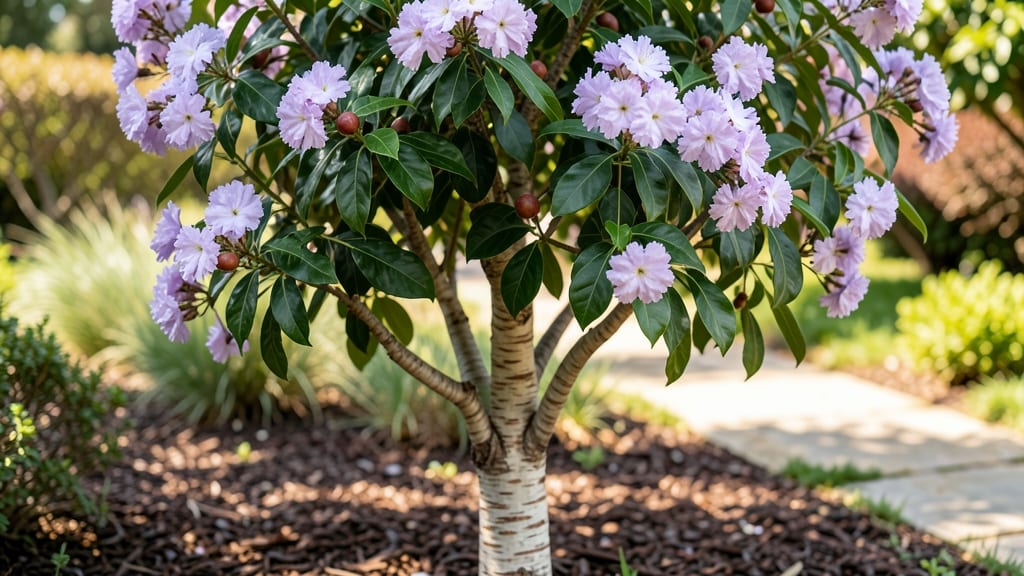
That fragrant tree with lilac flowers found in warm climates thrives where summers stay warm and winters rarely freeze—it’s the crepe myrtle (Lagerstroemia indica), and it’s the star of my front yard. 🌸 The secret to its success?
Planting it in well-draining soil with full sun, then giving it space to grow into the showstopper it’s meant to be.
My first crepe myrtle nearly died because I watered it too much—these trees crave drought once established. They bloom from summer into fall, with bark that peels dramatically in winter, adding texture even when flowers fade.
Varieties like ‘Natchez’ and ‘Tonto’ handle heat and humidity like champs, while ‘Muskogee’ stays compact for smaller spaces.
You’ll end up with a tree that smells like a spring garden in July, attracts hummingbirds, and requires almost no fuss after the first year. Just prune back dead wood in late winter, and watch it reward you with vibrant blooms for decades.
Perfect for Southern landscapes, urban streets, or even large containers. Here’s how to make yours thrive—no matter where you live in warm climates.
Climate Mismatch Explained
If you’ve spotted a tree with fragrant lilac-like flowers thriving in warm climates, you’re likely admiring a non-native variety or a hybrid species adapted to heat. But why do these blooms appear where traditional lilacs (like Syringa vulgaris) struggle?
The answer lies in a mix of natural adaptations, human intervention, and environmental shifts. Let’s break down the key reasons these trees flourish in warmth—and why they might not be what you expect.
Traditional lilacs, such as the common Syringa vulgaris, are hardy perennials native to temperate climates like Europe and Asia. They rely on cold winters to trigger dormancy and cool springs to bloom. However, some related species and hybrids have evolved—or been selectively bred—to tolerate warmer conditions.
- Heat-tolerant relatives: Trees like the Lagerstroemia indica (crape myrtle) or Jasminum grandiflorum (Spanish jasmine) produce fragrant, lilac-like flowers but thrive in USDA zones 7–11. These species have adapted to drought resistance and high temperatures through:
- Thicker, waxy leaves to reduce water loss.
- Deep root systems to access groundwater.
- Delayed dormancy cycles to avoid extreme heat stress.
- Hybrid vigor: Crossbreeding lilacs with heat-loving shrubs (e.g., Syringa meyeri or Syringa reticulata) creates cultivars that bloom year-round in mild winters. These hybrids often skip the cold requirement entirely.
Pro Tip: 🌡️ If you’re in a warm climate, look for Syringa × hyacinthiflora hybrids—they’re bred to handle 90°F+ temperatures and still produce lilac-scented blooms!
Human activity has accelerated the spread of lilac-like trees to warm regions through intentional planting and unintentional introductions. Here’s how:
- Ornamental landscaping: Nurseries and gardeners in Florida, California, and Mediterranean climates often choose heat-resistant varieties (like Chionanthus retusus, or Chinese fringe tree) for their fragrance and drought tolerance. These trees are not true lilacs but are marketed as "lilac alternatives."
- Escaped cultivars: Some lilac hybrids (e.g., Syringa × josikaea) were planted as ornamental escapes and now naturalize in warm, microclimates (like urban heat islands or coastal areas). Their ability to reproduce via suckers helps them spread.
- Climate change shifts: Rising temperatures are expanding the range of traditionally temperate species. For example, Syringa vulgaris may produce sparser blooms in extreme heat, but heat-tolerant mutants (or nearby hybrids) take over.
Watch Out: ⚠️ Not all "lilac" trees are Syringa species—some, like Plumeria (frangipani), mimic the scent but are tropical and not cold-hardy.
Even in warm climates, not all lilac-like trees thrive equally. Their success often depends on local soil conditions and microclimates that mimic their native needs:
| Factor | How It Helps Warm-Climate Growth | Example |
|---|---|---|
| Well-draining soil | Prevents root rot in hot, humid areas where water pools. | Lagerstroemia (crape myrtle) loves sandy or loamy soil. |
| Partial shade | Protects leaves from sun scorch while allowing enough light for blooms. | Jasminum thrives under dappled sunlight. |
| Coastal or high-altitude pockets | Cooler marine layers or mountain breezes can create "cool islands" where lilacs survive. | Southern California’s Santa Ana winds create microclimates where Syringa hybrids persist. |
Actionable Tip: 🌱 If you’re planting a lilac-like tree in a warm zone, amend clay soil with compost and mulch heavily to retain moisture without overheating roots.
In warm climates, pests and diseases that plague traditional lilacs (like borers or powdery mildew) are less common—but new threats emerge. Lilac-like trees in warmth often resist typical lilac pests because:
- Different foliage chemistry: Species like Murraya paniculata (orange jasmine) produce volatile oils that repel insects, while Syringa hybrids may have thicker cuticles.
- Fungal adaptations: Warmth-loving fungi (e.g., Phytophthora) are less active in dry heat, reducing root rot risks.
- Pollinator shifts: Bees and butterflies in warm climates prefer nectar-rich, heat-tolerant flowers, giving an edge to species like Plumeria or Tabebuia.
Caution: 🚨 While these trees may seem low-maintenance, overwatering in heat can attract fungal infections—stick to deep, infrequent watering.
Revitalizing Your Lilac Tree
If your tree with fragrant lilac blooms isn’t thriving in warm climates, don’t worry—most issues have simple, effective fixes. Below, we’ve mapped common problems to practical solutions, along with prevention tips to keep your tree blooming beautifully year after year.
If your lilac tree looks stunted or struggles to bloom, overcrowded roots may be the culprit. Lilacs need room to spread their roots and absorb nutrients.
How to Fix It: 🔥 Prune Aggressively (But Safely) – Trim back any nearby plants or shrubs within 3–5 feet of the tree’s trunk. Use clean, sharp shears to avoid damaging roots. 🍳 Loosen the Soil Gently – Carefully dig around the base (about 12 inches deep) to aerate compacted soil. Mix in 2–3 inches of organic compost to improve drainage. 👨🍳 Mulch Properly – Apply a 2–3 inch layer of mulch (wood chips or bark) around the base, keeping it away from the trunk to prevent rot. Prevention Tips: ✨ Plant Strategically – Space new lilac trees at least 6–10 feet apart to allow for future growth. 🌡️ Monitor Root Growth – If planting near other trees, choose varieties with shallow root systems (like Lagerstroemia or Jacaranda) to avoid competition.Warm climates can be brutal on lilacs, causing leaf scorch, wilting, or even flower drop. These trees prefer partial shade in hotter regions.
How to Fix It: 🔥 Provide Afternoon Shade – Install a temporary shade cloth (30–50% coverage) or plant nearby trees/shrubs (like Crape Myrtle) to filter direct sunlight. 🍳 Deep Watering Routine – Water deeply 2–3 times per week (instead of daily shallow watering) to encourage strong root growth. Aim for 1–1.5 inches of water per week. 👨🍳 Mist Leaves (Temporarily) – During extreme heatwaves, lightly mist leaves in the early morning to reduce stress. Avoid evening misting to prevent fungal issues. Prevention Tips: 💡 Choose Heat-Tolerant Varieties – Opt for Lilac hybrids like ‘Miss Kim’ or ‘Dwarf Korean Lilac’, which handle warmth better than traditional lilacs. 🎯 Adjust Planting Location – If possible, relocate the tree to a spot with morning sun and afternoon shade.Heavy clay soil or excessive irrigation can drown lilac roots, leading to yellowing leaves, stunted growth, or even root rot.
How to Fix It: 🔥 Test Your Soil – Use a DIY soil test kit to check drainage. If water pools after 6+ hours, you’ve got poor drainage. 🍳 Amend the Soil – Mix in perlite, coarse sand, or decomposed granite to improve aeration. For heavy clay, consider raised beds. 👨🍳 Improve Drainage Gradually – Dig a shallow trench around the tree to redirect water away from the roots. Prevention Tips: ✨ Plant on a Slope – If possible, choose a slightly elevated spot for better water runoff. 🌡️ Use Drip Irrigation – Instead of overhead watering, use drip lines to deliver water directly to the roots without oversaturating the soil.Lilacs attract aphids, Japanese beetles, and spider mites, which can defoliate your tree and weaken its blooms.
How to Fix It: 🔥 Blast Off Pests – Spray the tree with a strong stream of water to dislodge aphids or beetles. Repeat every 3–4 days for severe infestations. 🍳 Neem Oil Spray – Mix 1 tbsp neem oil with 1 quart of water and a drop of dish soap. Spray foliage thoroughly (especially undersides of leaves). 👨🍳 Introduce Beneficial Insects – Ladybugs and lacewings eat aphids naturally. Purchase them from garden centers and release them near the tree. Prevention Tips: 💡 Prune Regularly – Remove and destroy heavily infested branches to prevent spread. 🎯 Encourage Predatory Birds – Install a bird feeder nearby to attract sparrows and wrens, which eat Japanese beetle grubs.With these targeted solutions, your fragrant lilac tree should bounce back stronger than ever—even in warm climates! 🌸💚 For long-term success, combine fixes with consistent care, and your tree will reward you with stunning blooms for years to come.
Frequently asked questions
What’s the most fragrant tree with lilac-like flowers that thrives in warm climates?
The Lagerstroemia indica (crepe myrtle) is the top choice for its intense fragrance and heat tolerance. Varieties like ‘Natchez’ or ‘Tonto’ produce clusters of lavender-pink blooms that perfume the air from summer through fall. For smaller spaces, ‘Muskogee’ offers compact growth with equally sweet-scented flowers.
Can traditional lilacs (Syringa vulgaris) grow in warm climates?
Traditional lilacs struggle in extreme heat—they need cool winters to bloom well. However, heat-tolerant hybrids like Syringa × hyacinthiflora or Syringa meyeri can handle 90°F+ temperatures while still producing fragrant blooms. These varieties often flower year-round in mild winters.
How do I keep my warm-climate lilac tree blooming all season?
Prune lightly after blooming to encourage new growth, and fertilize with low-nitrogen, high-phosphorus fertilizer (like 5-10-5) in early spring. Water deeply 2-3 times per week during dry spells, and mulch heavily to retain moisture. Avoid overwatering—these trees prefer drought once established.
What’s the difference between crepe myrtle flowers and true lilacs?
Crepe myrtle flowers are papery and ruffled (like crepe paper), while true lilacs have smooth, tubular blooms. Crepe myrtles also have peeling bark in winter, adding winter interest, while lilacs are typically deciduous with no distinctive bark. Both produce fragrant blooms, but crepe myrtles handle heat and humidity far better.
Are there any toxic varieties of lilac-like trees for pets?
Yes! While crepe myrtles are generally pet-safe, some lilac varieties (especially Syringa species) contain cyanogenic glycosides, which can cause vomiting if ingested. For pet owners, opt for non-toxic alternatives like Murraya paniculata (orange jasmine) or Tabebuia (pink trumpet tree), both of which are heat-tolerant and pet-friendly.