
Container Gardens
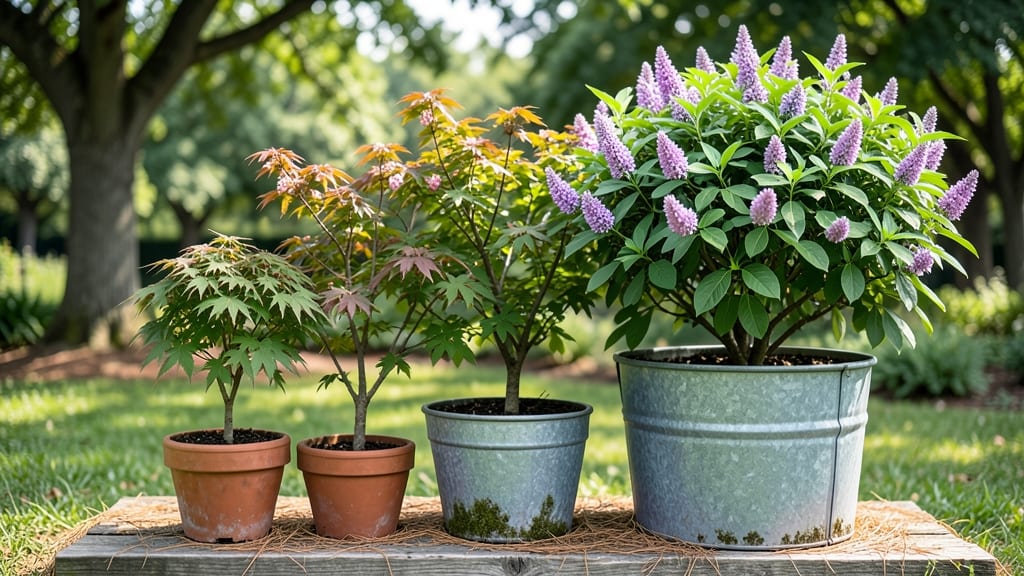
A tree container size chart helps you match pot dimensions to tree species and growth stages, ensuring roots get the 3–5 inches of annual expansion space they need. Small trees (1–3 ft tall) thrive in 5–15 gallon containers, while mature trees demand 30+ gallon pots or ground planting for long-term vitality.
This chart isn't just about pot size—it's about creating the right environment for root systems to grow without crowding. 🌳 Trees with shallow roots (like Japanese maples) need wider containers, while deep-rooted varieties (such as oaks) require deeper pots with proper drainage.
I always recommend checking your tree's specific needs before buying a container, as even a few extra inches can make the difference between healthy growth and stress-related decline.
For container-grown trees, the rule of thumb is to upgrade your pot size by 2–3 inches in diameter every 2–3 years to accommodate root expansion. Fabric grow bags are excellent for drainage but may need more frequent watering, while traditional plastic or ceramic pots retain moisture longer.
The key is balancing these factors with your tree's natural growth rate and species-specific requirements.
💡 In This Article
- How Container Size Affects Tree Root Development and Health
- Choosing the Right Tree Container by Species and Growth Stage
How container size affects tree root development and health
Tree roots need space to breathe—literally. The root-to-pot ratio determines how well oxygen circulates to the roots, which is critical for nutrient absorption and growth. When roots fill a container completely, they start circling the pot in search of nutrients, a condition called root binding.
This restricts water and oxygen flow, causing stress that weakens the tree's immune system and makes it vulnerable to diseases like root rot. For example, a 1-gallon container might suffice for a 6-inch-tall bonsai maple, but the same size would stunt a 2-foot-tall dogwood within months.
Drainage is equally crucial—poor drainage leads to waterlogged soil, cutting off oxygen and suffocating roots. Containers should have drainage holes and a depth at least 20% deeper than the tree's root ball at maturity.
Shallow-rooted species like Japanese maples or dwarf fruit trees need wider, shallower pots (e.g., 12–18 inches in diameter for a 3-foot-tall tree), while deep-rooted varieties like oaks or pine trees require taller containers (e.g., 24+ inches deep for mature specimens).
The soil composition also matters—well-draining mixes with perlite or sand prevent compaction, which further restricts root expansion.
Overcrowding triggers another invisible threat: nutrient depletion. In a small container, roots exhaust the soil's nutrients faster, forcing the tree to compete with itself. This leads to yellowing leaves, stunted growth, and even leaf drop.
For instance, a 5-gallon pot might support a 1-year-old olive tree for a season, but by year two, the tree will outgrow it unless repotted into a 15-gallon container. The solution?
Plan ahead—most trees need a 2–3 inch diameter increase every 2–3 years to keep pace with their root systems.
Material choice plays a hidden role too. Plastic pots retain moisture longer, which can suffocate roots if not monitored, while fabric grow bags allow better airflow but require more frequent watering. Ceramic pots add aesthetic appeal but can crack in freezing temperatures, exposing roots to cold stress.
For tropical trees like citrus or avocado, fabric pots are ideal because they mimic natural soil conditions and prevent root binding. Meanwhile, evergreens like juniper or arborvitae thrive in sturdy plastic or resin containers that protect against winter winds.
Here’s a quick comparison of root systems and container needs:
- Shallow roots (e.g., maples, fruit trees): Prioritize width—aim for 12–24 inches diameter for mature trees, with 8–12 inches depth.
- Deep roots (e.g., oaks, pines): Prioritize depth—containers should be 24+ inches deep, with 12–18 inches diameter.
- Surface roots (e.g., willows, birches): Use wide, shallow trays with 1–2 inches of soil depth to encourage horizontal spread.
The science behind this is simple: roots need room to explore, oxygen to breathe, and nutrients to thrive. Ignore these factors, and even the hardiest tree will struggle—no matter how much sunlight or water you provide. 🌿