
Container Gardens
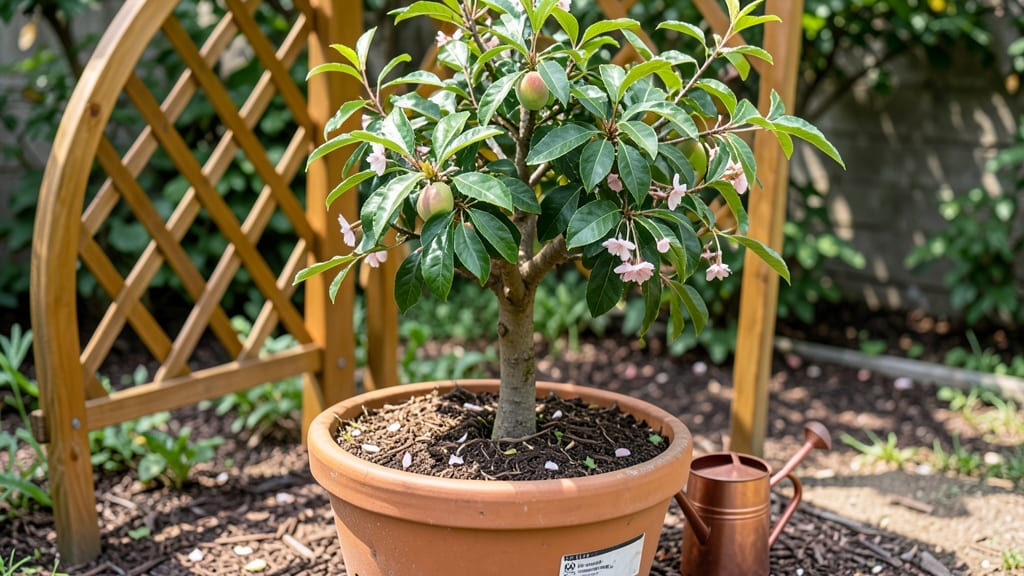
The right container size for a peach tree isn’t just about fitting it in your space—it’s about giving it room to thrive for years. 🌱 I’ve learned the hard way that cramped roots mean stunted growth, even with dwarf varieties.
A 5-gallon minimum for young trees scales up to 15-20 gallons as they mature, but the secret’s in the depth: peach roots need at least 18 inches to stretch out. Most gardeners overlook drainage, but soggy roots are the #1 killer of container peaches.
I use fabric pots with holes drilled in the bottom—no more root rot, and I can monitor moisture easily. The soil mix matters too: 60% well-draining potting mix, 30% compost, and 10% perlite keeps roots happy without compacting.
Repotting every 2-3 years prevents root binding, and I’ve seen trees double in size when given just a little extra space. By summer’s end, you’ll be harvesting sweet, juicy peaches from a tree that fits your patio.
The key is choosing dwarf or semi-dwarf varieties like ‘Bonanza’ or ‘Redhaven’—they stay compact but still produce bushels of fruit. Just watch for leaf curl (it hates wet feet) and prune aggressively in late winter to keep the shape manageable.
This works for balconies, rooftops, or even large pots on a sunny deck. The only real limit is your imagination—and how much you’re willing to feed those hungry roots. Let’s get growing!
📚 In This Guide
- What you need
- Instructions
- Tips and common mistakes
- Wrapping up and next steps
What you need
- ● Container: A minimum 18-gallon (24" diameter) pot or grow bag (bigger is better for dwarf varieties). Ensure it has drainage holes (or drill them yourself!).
- ● Peach Tree: Choose a dwarf or semi-dwarf variety (e.g., ‘Bonanza,’ ‘Redhaven,’ or ‘Contender’). Look for 1-2 year old bare-root or potted trees at a nursery.
- ● High-Quality Potting Mix: A well-draining blend (60% potting soil, 30% perlite/pumice, 10% compost). Avoid garden soil—it compacts and suffocates roots! 🚫
- ● Fertilizer: Slow-release granular fertilizer (10-10-10 or 8-3-9) for planting.
- ● Balanced liquid fertilizer (e.g., fish emulsion or 20-20-20) for ongoing feeding.
- ● Mulch: 2-3 inches of organic mulch (straw, wood chips, or pine bark) to retain moisture and regulate soil temp.
- ● Self-watering system (e.g., drip irrigation or a moisture meter) to keep roots happy without overwatering. 💧
- ● Support stake or trellis (for varieties that grow 6-8 ft tall) to prevent tipping.
- ● Pruning shears for shaping the tree and removing dead branches.
- ● Pollination aid: A small paintbrush or hand pollinator if your container lacks bees.
- ● Container saucer or tray to catch runoff and protect surfaces.
- ● A sunny spot with at least 6-8 hours of direct sunlight daily (peaches are sun-worshippers!).
- ● Access to water (containers dry out faster than in-ground plants!).
- ● Patience! Container peach trees may take 2-3 years to bear fruit but are totally worth it. 🍑
How to select and care for peach trees in containers
Growing peaches in containers isn’t just possible—it’s rewarding with the right variety and care.
🪴 Step 1: Choose the Right Compact Variety and Container
Not all peach trees thrive in containers, but dwarf varieties like 'Bonanza,' 'Bonanza Red,' or 'Bonanza Gold' are bred for small spaces. These stay under 10 feet tall with proper pruning, making them ideal for patios or balconies. Avoid standard varieties—they’ll outgrow containers quickly and become unmanageable.
Your container must be at least 24 inches in diameter and 24 inches deep to accommodate root growth. Larger containers (like 30-inch diameter) give you more stability and reduce the need for frequent repotting. Use a heavy-duty container—peach trees can tip over in wind if not anchored properly. I recommend fabric grow bags or ceramic pots with drainage holes, as they provide better aeration than plastic.
☀️ Step 2: Prepare the Soil and Plant Correctly
Peach trees need well-draining, slightly acidic soil (pH 6.0-6.5). Mix 2 parts high-quality potting soil with 1 part perlite or coarse sand to improve drainage. Avoid garden soil—it compacts in containers and suffocates roots. Add a slow-release fertilizer (like 10-10-10) at planting time to give your tree a nutrient boost.
When planting, dig a hole twice as wide as the root ball but no deeper. Place the tree so the graft union (the bump near the base) sits 1-2 inches above soil level. This prevents rot and ensures the tree grows upright. Backfill with soil, firming it gently around the roots to eliminate air pockets. Water deeply until it drains from the bottom holes.
💧 Step 3: Water and Fertilize for Container Success
Containers dry out faster than in-ground plantings, so check soil moisture daily during hot weather. Stick your finger 2 inches into the soil—if it feels dry, water until it runs out the drainage holes. Overwatering is just as harmful as underwatering, so let the top 1-2 inches dry out between waterings. Mulch the surface with 2-3 inches of straw or wood chips to retain moisture and regulate temperature.
Fertilize every 4-6 weeks during the growing season (spring through summer) with a balanced, water-soluble fertilizer. In fall, switch to a low-nitrogen, high-phosphorus formula (like 5-10-10) to encourage root development. Avoid high-nitrogen fertilizers in late summer—they promote tender new growth that can’t survive winter.
✂️ Step 4: Prune and Protect for Winter Survival
Prune your peach tree annually in late winter or early spring before new growth begins. Remove dead, crossing, or diseased branches first, then thin the canopy to improve airflow. Aim to keep the tree open and airy—this reduces humidity-related diseases. Never prune more than 25% of the tree’s foliage in one season, or you’ll stress it unnecessarily.
Peach trees in containers are more vulnerable to cold damage than in-ground trees. Before the first frost, move the container to a protected location (like against a south-facing wall) or wrap the pot in burlap. In extremely cold climates, mulch the soil surface with 4-6 inches of straw and consider using a tree blanket to shield the trunk and branches. Water sparingly in winter—just enough to keep the soil from drying out completely.
🌱 Step 5: Pollinate and Harvest for Fruit Success
Most peach trees are self-pollinating, but container-grown trees benefit from hand pollination if bees struggle to reach them. On a dry morning, use a soft paintbrush to transfer pollen from one flower to another. Focus on open flowers—they’re more receptive. Thin fruit when they’re the size of a marble, leaving 6-8 inches between each peach to ensure they reach full size without overburdening the tree.
Harvest peaches when they easily detach from the tree with a slight twist. Ripe peaches will have full color (depending on the variety) and a slight give when pressed gently. Store them at room temperature for a few days to ripen fully, then refrigerate. Container-grown peaches are smaller than in-ground fruit, but their concentrated flavor makes up for it—perfect for fresh eating or preserving.
Tips & tricks for perfect peach tree container care
Container growing demands extra attention—here's how to avoid common pitfalls with your compact peach trees.
Variety Selection Wisdom: The 'Bonanza' series (and similar dwarf varieties) are your best bet for containers, but even these need careful monitoring. I've seen 'Bonanza' trees reach 10 feet with aggressive pruning—watch for new shoots beyond that 10-foot mark and trim them immediately to maintain your space constraints. These varieties produce fruit earlier than standard trees, so you'll get rewards sooner, but they're also more sensitive to root restriction.
Container Stability Strategy: Wind is the silent enemy of container-grown peach trees. I learned this the hard way when my first tree tipped over during a summer storm. To prevent this, place your container on a sturdy surface and consider adding weights (like bricks) to the base. For extra security, anchor the pot with stakes or a tree tie system—especially important if you're using lightweight fabric grow bags.
Soil Mix Secrets: That 2:1 ratio of potting soil to perlite/sand is crucial, but don't skimp on quality. I recommend mixing in a handful of worm castings at planting time for extra microbial activity—this helps roots establish faster in the confined space. Also, consider adding a slow-release fertilizer specifically formulated for fruit trees at planting; the 10-10-10 mentioned works, but fruit-specific blends provide better micronutrient balance for your peach tree's needs.
Watering Watchdog: The daily moisture check during hot weather is non-negotiable, but timing matters too. Water in the morning to allow excess moisture to evaporate during the day, preventing fungal issues. I've found that container-grown peach trees actually prefer slightly drier conditions than in-ground trees—let that top 2 inches dry out completely between waterings to encourage deeper root growth into the limited soil volume.
Pro Tips for Peach Tree Container Size
- Container growing demands extra attention—here's how to avoid common pitfalls with your compact peach trees.
- Variety Selection Wisdom: The 'Bonanza' series (and similar dwarf varieties) are your best bet for containers, but even these need careful monitoring.
- Container Stability Strategy: Wind is the silent enemy of container-grown peach trees.
Frequently asked questions
Got questions about growing peach trees in containers? You’re not alone! Here are some of the most common queries—and answers—to help you get started with confidence.
What’s the ideal container size for a peach tree?
A standard dwarf peach tree needs a container at least 18–24 inches in diameter and depth to support its roots and fruit production. Larger containers (30+ gallons) give mature trees more stability and water retention. Pro tip: Wider is better than deeper for dwarf varieties!
How long does it take for a peach tree to bear fruit in a container?
Dwarf peach trees typically bear fruit within 2–3 years of planting, while standard varieties may take 4–5 years. Container-grown trees often fruit sooner due to controlled conditions. Patience pays off—just ensure proper pruning and care!
Can I grow a peach tree in a container year-round?
Peach trees thrive outdoors in USDA Zones 5–9 but need winter protection in colder climates. Move containers to a sheltered spot (like a garage or against a wall) or use insulating wraps to shield roots from freezing. Bonus: Mulch helps retain warmth!
What if my peach tree outgrows its container?
If roots circle the pot or the tree becomes top-heavy, it’s time to upgrade to a larger container (2–4 inches wider) or transplant to the ground. Prune roots gently during repotting to encourage outward growth. Warning: Avoid disturbing roots too often—peach trees hate stress!
Are there any peach tree varieties that do well in small containers?
Yes! Look for dwarf or semi-dwarf varieties like ‘Bonanza,’ ‘Contender,’ or ‘Redhaven.’ These are bred for compact growth and still produce sweet, juicy fruit. Quick tip: Check labels for “self-pollinating” if you want one tree to do the job!
Wrapping up and next steps
Choosing the right peach tree container size can turn even the tiniest balcony or patio into a fruitful oasis! 🌱 Compact varieties like Bonanza or Redhaven prove that big harvests don’t need big spaces—just the right care and a well-sized pot.
With proper pruning, drainage, and sunlight, your peach tree will reward you with juicy fruit year after year.
Ready to get growing? Start by selecting your dwarf variety and a container that fits your space—then grab your gardening gloves and dig in! 🌟 Your future peach pie awaits.