
Container Gardens
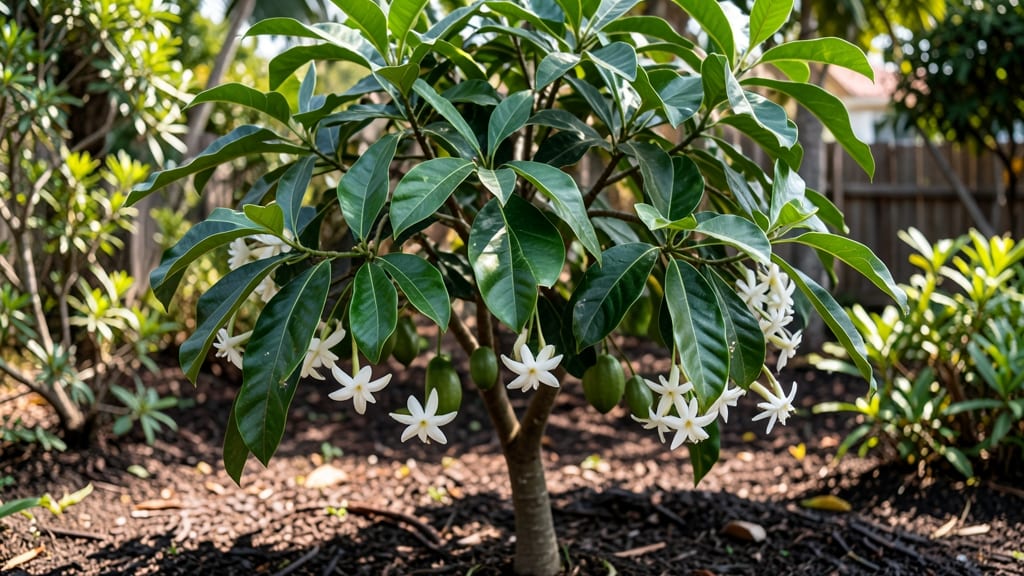
Star fruit trees grow best in USDA growing zones 10 through 12, where frost-free winters keep temperatures consistently above 32°F. Outside these zones, their delicate tropical structure makes them vulnerable to cold damage, requiring specialized care or container growing.
These tropical trees originated in Southeast Asia and simply can't tolerate freezing temperatures—even brief exposure below 32°F can cause irreversible damage to their leaves, branches, and fruit production. 🌿 In colder regions, gardeners often move potted star fruit trees indoors during winter months, placing them near bright windows or under grow lights to maintain their health.
The key is replicating their native climate conditions year-round, whether through containers or indoor cultivation.
For those in marginal zones (like 9b), a combination of heavy mulching, frost blankets, and even temporary heated enclosures can extend the growing season. I've seen success with insulated grow tents during sudden cold snaps, though they require careful monitoring to prevent overheating.
The goal is always to protect the tree's root system—the most critical part—while maintaining consistent warmth.
💡 In This Article
- USDA Hardiness Zones for Star Fruit Trees: Exact Climate Requirements
- Protecting Star Fruit Trees in Cold Climates: Step-by-Step Winter Care
USDA hardiness zones for star fruit trees: exact climate requirements
The star fruit tree (Averrhoa carambola) evolved in the tropical climates of Southeast Asia, where temperatures rarely dip below 60°F year-round. This tropical heritage explains why they're classified as USDA hardiness zones 10-12—zones where winter lows stay above 32°F consistently.
The critical threshold is actually 28°F, where cell damage begins in the tree's delicate leaves and stems, but 32°F marks the point where fruit production halts permanently.
In zone 10, winter lows typically range from 30-40°F, pushing star fruit trees to their limit. Gardeners here often report 50-70% fruit yield reduction during colder winters, while zones 11-12 (with winter lows above 40°F) maintain full productivity.
The tree's native range in Malaysia and Indonesia receives 120-150 inches of rainfall annually with 75-85% humidity, creating a microclimate that's impossible to replicate in drier or colder regions without intervention.
What makes these trees particularly vulnerable is their thin, waxy leaf structure that can't withstand frost formation. When temperatures drop below 32°F, ice crystals form in the leaf cells, rupturing their membranes—a process called freeze dehydration.
This is why even brief cold snaps can cause leaf scorch and branch dieback, symptoms that appear as brown, crispy edges on foliage within 24-48 hours. The tree's root system, while slightly more resilient, still suffers when soil temperatures fall below 55°F for extended periods.
For comparison, citrus trees (also tropical) survive in zone 9b because they can tolerate brief dips to 25°F with proper care. Star fruit trees lack this resilience—even a 2°F drop below 32°F can trigger irreversible damage.
This explains why container growing becomes essential outside zone 10: portable pots allow you to move the tree indoors when forecasts predict 30°F nights, maintaining the 65-80°F range these trees require for optimal growth.
Here's what the zone breakdown means for your growing strategy:
- Zones 10-12: Plant directly in ground with 6-8 hours of sunlight daily
- Zones 9a-9b: Use 18-inch pots with winter indoor relocation
- Zones 8 and below: Container growing with grow lights required
What most gardeners don't realize is that star fruit trees also struggle with temperature fluctuations. While they thrive in 75-90°F days, sudden drops to 50°F at night can shock the system, reducing flowering by 30-40%.
This explains why coastal areas in zone 10 (like Miami) often outperform inland locations with similar zone ratings but more extreme temperature swings.