
How To
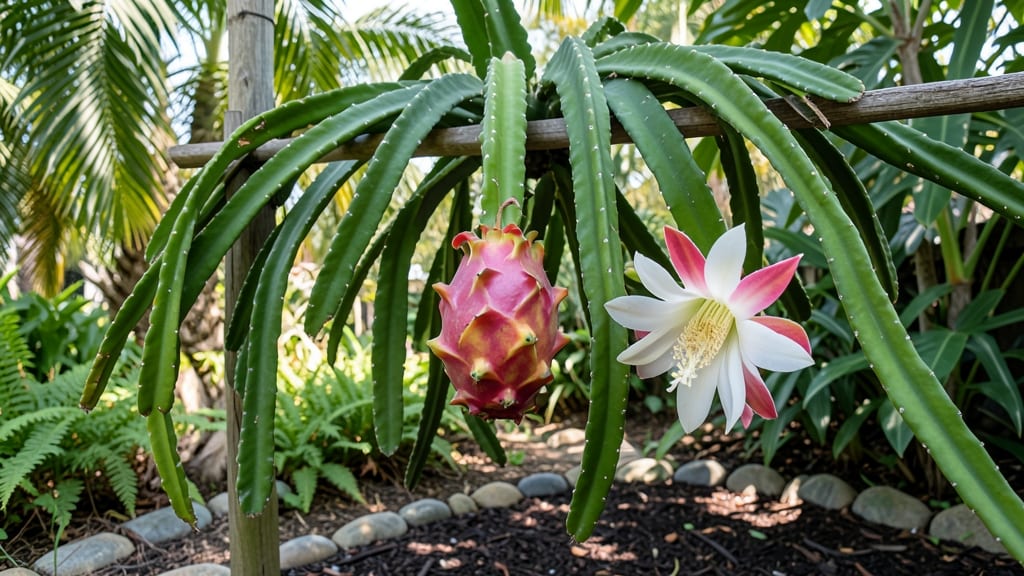
Dragon fruit tree height by variety: from dwarf to vining giants
If you’re planning to grow dragon fruit (Hylocereus spp.), one of your first questions is likely: how tall does a dragon fruit tree grow? The answer varies dramatically by variety, with some reaching 20 feet tall while others stay more compact.
Understanding these differences helps you choose the right type for your space—whether that’s a backyard trellis or a container on your patio.
The height of a dragon fruit tree depends on two key factors: its genetic variety and whether it’s a climbing or non-climbing type. Climbing varieties, like the popular Hylocereus undatus, will naturally grow taller when given support, while some dwarf or bushier types may stay shorter.
Let’s break down the most common varieties and their mature heights to help you plan your garden.
| Variety | Mature Height | Spread | Growth Habit | Ideal Spacing |
|---|---|---|---|---|
| Hylocereus undatus (Pink Pitaya) | 15–20 ft | 10–15 ft | Climbing vine | 10 ft from structures |
| Hylocereus costaricensis (Red Pitaya) | 10–15 ft | 8–12 ft | Climbing vine | 8 ft from support |
| Hylocereus megalanthus (White Pitaya) | 12–18 ft | 10–14 ft | Climbing vine | 10 ft from trellis |
| Selenicereus cityanus (Yellow Pitaya) | 8–12 ft | 6–10 ft | Semi-climbing | 6 ft from support |
| Hylocereus polyrhizus (Queen of the Night) | 6–10 ft | 5–8 ft | Bushy, non-climbing | 5 ft apart in ground |
The Hylocereus undatus, also called pink pitaya, is the most common variety and can grow up to 20 feet tall when given a sturdy trellis or fence to climb.
Without support, it may sprawl but rarely exceeds 10 feet in height. This variety thrives in warm climates and produces vibrant pink fruit with sweet, seedless flesh.
On the shorter end, Hylocereus polyrhizus, or the "Queen of the Night," typically stays between 6–10 feet tall and has a bushier, non-climbing growth habit. This makes it a better fit for smaller gardens or containers, though it still benefits from pruning to control its spread.
Its white flowers bloom at night, adding a dramatic touch to your garden.
If you’re growing dragon fruit in containers, opt for dwarf varieties or prune climbing types aggressively. Most container-grown dragon fruit trees max out at 6–8 feet tall, but they’ll need a large pot (20+ gallons) and regular pruning to prevent overgrowth.
Choose a pot with drainage holes and use a lightweight, well-draining mix to avoid root rot.
For backyard gardens, plan for at least 10 feet of vertical space if you’re growing climbing varieties like Hylocereus undatus. Install a trellis or pergola near a south-facing wall to maximize sunlight exposure.
Space multiple plants 8–10 feet apart to allow airflow and prevent disease, especially in humid climates.
Climbing varieties like Hylocereus costaricensis (red pitaya) can reach 15 feet tall but stay more compact in width compared to their height. These vines produce red-skinned fruit and are slightly more cold-tolerant than other varieties, making them a great choice for USDA Zone 9b with winter protection.
One common misconception is that all dragon fruit trees grow into giant vines. In reality, their height is highly manageable with proper pruning and support. If left unchecked, even dwarf varieties can become leggy, so regular tip pruning encourages bushier growth and more fruit production.
Always prune in late winter or early spring before new growth begins.
For urban gardeners with limited space, consider growing dragon fruit on a vertical trellis or wall-mounted planter. With the right support, even climbing varieties can be trained to grow horizontally along a fence or wall, saving ground space while still reaching their full height potential.
Just ensure the structure is sturdy and weather-resistant to support the weight of mature vines.
🌱 Whether you’re dreaming of a towering vineyard or a compact container garden, choosing the right dragon fruit variety—and providing the right support—will determine how tall your tree grows.
Start with a dwarf or semi-dwarf type if space is limited, or embrace the challenge of training a climbing variety for a stunning vertical display.
How to control dragon fruit tree height: pruning, support, and container gardening tips
Dragon fruit trees (Hylocereus spp.) are vigorous climbers that can reach heights of 10-20 feet if left unchecked. While their tropical allure is undeniable, their rapid growth can overwhelm small gardens or balconies.
The good news? With the right techniques, you can train your dragon fruit tree to stay compact, productive, and perfectly sized for your space—whether that’s a 5-gallon container or a backyard corner.
One of the most effective ways to manage height is by providing a trellis or sturdy support system. These plants are epiphytes by nature, meaning they naturally cling to trees or structures in the wild.
In your garden, a 6-foot wooden trellis or a metal cage can guide their growth upward while keeping them contained. For container gardening, choose a pot with deep drainage holes and a diameter of at least 12 inches to accommodate their sprawling roots.
⚠️ callout-warning ⚠️
Without control, these vines can shoot up 3-5 feet per year. In 3 years, an unpruned tree may reach 10+ feet—taller than most garage doors! Prune early to avoid structural damage or overcrowding. Use sharp, sterilized shears and cut just above a leaf node to encourage bushier growth.
Pruning is your secret weapon for height control. Start by removing overly long vines in early spring to redirect energy into fruit production. Focus on cutting back 1/3 of the longest stems to maintain a balanced shape.
For container-grown plants, prune aggressively in late winter to reset growth for the season. Always prune just above a leaf node—this is where new shoots will emerge, creating a fuller, more manageable plant.
Another common mistake is underestimating the spread of dragon fruit trees. While height gets most of the attention, their horizontal growth can sprawl 6-10 feet wide if not managed. To contain them, use a horizontal trellis or train vines along a fence with zip ties.
For container plants, choose a pot with a wide base (like a whiskey barrel planter) to stabilize the plant and prevent tipping as it grows.
If you’re growing dragon fruit in a container, size matters. A 15-gallon pot is ideal for dwarf varieties, while standard types need 20+ gallons to thrive long-term. Use a lightweight potting mix with perlite or coconut coir to improve drainage.
Remember, root-bound plants grow slower but may produce fewer fruits. Repot every 2-3 years to refresh the soil and encourage healthy growth.
For those in USDA zones 9b-11, winter care is key to controlling height. Reduce watering in cool months and move containers to a sheltered spot if temperatures drop below 50°F.
A light mulch layer around the base helps insulate roots, preventing stress that can lead to erratic growth spurts. With these strategies, your dragon fruit tree will stay manageable, productive, and perfectly sized for your garden—no matter how small your space! 🌱