
Pruning
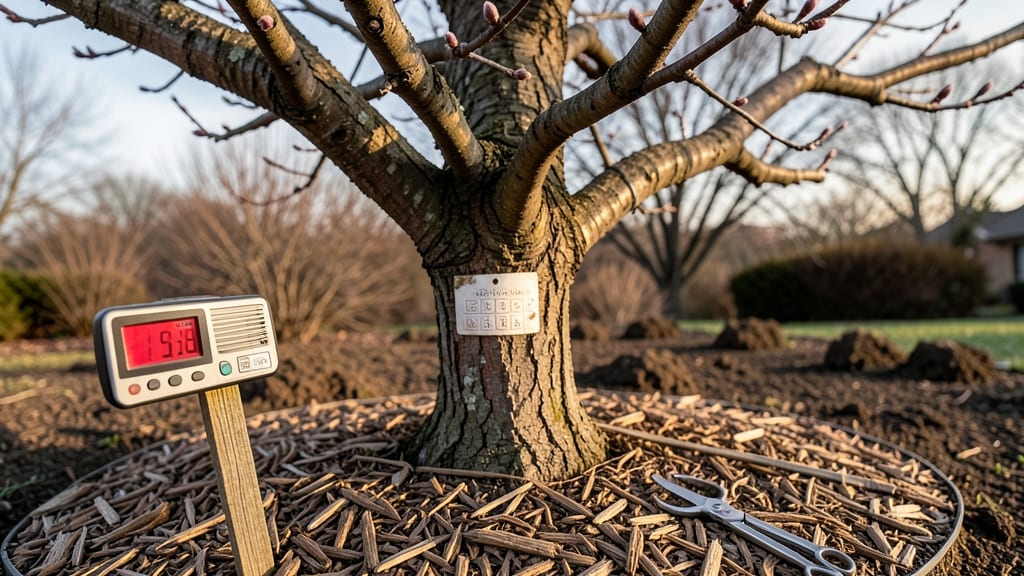
Understanding peach tree cold tolerance reveals they thrive in USDA Hardiness Zones 5-8, enduring temperatures as low as 10-25°F (-12 to -4°C). Young trees and late-season blossoms are particularly sensitive, while mature specimens benefit from winter care like mulching and windbreaks to boost their resilience.
Peach trees' cold tolerance varies significantly based on their maturity and variety. 🌱 For example, Elberta peaches handle colder snaps better than Reliance varieties, which are more suited to milder winters.
The key isn't just the lowest temperature but also how many chilling hours (below 45°F) the tree receives—typically 400-1,000 hours—to trigger proper dormancy. Young trees, especially those under 3 years old, need extra protection since their root systems are still developing.
Late spring frosts can also devastate fruit buds, making winter care a year-round consideration.
To prepare your peach tree for winter, focus on three critical steps: mulching the base with 4-6 inches of organic matter, wrapping the trunk with burlap or tree guard to prevent sunscald, and pruning dead or weak branches before the first frost. 🌡️ If you're in Zone 4 or colder, consider planting cold-hardy varieties like Montgomery or Redhaven, which have proven more resilient in harsh climates.
Even in ideal zones, a sudden freeze can cause damage, so keeping an eye on weather forecasts and having a plan for emergency irrigation (to prevent root heaving) is wise.
💡 In This Article
- Peach Tree Cold Hardiness by Variety and Age
- Winterizing Peach Trees for Extreme Cold
Peach tree cold hardiness by variety and age
Peach trees exhibit dramatic cold tolerance variations based on genetics and development stage. For instance, the Elberta variety, a classic freestone peach, typically handles 15-20°F (-9 to -6°C) without significant damage, while Reliance peaches—bred for milder climates—struggle below 10°F (-12°C).
The difference lies in their cellular structure: cold-hardy varieties produce more protective proteins that stabilize cell membranes during freeze-thaw cycles, similar to how some winter wheat varieties survive sub-zero temperatures through antifreeze proteins.
Age plays a critical role in survival rates. Young trees (1-3 years old) have shallow root systems that freeze more easily, making them vulnerable to root heaving—when ice expansion pushes roots out of the soil.
Mature trees (>strong>5 years) develop deeper roots and thicker bark, allowing them to withstand 5-10°F colder temperatures. The bark of older trees also contains more suberin, a waxy compound that reduces water loss and insulation loss during winter.
Chilling hours—accumulated temperatures between 32-45°F (0-7°C)—are equally crucial. Most peach varieties require 400-1,000 chilling hours annually to break dormancy. In Zone 6, this typically occurs naturally, but in Zone 7-8, insufficient chilling can lead to poor fruit set.
Late spring frosts (28-32°F/-2 to 0°C) after buds swell are particularly devastating, as they kill blossoms before fruit develops—this is why growers in marginal zones use frost cloths or overhead sprinklers to create insulating ice layers.
Consider these key variety comparisons for cold climates:
- Montgomery: Tolerates 0°F (-18°C) but needs 800+ chilling hours—ideal for Zone 5
- Redhaven: Handles 10°F (-12°C) with 500-700 chilling hours—best for Zone 6-7
- Sanguinelle: Thrives in Zone 7-8 with 300-500 chilling hours, struggling below 15°F (-9°C)
The science behind these differences lies in gene expression. Cold-hardy varieties activate CBF (C-repeat binding factor) genes during winter, which boost production of protective sugars and antioxidants. Without these adaptations, cell damage from ice crystal formation becomes irreversible. 🌡️
For gardeners in transition zones (like Zone 6b), selecting varieties with intermediate chilling requirements (e.g., Contender) can mean the difference between a failed harvest and a bountiful one. The key is matching both minimum temperature tolerance and chilling hour needs to your local climate data.