
Trees
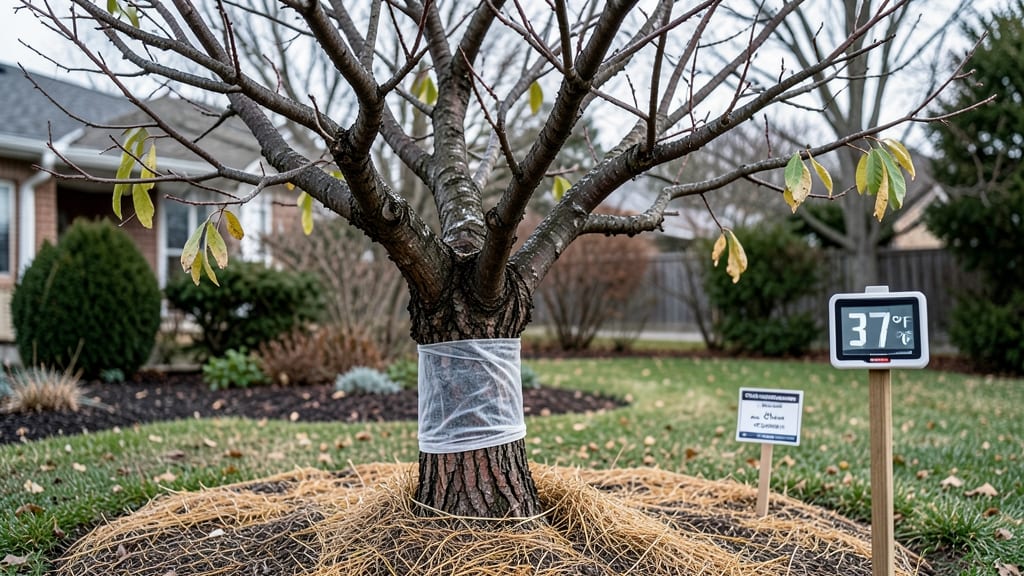
Mango trees can't survive winter in areas colder than USDA Zone 10 without protection, as frost destroys leaves, blossoms, and fruit development. Young trees face the highest risk and need extra care like mulching or indoor sheltering to endure freezing temperatures.
Mango trees thrive in warm climates where temperatures rarely drop below 32°F, making them highly sensitive to frost. 🌱 The most critical damage occurs when flowers and young fruit form—even a light freeze can kill blossoms before they develop into fruit.
I've seen mature trees recover from brief cold snaps, but repeated exposure below 28°F will kill the tree entirely. The key is understanding your local climate zone and preparing accordingly—whether through soil insulation or temporary indoor relocation.
For example, in Zone 9 (where winters dip to 20-25°F), I've successfully overwintered potted mango trees in unheated garages with grow lights, while gardeners in Zone 8 often use thick mulch layers combined with frost blankets.
The goal is to maintain root temperatures above 40°F—this small difference can mean the difference between survival and loss.
💡 In This Article
- Mango Tree Cold-Hardiness Zones Explained
- Winter Protection Techniques for Mango Trees
Mango tree cold-hardiness zones explained
The USDA Plant Hardiness Zone Map divides North America into 13 zones based on average annual minimum temperatures. Mango trees, native to tropical regions, thrive in Zones 10-11, where winters rarely drop below 32°F.
Below Zone 10, the risk increases dramatically—even a single night at 28°F can cause irreversible damage to leaves, flowers, and developing fruit. The critical threshold is 32°F, where ice crystals form in plant cells, rupturing them and causing cell death.
Young mango trees are particularly vulnerable because their root systems are shallow and less developed. A mature tree with a 10-year+ established root system might survive brief dips to 28°F if protected, but young trees (under 3 years) often succumb to frost within hours.
The bark of young trees is thinner and less insulated, making them more susceptible to cold damage. For example, in Zone 9 (where winter lows reach 20-25°F), I've observed that trees under 5 feet tall require more aggressive protection than taller specimens.
The growth stage matters too. Mango trees flower in late winter or early spring, and these blossoms are extremely frost-sensitive. A single freeze can destroy 90% of flowers, leading to poor fruit set. Even if the tree survives, the lack of fruit weakens it for the following season.
The fruit itself is also at risk—young mangoes can split or turn black when exposed to freezing temperatures, while mature fruit may drop prematurely. This is why gardeners in Zone 8 often prune back flowering branches before winter to reduce frost damage.
There's a common misconception that mango trees can tolerate brief cold snaps if they're "hardened off." While some tropical plants can adapt to slightly cooler conditions, mango trees don't have this ability.
Their metabolic processes shut down at temperatures below 50°F, and any exposure to frost triggers irreversible cellular damage. The only way to mitigate this is through artificial protection, as the tree itself cannot physiologically prepare for cold weather like temperate species can.
To visualize the risk, consider this comparison: A citrus tree in Zone 9 might survive winters with temperatures down to 20°F if properly protected, while a mango tree in the same zone will likely suffer severe damage unless moved indoors.
The difference lies in their evolutionary origins—citrus trees have adapted to Mediterranean climates with mild winters, whereas mango trees evolved in equatorial regions where frost is nonexistent. 🌡️
Understanding your specific zone is the first step. For instance, Zone 10a (where winters average 30-35°F) is the northernmost limit for outdoor mango cultivation without protection, while Zone 11 (above 40°F) offers the best conditions for year-round growth.
If you're in Zone 9 or colder, your focus should shift to creating a microclimate that mimics these ideal conditions during winter.