
Pruning
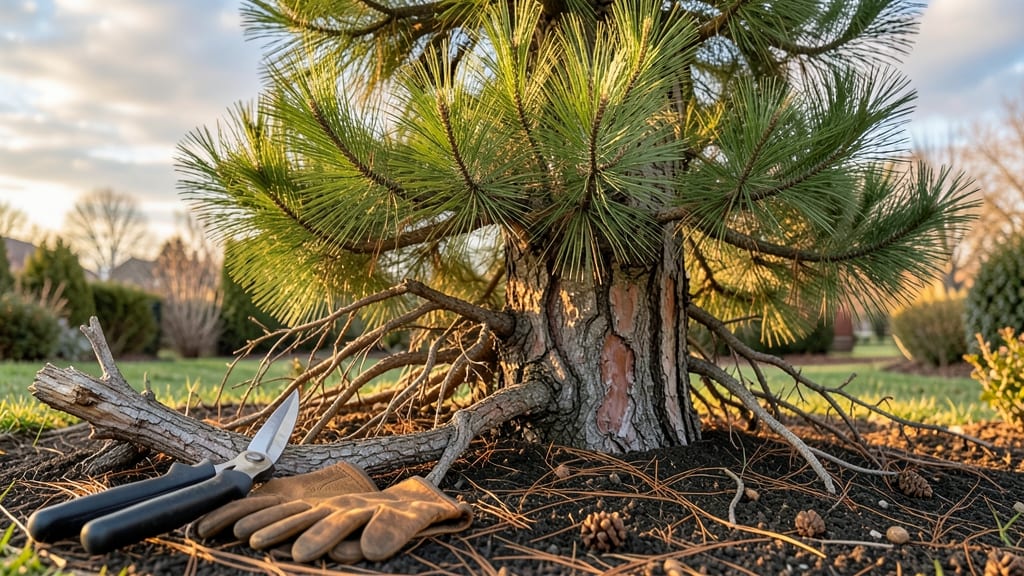
Your pine tree’s bare lower branches aren’t just unsightly—they’re a cry for help. 🌲 Whether it’s aging, disease, pests, or stress, dead branches mean your tree’s health is at risk, and pruning isn’t just about looks.
The right cuts can revive growth, but the wrong ones will weaken your tree further.
Most homeowners assume dead branches are just part of a pine’s natural cycle, but fungal infections like Fusarium or bark beetles often lurk behind the damage. I’ve seen trees with dead lower branches for years—until we pruned the right way and saw fresh green needles within months.
The key is identifying the cause first.
Start by inspecting the branches: if they’re brittle, brown, and crumble easily, they’re dead. Use clean, sharp pruners to remove them at the branch collar, never leaving stubs.
For severe cases, a professional arborist can assess if the tree’s core is still healthy—sometimes, it’s time to say goodbye to save the rest.
Prevention is easier than repair: water deeply during droughts, mulch properly, and avoid over-fertilizing. A healthy pine sheds naturally as it grows taller, but sudden dieback? That’s your tree asking for help. Let’s get those branches pruned—and your tree thriving—before winter sets in.
Underlying Causes Of Branch Dieback
Understanding why your pine tree’s lower branches are dying is the first step toward restoring its health. Pines are resilient, but specific stressors can trigger browning, thinning, or death in their lower limbs.
Below, we break down the most common culprits—each with actionable insights to help you diagnose the issue accurately.
---
Pines thrive in well-draining soil and moderate climates, but extreme conditions can push them past their limits. Heat stress and drought force trees to prioritize survival by shutting down water flow to non-essential branches—often the lower ones. Here’s how it happens:
- Water Deficit: Pines rely on deep root systems to access moisture. When soil dries out (especially in sandy or rocky terrain), roots struggle to supply water to the canopy.
The tree responds by abscising (dropping) lower branches first, conserving resources for the upper crown where sunlight is abundant. - Sun Scorch: In hot, dry climates, direct afternoon sun can burn needles on exposed branches.
Lower limbs may die back because they’re often shaded by the upper canopy, making them more susceptible to sudden heat spikes when the tree is stressed. - Winter Desiccation: Cold winds and frozen soil can dry out branches, particularly in evergreen pines that retain needles year-round.
Without protective snow cover, lower limbs lose moisture and turn brown.
💡 Pro Tip: Check soil moisture 3–4 inches deep—if it’s bone-dry, your pine is likely underwatered. Mulch heavily (3–4 inches of organic mulch) and water deeply once a week during droughts to encourage deeper root growth.
---
Pines hate waterlogged or compacted soil, which suffocates roots and blocks oxygen. When roots can’t function properly, the tree’s lower branches—farther from the main water supply—suffer first.
- Root Asphyxiation: Clay-heavy or poorly draining soil traps water, leading to anaerobic conditions (lack of oxygen). Roots rot, and the tree can’t transport nutrients or water efficiently.
Lower branches, reliant on weaker lateral roots, die back as the tree allocates energy upward. - Nutrient Deficiencies: Pines prefer acidic, well-aerated soil with ample nitrogen, phosphorus, and micronutrients like magnesium and manganese.
Deficiencies (especially iron or zinc) cause chlorosis (yellowing) and necrosis (browning) in older needles, which often appear first on lower branches. - Soil pH Imbalance: If your soil is too alkaline (pH > 7), essential nutrients like iron become locked away.
Pines struggle to absorb them, leading to branch dieback from the bottom up.
📊 Actionable Fix: Test your soil’s pH and nutrient levels (kits are affordable and available at garden centers). If compacted, aerate with a garden fork or top-dress with pine-specific fertilizer (high in nitrogen and micronutrients). For waterlogged areas, consider raising beds or installing French drains.
---
Fungi thrive in damp, stagnant conditions and can infect pine roots or needles, cutting off the tree’s lifeline. Lower branches are often the first to show symptoms because they’re closest to infected soil or splash zones.
- Armillaria Root Rot ("Shoestring Root Rot"): - Cause: The honey mushroom (Armillaria spp.) infects roots, creating white, shoestring-like fungal strands that strangle the tree. - Symptoms: Lower branches die back suddenly, accompanied by conks (mushroom-like growths) at the base.
The tree may also exhibit resin bleeds as it tries to fight the infection. - Spread: Thrives in wounded trees, mulch volcanoes, or overwatered soil.
- Diplodia Tip Blight: - Cause: The fungus Sphaeropsis sapinea attacks needle tips, especially in young pines or stressed trees. - Symptoms: Needles on lower branches turn purple-brown, then blacken and die.
Infected needles may ooze resin. - Conditions: Worsens in wet, humid summers or after drought stress weakens the tree.
✨ Prevention & Treatment: - Remove infected branches 6–12 inches below the dieback (sterilize pruners with 70% isopropyl alcohol). - Improve drainage by amending soil with compost or sand. - Apply fungicidal sprays (copper-based or propiconazole) in early spring if blight is suspected. - Avoid wounding the trunk—fungi like Armillaria enter through cuts or bark damage.
---
Insects can drain sap, lay eggs in needles, or bore into bark, starving lower branches of vital resources. Pines are especially vulnerable to:
- White Pine Weevil: - Damage: Adults lay eggs in candle-like shoots (new growth) or lower branches. Larvae burrow into the terminal leader, causing it to wilt and die.
Lower branches may follow as the tree diverts energy to survive. - Signs: Sawdust-like frass at branch tips, resin pockets, and brown, curled needles.
- Pine Bark Beetles: - Damage: These beetles bore into the phloem, disrupting nutrient transport. Lower branches may die back as the tree’s vascular system is compromised. - Signs: Pitch tubes (resin excretions), boring dust at the base, and reddish sawdust near the bark.
- Spider Mites & Aphids: - Damage: These sap-sucking pests weaken branches by removing chlorophyll. Lower limbs, often shaded and dusty, are prime targets. - Signs: Yellow stippling on needles, webbing (mites), or sticky honeydew (aphids).
🔥 Treatment Plan: - Prune and destroy heavily infested branches (do not compost them). - Apply horticultural oil or insecticidal soap in early spring (before pests emerge). - Invite predators: Ladybugs, lacewings, and birds help control mites and aphids. - For beetles: Use fast-acting systemic insecticides (like imidacloprid) if the tree is severely stressed.
--- Mechanical stress can sever vascular tissues or break branches, leading to dieback. Lower limbs are often older and more brittle, making them prime candidates for damage.
- Wind Throw or Breakage: - Cause: Strong winds snap branches or uproot shallow roots, severing the tree’s connection to nutrients. - Symptoms: Sudden dieback in one-sided lower branches, exposed root plates, or leaning trunks.
- Hail or Ice Damage: - Cause: Heavy hail or ice can crush needles and bark, creating entry points for disease. - Symptoms: Bruised, blackened needles, split bark, and resin bleeding.
- Poor Pruning Practices: - Cause: Cutting too close to the trunk (within 6–12 inches) or removing large branches improperly can seal over wounds and strangle the tree. - Symptoms: Dieback above pruning cuts, resin pockets, or sunburned bark where branches were removed.
👨🍳 Fix It Now: - Support weak branches with tree straps or cables if wind damage is a risk. - Prune correctly: Use the 3-cut method, leaving branch collars intact, and sterilize tools to prevent disease spread. - Protect young pines with burlap wraps during hail season.
Reviving Your Pine Tree: Step-by-Step Fixes
Now that you understand why your pine tree’s lower branches are dying, it’s time to take action! The good news? Most issues can be resolved with targeted care, proper pruning, and a little preventive maintenance.
Below, we’ve mapped out practical solutions based on the most common causes, along with tips to keep your tree thriving long-term.
---
When lower branches are shaded out by dense foliage, they struggle to photosynthesize and eventually die. Here’s how to fix it:
#### 🍳 Step 1: Assess the Tree’s Structure Before cutting, examine your pine tree to identify: - Dead branches (brown, brittle, or crunchy when touched). - Healthy but shaded branches (green but weak, with sparse needles). - Structural branches (thick, sturdy limbs supporting the tree’s shape).
Pro Tip: 💡 Use a pruning saw for thick branches (over ½ inch) and hand pruners for smaller ones. Always cut just outside the branch collar (the swollen area where the branch meets the trunk) to prevent damage.
#### 👨🍳 Step 2: Thin Out the Canopy Pine trees benefit from selective thinning to improve airflow and sunlight penetration: 1. Remove dead branches first—cut them at the base to prevent disease spread. 2. Prune upward-facing branches (those growing toward the sky) to open the canopy.
3. Avoid "lion’s tailing" (cutting all branches at once)—this can shock the tree. Instead, remove no more than 25% of the foliage in one session.
#### ⏰ Step 3: Schedule Pruning for Optimal Healing - Best time to prune pines: Late winter to early spring (just before new growth starts). - Avoid pruning in fall—this can stress the tree before winter dormancy. - Water deeply after pruning to help the tree recover.
---
If dead branches are due to disease (like needle blight) or pests (like bark beetles), act fast with these steps:
#### 🔪 Step 1: Remove Infested or Diseased Branches - Cut back at least 6–12 inches beyond the visible damage to ensure the pathogen or pests are fully removed. - Dispose of infected branches by burning (if legal) or sealing them in a trash bag for pickup—do not compost.
#### 🛡️ Step 2: Apply Fungicides or Insecticides (If Needed) - For fungal issues (e.g., brown spot needle blight), use a copper-based fungicide (like copper sulfate) and apply it every 2–4 weeks during wet seasons. - For bark beetles, consider insecticidal sprays (like permethrin) or beneficial nematodes (for soil-dwelling pests). - Pro Tip: 🎯 Prevent future outbreaks by keeping the area under the tree clean and mulched (but not piled against the trunk).
#### 🌿 Step 3: Boost Tree Health Naturally - Fertilize lightly with a slow-release, pine-specific fertilizer (high in nitrogen but low in phosphorus). - Improve soil drainage—pines hate "wet feet."
Amend heavy clay soil with sand or compost to prevent root rot. - Water deeply but infrequently—pines prefer dry soil between waterings (overwatering is a common killer!).
---
If your tree is struggling due to poor soil, drought, or urban pollution, these fixes will help:
#### 💧 Step 1: Test and Improve Soil Conditions Pine trees thrive in acidic, well-draining soil (pH 4.5–6.0).
If your soil is alkaline or compacted: - Test your soil with a home pH kit or send a sample to a local extension office. - Add sulfur to lower pH if needed (follow package instructions). - Aerate compacted soil with a garden fork or soil loosener in early spring.
#### 🌞 Step 2: Provide the Right Light & Airflow - Move young pines to a sunnier spot if they’re in deep shade (e.g., under large trees or buildings). - Space trees properly—pines need at least 10–15 feet between them to avoid competition. - Avoid planting near sidewalks or driveways—root damage from construction can stress the tree.
#### 🚫 Prevention Tips for Long-Term Health - Mulch correctly: Use 3–4 inches of pine straw or bark mulch, keeping it 6 inches away from the trunk. - Water deeply in droughts: If rainfall is scarce, water once a week (deep soak, not light sprinkles). - Monitor for stress signs: Yellowing needles, excessive sap, or wilting can signal root damage or dehydration.
---
While many pine tree issues are DIY-friendly, seek an arborist if: - The tree is over 30 feet tall (safety risk for pruning). - You suspect severe pest infestation (like bark beetles in mature trees). - The tree is leaning dangerously or has large dead sections (risk of limb failure).
--- Final Thought: 🌲 With the right care, your pine tree can bounce back—dead lower branches don’t mean the whole tree is doomed! Start with pruning, address the root cause, and give your tree time to recover. Soon, you’ll see new growth and a healthier, fuller canopy. 🌿✨
Frequently asked questions
Why do pine trees naturally lose lower branches as they age?
Pines often shed lower branches through a process called self-pruning. As the tree grows taller, the upper canopy gets more sunlight, while lower branches become shaded and less efficient at photosynthesis. The tree naturally allocates resources upward, causing older lower branches to die back. This is normal—especially in mature pines—but sudden dieback may signal stress or disease.
How can I tell if dead branches are from disease vs. natural aging?
Check for these clues: Disease often shows resin leaks, mushroom-like growths at the base, or purple-brown needles (signs of fungal infections like Diplodia). Natural aging usually means brittle, dry branches with no other symptoms. If you see sawdust-like frass or boring holes, pests like bark beetles are likely the culprit.
Can I prune dead branches anytime, or does timing matter?
Prune dead branches anytime—they’re not alive to stress the tree. However, for healthy branches, wait until late winter to early spring (just before new growth starts). Avoid pruning in fall, as it can leave wounds vulnerable to disease before winter dormancy. Always use sterilized tools to prevent spreading pathogens.
What’s the best way to dispose of pruned pine branches?
Never compost branches with fungal infections or pests—burn them (if legal) or bag them for trash pickup. Healthy branches can be mulched away from the tree to prevent disease spread. For infested wood, soak in a 10% bleach solution for 30 minutes before disposal to kill pathogens.
Will fertilizing help revive my pine tree’s dead branches?
Fertilizer alone won’t bring dead branches back, but it can prevent further decline if the tree is nutrient-deficient. Use a slow-release, pine-specific fertilizer (high in nitrogen) in early spring. Focus on improving soil drainage and watering deeply—over-fertilizing can actually stress the tree. Test soil pH first (pines prefer acidic, 4.5–6.0).