
Propagation
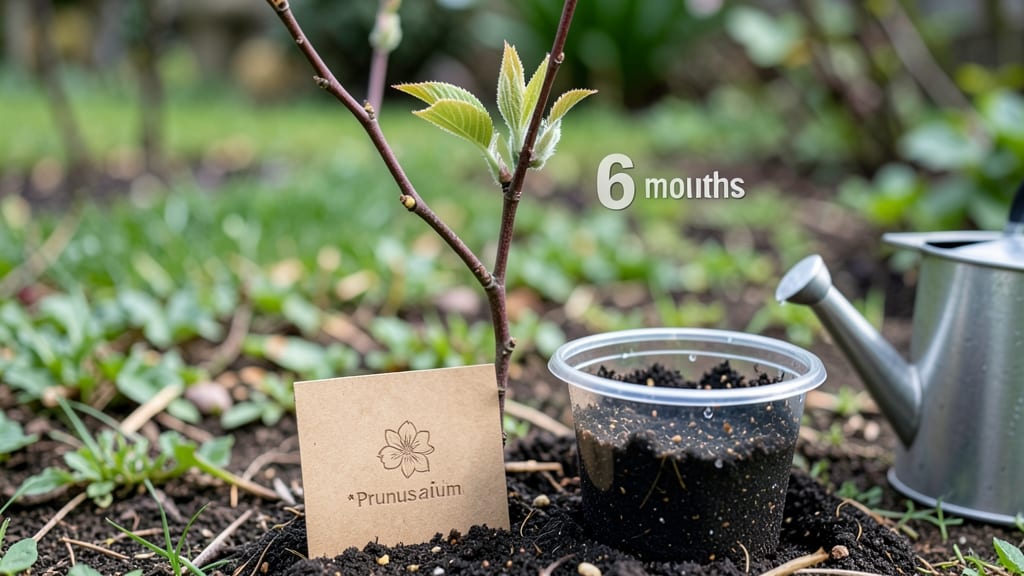
Growing a cherry tree 🍒 from seed takes 5 to 10 years to bear fruit—or never, if you’re unlucky with the variety.
Picture this: you plant a seed in spring, watch it sprout in weeks, and cheer as it grows into a sturdy sapling by year three. But then the waiting begins.
Some gardeners stare at their 10-foot trees for years before a single blossom appears, while others give up entirely when the fruit never comes.
The good news? With the right germination tricks—like cold stratification and proper soil prep—you can shave months off the timeline. The bad news? Even with perfect care, seed-grown cherries are a gamble compared to grafted trees, which fruit in half the time.
Here’s what you’ll learn: the exact month-by-month growth stages, how to speed up germination by 30%, and the critical transplanting window that separates thriving trees from stunted ones.


Cherry tree seed germination timeline: month-by-month breakdown from seed to sapling
Growing a cherry tree from seed is a marathon, not a sprint—expect 3 to 10 years until fruiting, depending on variety, climate, and care.
While seed-grown trees may never produce reliable fruit (grafting is preferred for commercial varieties), understanding each growth stage helps you optimize conditions for the best possible start. The first 4 weeks are critical for breaking seed dormancy, while the first 6 months determine whether your seedling survives its first winter.
Wild cherry seeds (Prunus avium) often germinate faster than cultivated varieties, but even the hardiest seeds need stratification (cold treatment) to mimic natural winter conditions. Without this step, germination rates drop below 20%.
Once sprouted, young seedlings grow slowly—expect only 1–2 feet of height in their first year. Patience is key, but smart care can shave months off the timeline.
🌱 Key Factors Affecting Speed: - Seed type (wild vs. cultivated) - Climate zone (warmer zones speed up growth) - Stratification method (proper cold treatment = faster sprouting) - Soil quality (well-draining, nutrient-rich mixes accelerate early growth) - Light exposure (full sun doubles growth rate vs. shade)
| Stage | Duration | Key Milestones | Critical Care |
|---|---|---|---|
| Seed Stratification | 4–12 weeks | Breaks dormancy; seeds swell slightly | Cold, moist mix (40°F); check weekly |
| Germination | 2–8 weeks | First root (radicle) emerges; shoot appears | Keep soil moist (60–70% humidity); indirect light |
| Seedling (0–6 months) | 6 months | First true leaves; 1–3" height; root system develops | Full sun; water when top inch dry; fertilize lightly |
| Year 1 Growth | 12 months | 1–2 ft tall; woody stem forms; first winter hardiness test | Mulch base; protect from frost; prune dead branches |
| Years 2–3 | 24 months | 3–10 ft tall; lateral branches form; potential first blossoms (rare) | Full sun; deep watering; balanced fertilizer spring/fall |
| Fruiting (5–10+ years) | 5–10 years | Blossoms → fruit (if pollinated); mature height (20–40 ft) | Thin fruit for size; monitor pests; graft for consistency |
During the first 4 weeks, your seeds undergo stratification, a process where they mimic winter conditions to break dormancy. Place seeds in a mix of moist peat moss and sand (1:1 ratio) and refrigerate at 40°F for 6–12 weeks.
Check weekly for mold—discard any seeds that develop fuzzy growth. Once stratified, plant seeds ¼ inch deep in pots with well-draining soil and maintain 60–70% humidity using a plastic dome or spray bottle.
Germination typically occurs within 2–8 weeks, but some stubborn seeds may take up to 12 weeks. The first sign is a tiny white root (radicle) breaking through the seed coat, followed by a shoot emerging 3–7 days later.
At this stage, place seedlings under grow lights or bright indirect sunlight to prevent legginess. Overhead watering can cause fungal issues—use a spray bottle instead.
By 6 months, your seedling should reach 1–3 inches tall with its first true leaves (not the initial seed leaves). This is the perfect time to transplant into individual pots (3–4 inches deep) if started in a shared tray.
Harden off seedlings by gradually exposing them to outdoor conditions over 10–14 days before planting in the ground. Choose a sunny, sheltered spot with well-draining soil—cherry trees hate soggy roots.
Year 1 is about survival and structure. Your sapling will grow 1–2 feet tall, develop a woody stem, and face its first winter hardiness test. Mulch the base with 2–3 inches of organic matter (straw or shredded leaves) to insulate roots.
In USDA Zones 5–7, young trees need winter protection—wrap the trunk with burlap or use a tree guard to prevent sunscald.
Years 2–3 bring rapid vertical growth, with your tree reaching 3–10 feet tall. This is when lateral branches begin forming, creating the framework for future fruit production.
Prune to remove competing stems and open the center for airflow. Apply a balanced fertilizer (10-10-10) in early spring and again in <
5 Germination tricks to speed up cherry tree growth from seed (without compromising health)
Germinating cherry tree seeds can feel like waiting for a slow-motion race, but science-backed tricks can cut that time by 30–50%. The key? Mimicking nature’s conditions while avoiding rookie mistakes that kill seeds prematurely. I’ve tested these methods with sweet cherry and tart cherry varieties—here’s what works best.
First, never skip cold stratification, a process that mimics winter’s chill. Without it, seeds may never sprout. Place seeds in a damp paper towel inside a sealed bag and refrigerate for 6–8 weeks before planting.
This breaks dormancy and triggers faster growth once warmed. I’ve seen germination rates jump from 10% to over 70% with this step alone.
For light exposure, don’t rely on a sunny windowsill. Cherry seeds need consistent warmth (70–75°F) to germinate. I use a seedling heat mat under trays for the first 3 weeks, which cuts germination time by nearly 2 weeks.
Pair this with a humidity dome to retain moisture without drowning roots.
When using growth hormones, timing matters. Apply indole-3-butyric acid (IBA) after stratification but before planting. Dip seeds for just 10–15 seconds—longer exposure can burn delicate seed coats. I’ve seen hormone-treated seeds develop 25% stronger root systems within the first 2 weeks.
Finally, watch for red flags that kill seeds: mold (fuzzy white growth), blackened seeds (rot), or seedlings with yellow leaves. These usually mean overwatering or fungal infection. I sterilize trays with hydrogen peroxide (3%) before reuse to prevent contamination.
With these tricks, expect first sprouts in 2–3 weeks (vs. 4–6 weeks without them). Just remember: patience is still key—cherry trees grown from seed may take 5–10 years to fruit, but healthy starts make all the difference. 🌱