
Pruning
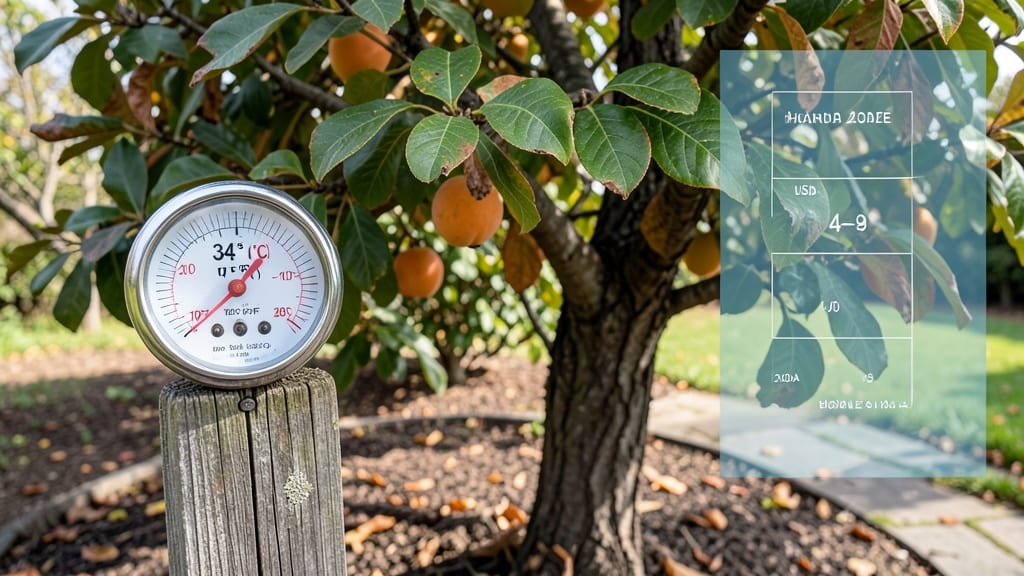
Understanding persimmon tree temperature tolerance reveals they thrive in USDA Hardiness Zones 5 through 9, handling winter lows down to -15°F (-26°C) for established trees, while young trees require extra care when temperatures drop below 10°F (-12°C). Their sensitivity to spring frosts and summer heat also plays a critical role in long-term survival.
Persimmons are surprisingly resilient once mature, but their cold tolerance varies dramatically between young and established trees. 🌱 Young saplings often suffer irreversible damage when exposed to prolonged cold below 10°F (-12°C), while mature trees can bounce back from dips to -15°F (-26°C) thanks to their deeper root systems.
The real challenge comes during late spring frosts, when new growth emerges vulnerable—this is why many growers use frost cloths or row covers during critical bloom periods. Summer heat stress is another silent threat, as prolonged temperatures above 90°F (32°C) can cause leaf scorch and reduce fruit quality.
For optimal results, I recommend monitoring your local microclimate and adjusting care practices accordingly. Mulching with 4-6 inches of organic matter in late fall helps insulate roots, while proper watering before winter dormancy ensures trees enter cold weather with adequate moisture reserves.
Variety selection also matters—American persimmons generally handle colder climates better than their Asian counterparts, which prefer slightly milder winters.
💡 In This Article
- Persimmon Tree Cold Hardiness by Variety and Stage
- Protecting Persimmon Trees from Freeze Damage
Persimmon tree cold hardiness by variety and stage
American persimmons (Diospyros virginiana) outperform their Asian relatives (Diospyros kaki) in cold climates, thanks to their native adaptation to North American winters. Mature American persimmons can withstand temperatures down to -20°F (-29°C) in short durations, though prolonged exposure below -15°F (-26°C) may cause bark splitting.
Asian varieties typically max out at -10°F (-23°C) without protection, making them better suited for Zones 7-9. The key difference lies in their bark thickness—American persimmons develop a tougher, more insulating bark layer over time, while Asian varieties retain thinner bark that cracks more easily in freezing conditions. 🌰
Age plays a critical role in cold tolerance. Young trees (under 3 years) lack the root depth and bark thickness to survive prolonged cold, often suffering damage when temperatures dip below 10°F (-12°C).
Their shallow root systems—typically only 12-18 inches deep—freeze more easily than mature trees with roots extending 3-5 feet. The transition period between 2-5 years is particularly vulnerable, as trees develop cold resistance but haven't yet built full winter hardiness.
This is why many nursery-grown persimmons come with winterization instructions for their first few seasons.
Root system development is the secret to persimmon resilience. Mature trees with established roots can access deeper soil moisture, which helps maintain cellular hydration during freeze-thaw cycles. The roots also produce more antioxidants in fall, which protect cellular membranes from ice crystal formation—a process called "cold acclimation."
In contrast, young trees with immature roots are more prone to cytoplasmic freezing, where ice forms inside cells and ruptures them.
This is why mulching becomes critical for young persimmons—adding 4-6 inches of wood chips or straw insulates roots by 4-6°F, making a significant difference during cold snaps. 🌱
Variety selection can mean the difference between survival and loss. For colder climates (Zones 5-6), choose cold-hardy American varieties like 'Meader' or 'Pecan' persimmon, which have been tested to survive -25°F (-32°C) in short-term exposure.
Asian varieties like 'Fuyu' or 'Hachiya' are better suited for Zones 7-9, where winter lows rarely drop below -5°F (-21°C). Even within varieties, grafted trees may show different cold tolerance than seed-grown specimens, as grafting can sometimes weaken a tree's natural cold resistance during its early years.
Spring frost sensitivity is often underestimated but equally damaging. Persimmon trees begin active growth when daytime temperatures reach 50°F (10°C), but nighttime frosts below 28°F (-2°C) can kill emerging buds and flowers.
This is why many growers use frost cloth during late spring blooming periods—it raises temperatures by 5-8°F, protecting vulnerable new growth.
The timing of these frosts is critical: damage occurs when buds are in the "swollen" stage (just before leaves emerge), making early spring particularly risky for young trees. 🌸
Summer heat stress is another factor that affects long-term cold tolerance. Persimmons grown in hot climates (Zones 8-9) often develop weaker cold acclimation because they don't experience the gradual temperature drops that trigger winter hardening. These trees may struggle when sudden cold snaps occur in late fall.
To mitigate this, I recommend gradually reducing water in late summer to encourage root growth and applying a balanced fertilizer in early fall to boost carbohydrate storage—both of which improve cold hardiness. The result? Trees that enter winter with better energy reserves to survive cold stress.
What most gardeners don't realize is that persimmon trees actually benefit from winter chill hours (300-600 hours below 45°F/7°C) to break dormancy properly. Without sufficient chill, trees may bloom late, making them more vulnerable to spring frosts.
This is why persimmons grown in mild winter climates (like coastal Zones 9) often require artificial chilling treatments or may produce lower yields.
Understanding this chill requirement helps explain why some persimmons in warm climates struggle with inconsistent fruiting—it's not just about heat tolerance, but the balance between cold exposure and growth cycles. ❄️