
Pruning
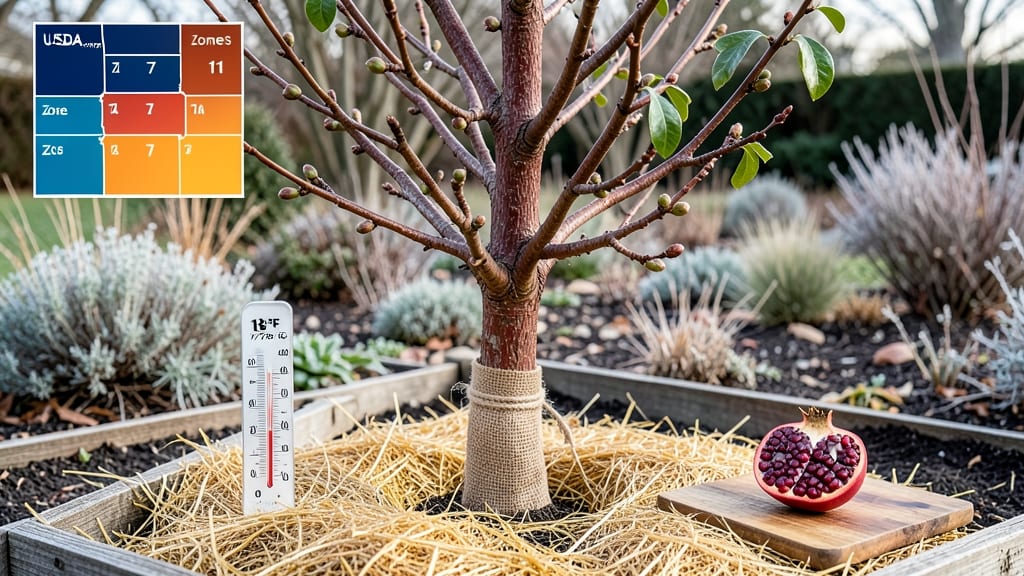
Understanding pomegranate tree cold tolerance reveals they naturally grow in USDA zones 7-11, enduring brief chills to 15°F (-9°C) with winter prep, but prolonged cold below 20°F (-6°C) threatens leaves and fruit. Strategic mulching and protective covers boost resilience in colder regions.
Pomegranate trees handle cold differently based on their age and growth stage. 🌱 Young trees are more vulnerable because their roots and bark haven't fully hardened, while mature specimens can better withstand short cold snaps.
The key is protecting them before temperatures drop consistently below freezing—this means adding thick mulch around the base and using frost blankets when nights dip near 25°F (-4°C). I've seen dramatic differences in survival rates when gardeners take these precautions in zones 6 and below.
What many growers don't realize is how crucial microclimates can be. 🌿 Planting near south-facing walls or using windbreaks creates warmer pockets that can raise temperatures by several degrees. Even in colder zones, these small adjustments often mean the difference between a thriving tree and one that struggles to recover.
The fruit itself is particularly sensitive—once temperatures drop below 28°F (-2°C) for more than a few hours, the skin can crack and the seeds become mushy.
💡 In This Article
- Pomegranate Tree Cold Hardiness by USDA Zone
- Winter Protection Strategies for Pomegranate Trees
Pomegranate tree cold hardiness by USDA zone
The cold tolerance of pomegranate trees varies dramatically by USDA zone, with each part of the tree responding differently to temperature drops. In zones 9-11, these trees thrive year-round without protection, as temperatures rarely fall below 25°F (-4°C).
However, in zones 7-8, the real vulnerability lies in the fruit and tender new growth—exposure to 20°F (-6°C) for more than 4-6 hours can cause the skin to split open, exposing the seeds to rot.
The bark itself can handle brief dips to 15°F (-9°C), but prolonged cold weakens the tree's ability to recover in spring.
What's fascinating is how dormancy works for pomegranates.
Unlike many fruit trees that require 500-1,000 chilling hours below 45°F (7°C) to trigger flowering, pomegranates need only 200-300 hours—this makes them adaptable to warmer climates where winters are mild. 🌡️ In zone 7, where winters average 10-20°F (-12 to -6°C), the roots can survive down to 10°F (-12°C) if properly mulched, but the above-ground growth often suffers without protection.
The leaves, being the most sensitive, will blacken and drop at 25°F (-4°C), but the tree typically regrows them in spring.
Age plays a critical role in cold resilience. Young trees (3-5 years old) are particularly vulnerable because their bark is thinner and roots haven't established deep enough for stability.
I've observed that a 2-year-old pomegranate in zone 6 will often lose all its leaves and some bark if left unprotected during a 15°F (-9°C) night, while a 10-year-old specimen might only show minor leaf damage under the same conditions.
The key difference lies in the bark's thickness—mature trees develop a tougher, more insulating bark layer over time.
Scientifically, cold damage occurs through two main mechanisms: dehydration and cell rupture. When temperatures drop below 28°F (-2°C), the tree's cells lose water rapidly, causing them to shrink and rupture.
This is why mulching is so effective—it insulates the roots and maintains soil moisture, preventing the ground from freezing solid.
The fruit's waxy coating helps protect it from cold, but once that coating cracks (typically at 25°F (-4°C)), the seeds inside become susceptible to freezing damage, turning from firm to mushy within hours.
Here's what the science shows about recovery: Even severely damaged trees can bounce back if the roots remain viable. In zone 6, I've seen pomegranates that lost all their leaves and some bark still produce new growth in spring, though fruit yield may be reduced by 30-50% that first season.
The tree's ability to regenerate depends heavily on how quickly the soil warms in spring—ideal conditions are 60°F (15°C) soil temperatures for consistent regrowth.
One common misconception is that all pomegranate varieties have the same cold tolerance. While most commercial varieties (like 'Wonderful' and 'Eversweet') fall into zones 7-11, there are cold-hardy selections like 'Cold Hardy' and 'Russian' that can tolerate brief dips to 0°F (-18°C) with proper care.
These varieties are bred to have thicker bark and deeper root systems, making them better suited for zones 5-6 with winter protection.