
Light Requirements
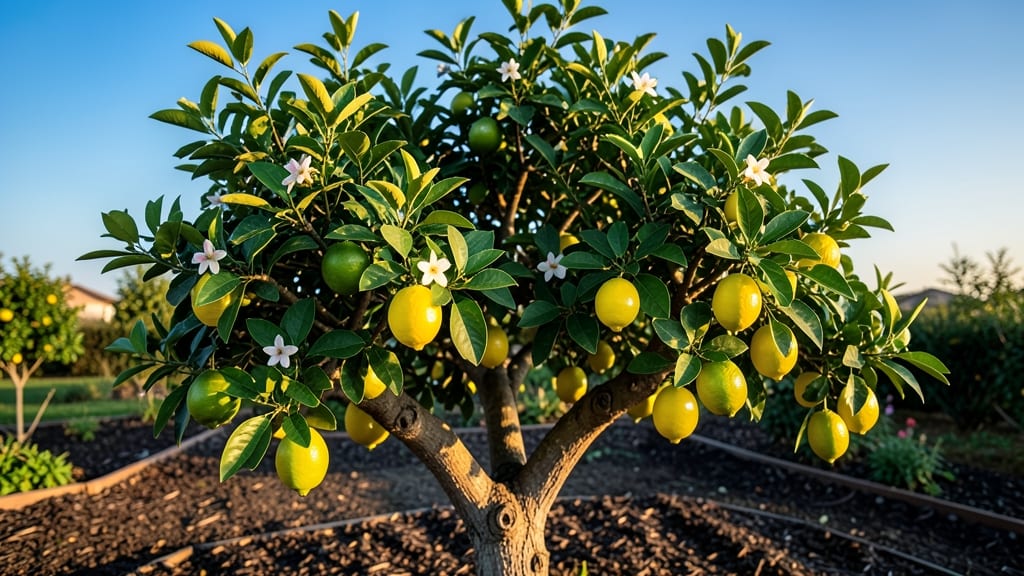
A lemon tree’s sunlight requirements are the foundation of its health — 6 to 8 hours of direct light daily is non-negotiable if you want fruit and vibrant foliage.
Struggling to keep your 🍋 thriving? Too little sun leaves it leggy and fruitless, while too much scorches the leaves faster than you can say "citrus burnout." The trick is finding that sweet spot where your tree soaks up enough rays without wilting under the midday glare.
Outdoors, that means planting it where it gets morning sun and afternoon shade in hot climates, or full sun year-round in cooler zones like USDA 6a.
Indoors, a south-facing window is your best bet, but even there, you’ll need to rotate the pot every few weeks to keep growth even.
Below, I’ll break down exactly how to spot sunlight problems, adjust exposure for your climate, and keep your lemon tree basking in the perfect balance of light — no guesswork required.


How many hours of sunlight does a lemon tree need daily?
If you've ever watched your lemon tree's leaves yellow or its fruit stay small and bitter, chances are your sunlight exposure isn't quite right. Lemon trees thrive under full sun conditions, but the exact hours needed vary by variety and climate.
For most lemon trees—especially the popular Meyer lemon and Eureka lemon—you’ll need 6 to 8 hours of direct sunlight daily for optimal growth and fruit production.
However, tropical varieties like the Lisbon lemon can tolerate slightly more intense sun, while younger trees or those in cooler climates may need partial afternoon shade to prevent leaf scorch.
Understanding your lemon tree’s sunlight needs isn’t just about counting hours—it’s about balancing intensity, duration, and seasonal shifts.
In temperate climates like USDA Zones 9-11, lemon trees bask in year-round sun, while in subtropical zones (like Florida or California), they may need afternoon shade during peak summer months to avoid heat stress.
Even in container gardening, positioning your pot near a south-facing window or rotating it weekly ensures even sunlight distribution, which is critical for preventing lopsided growth.
Why does sunlight matter so much? Lemon trees are native to Mediterranean climates, where they evolved to thrive under bright, consistent light. Without enough sun, they produce fewer flowers and fruit, and their leaves may develop a pale, stretched-out appearance—a classic sign of etiolation. Too much harsh afternoon sun, especially in hot climates, can cause leaf burn, turning edges crispy and brown. The key is finding that golden balance where your tree gets plenty of light without overheating.
| Variety | Daily Sunlight Needs | Shade Tolerance | Best Climate Zones | Seasonal Adjustments |
|---|---|---|---|---|
| Meyer Lemon | 6–8 hours | Moderate (needs afternoon shade in heat) | USDA 9–11, subtropical | Partial shade in summer |
| Eureka Lemon | 8+ hours | Low (avoid heavy shade) | USDA 10–11, coastal | Full sun year-round |
| Lisbon Lemon | 6–10 hours | High (tolerates partial shade) | USDA 8–11, tropical | Morning sun, afternoon shade |
| Young Trees | 4–6 hours | High (protect from direct sun) | All zones (acclimate gradually) | Gradually increase sun exposure |
Let’s break down the sunlight requirements for each popular lemon tree variety to help you tailor care to your specific plant.
The Meyer lemon, known for its sweeter fruit, is the most adaptable and can handle 6 to 8 hours of sun, making it ideal for container gardening on patios or balconies.
In contrast, the Eureka lemon, a classic bearing variety, demands 8+ hours of full sun to produce its signature tart lemons.
If you’re in a cooler climate like Zone 8 or below, consider growing Eurekas in large pots so you can move them indoors during winter or under grow lights.
For those in tropical or subtropical climates, the Lisbon lemon is a fantastic choice because it can tolerate up to 10 hours of sun and even handles partial shade better than other varieties.
This makes it perfect for urban gardens with limited space or areas where afternoon sun is too intense. If you notice your Lisbon’s leaves curling or developing brown spots, it’s a sign to provide light shade cloth during peak heat hours.
Even in these climates, morning sun is ideal—it warms the tree gently without the risk of heat stress that comes with afternoon rays.
Calculating the optimal sunlight exposure for your lemon tree starts with understanding your local climate zone and the direction your garden faces. A south-facing garden in the Northern Hemisphere gets the most sun, while east or west exposures may require adjustments.
Use a sunlight tracker app or observe your garden’s light patterns for a full week to determine how many hours of direct sun each spot receives.
For example, if your tree only gets 4 hours of morning sun but then sits in shade, supplement with a reflective surface like a white wall or mirror to bounce extra light onto the leaves.
Seasonal adjustments are just as critical as daily sunlight calculations. In summer months, especially in hot climates, lemon trees may need afternoon shade between 12 PM and 4 PM to prevent leaf burn. You can achieve this with a lightweight shade cloth (30–50% coverage) or by
Signs your lemon tree isn’t getting the right sunlight balance
Your lemon tree’s leaves tell a story—one that reveals whether it’s basking in perfect sunlight or struggling with too much or too little. Over-exposure often manifests as crispy, brown edges on leaves, while under-exposure shows up as pale, sparse foliage and weak branches.
These visual cues are your first clues to diagnosing sunlight issues before they stunt your tree’s growth or fruit production.
Start by examining the leaf patterns. Healthy lemon leaves are glossy, dark green, and evenly spaced. If you notice yellowing between veins (chlorosis), it’s a classic sign of too much sun, especially in hot climates.
Meanwhile, stunted growth or leaves clustering only at the top of the tree signals insufficient light reaching the lower branches. Pay attention to these details—they’re your tree’s way of communicating its needs.
🌱 PROS CONS BOX: Lemon Tree Sunlight Balance
- Glossy, dark green leaves
- Abundant fruit production
- Strong, upright growth
- Brown, crispy leaf edges
- Yellowing between veins
- Reduced fruit quality
- Pale, sparse foliage
- Stunted, weak branches
- Fewer lemons or none
- Move tree to partial shade (if burned)
- Rotate container-grown trees weekly
- Prune lower branches for better light penetration
Check the fruit development next—this is where sunlight issues become crystal clear. If your lemons are small, misshapen, or fail to ripen, it’s often a sign of inconsistent light. Overripe or bitter lemons can also indicate too much sun exposure, especially during peak summer months.
Conversely, if your tree produces hard, green lemons that never yellow, it’s likely not getting enough sunlight to trigger the ripening process.
For container-grown lemon trees, rotate the pot 180 degrees every few weeks to ensure even sunlight exposure. This simple trick prevents one side from becoming leggy while the other burns.
If your tree is planted outdoors, observe its shadow patterns throughout the day—if it’s consistently in deep shade for more than 4 hours, consider relocating it to a sunnier spot or using a reflective surface (like white gravel) to bounce light onto the tree.
Don’t overlook the soil temperature—lemon trees thrive in well-draining soil that stays warm. If your tree is in a shady spot, the cooler soil can stress the roots, further reducing its ability to absorb nutrients.
Test your soil’s warmth by pressing your hand into the ground near the tree’s base; it should feel comfortably warm (around 70-85°F) during the growing season.
Finally, adjust your approach based on the season. In summer, provide afternoon shade (1-3 PM) to protect leaves from scorching, while in winter, maximize sunlight exposure to compensate for shorter days.
Paying attention to these seasonal shifts ensures your lemon tree stays balanced year-round, leading to healthier growth and sweeter fruit.
With these signs in mind, you’ll quickly spot when your lemon tree needs a sunlight adjustment—and act before the damage becomes permanent. A little observation goes a long way in keeping your citrus tree thriving! 🌿☀️