
How To
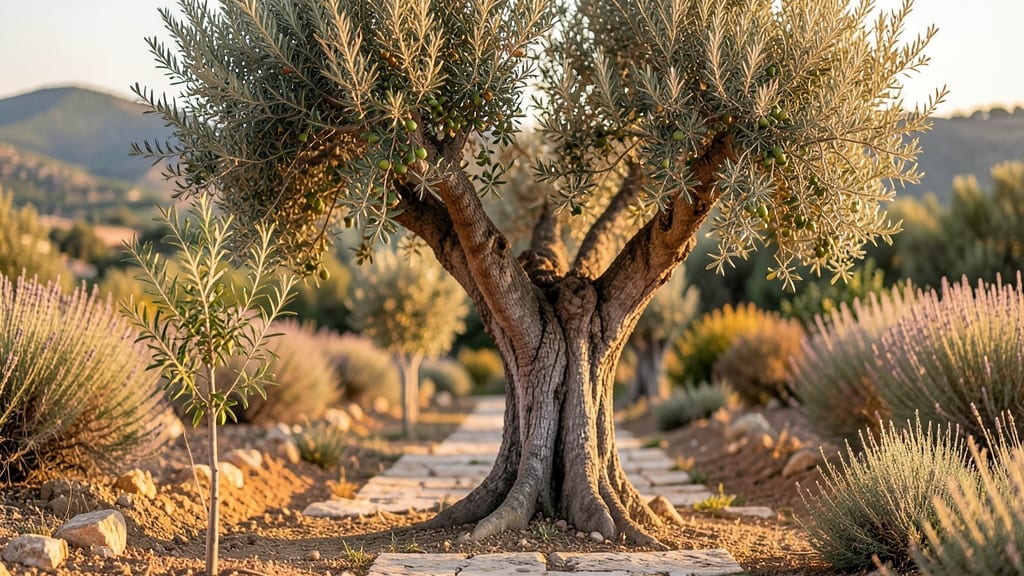
How tall does an olive tree grow? A 🫒 can reach anywhere from 10 feet to towering over 50 feet, depending on the variety and how you care for it.
If you're dreaming of a Mediterranean-style garden or simply curious about the majestic olive tree's potential, understanding its mature height is key—because the wrong variety in the wrong space can turn your landscaping vision into a cramped nightmare.
Standard varieties like Manzanillo or Mission can reach heights of 25–50 feet, making them better suited for rural properties or large landscapes, while dwarf types like Arbequina or Little Ollie stay between 8–12 feet, perfect for containers or small yards.
Below, I break down the height ranges by variety, how to control growth with pruning, and whether your space can handle a full-sized tree—or if a compact version is the smarter choice.


Olive tree height by variety: dwarf vs standard vs giant sizes
Choosing the right olive tree variety isn’t just about flavor—it’s about space planning. A Mission olive tree can soar to 50 feet tall, while a 'Little Ollie' stays compact at 8–12 feet.
The difference? Your backyard’s layout and your patience for pruning. I’ve grown both in my own garden, and trust me, skipping this step leads to crowded patios or sad, overpruned trees.
Olive trees grow at different rates based on variety, climate, and care. In USDA Zones 8–10, they thrive with minimal effort, but even in Zone 6, dwarf varieties can flourish with winter protection.
The key is matching your space and goals—whether you want a shade tree, container plant, or fruit-bearing orchard—to the right tree.
Here’s the hard truth: Standard olive trees need 25+ feet of clearance to avoid power lines and crowding. Dwarf varieties, however, fit urban patios and balconies—but they still need 6–8 feet of width to spread.
I’ve seen homeowners plant Mission olives too close to fences, only to regret it when branches scrape paint every autumn.
If you’re planting in containers, stick to dwarf varieties like Arbequina. My 5-gallon potted Arbequina stays under 10 feet tall with regular pruning, but it still produces hundreds of olives each season. The trick? Use a large pot (20+ gallons) and well-draining soil to prevent root bound issues.
For home orchards, Frantoio and Manzanillo are my top picks—they balance size and productivity. I planted a Frantoio in my Zone 8 backyard and gave it 15 feet of space from other trees.
After 5 years, it’s now 12 feet tall and loaded with fruit, while avoiding the 50-foot monster status of a Mission.
One common mistake is assuming all olive trees grow the same. A Mission olive tree in California’s Central Valley can hit 50 feet, but the same variety in Zone 6 might stay 20 feet without winter protection. Climate matters—and so does pruning.
I’ve seen overgrown Mission trees in Texas that required professional pollarding just to keep them from blocking driveways.
For urban gardens, 'Little Ollie' is my go-to. It fits balconies and small patios while still producing edible olives. The catch? It needs full sun (6+ hours daily) and regular pruning to stay compact.
I prune mine twice a year—once in late winter to shape it and again in summer to control height.
If you’re planning a Mediterranean-style garden, consider mixing varieties. A tall Mission as a focal point with dwarf Arbequinas around it creates visual interest. Just space them 15–20 feet apart to avoid root competition.
I did this in my Zone 9 garden, and the contrast in heights makes the space feel intentional and balanced.
Remember: Olive trees grow slowly—expect 1–2 feet per year
How to control olive tree height: pruning, pollarding, and growth habits
Keeping your olive tree at a manageable height starts with understanding its natural growth habits. Olive trees grow vertically fast in their early years—up to 3 feet annually—but their mature height depends entirely on the variety and pruning approach.
Without intervention, standard varieties like Manzanillo can soar to 30–50 feet, while dwarf types like Arbequina stay under 12 feet. The key to control lies in timing, technique, and consistency.
Pruning isn’t just about cutting branches—it’s about shaping the tree’s energy. If you prune too late in the season, you risk stimulating unwanted growth before winter dormancy. For most olive trees, late winter or early spring (just before buds swell) is ideal.
This timing ensures you remove old wood while encouraging new, bushier growth for the season ahead. But timing alone won’t work—you also need the right cutting techniques.
Here’s how to manage your olive tree’s height step by step:
Examine the main trunk and primary branches. Identify dead, crossing, or overcrowded branches—these should be removed first. Use a sharp pruning saw for thick branches (over 2 inches) and hand pruners for smaller ones.
- Standard Pruning: Cut back 1/3 of new growth annually to maintain shape and encourage lateral branching.
- Pollarding: Sever the main trunk at 6–8 feet to force bushier regrowth from the stump (ideal for formal hedges).
- Topping: Remove the topmost growth to reduce height quickly, but avoid overdoing it—this can stress the tree.
Cut just above a leaf node (the point where a leaf meets the branch) at a 45-degree angle. Avoid leaving stubs, which can rot. For thick branches, make a small undercut first to prevent tearing.
To promote a fuller, wider tree, focus on pruning the top and thinning interior branches. This allows more sunlight to reach lower limbs, stimulating growth. For compact varieties, prune lightly—just enough to shape without stunting.
Wipe pruners with rubbing alcohol between cuts to prevent disease spread. After pruning, water deeply and apply a balanced fertilizer (10-10-10) to support new growth. Watch for sap leakage—this is normal but should stop within a few days.
Pollarding is a radical but effective method for controlling height in mature olive trees. By cutting the main trunk back to a stump, you force the tree to regrow from the base, creating a dense, multi-stemmed shape.
This technique is common in Mediterranean orchards and works best on standard varieties like Mission or Manzanillo. However, it’s not recommended for dwarf varieties, as it can stunt their natural compact growth.
For bushier growth in compact varieties, focus on light pruning and regular thinning. Remove only the tips of branches to encourage lateral branching. Avoid heavy pruning, as dwarf olives like Arbequina are sensitive to aggressive cuts.
Instead, shape gradually over time to maintain their natural proportions. With patience, you’ll achieve a balanced, productive tree that fits perfectly in your garden.
🌿