
How To
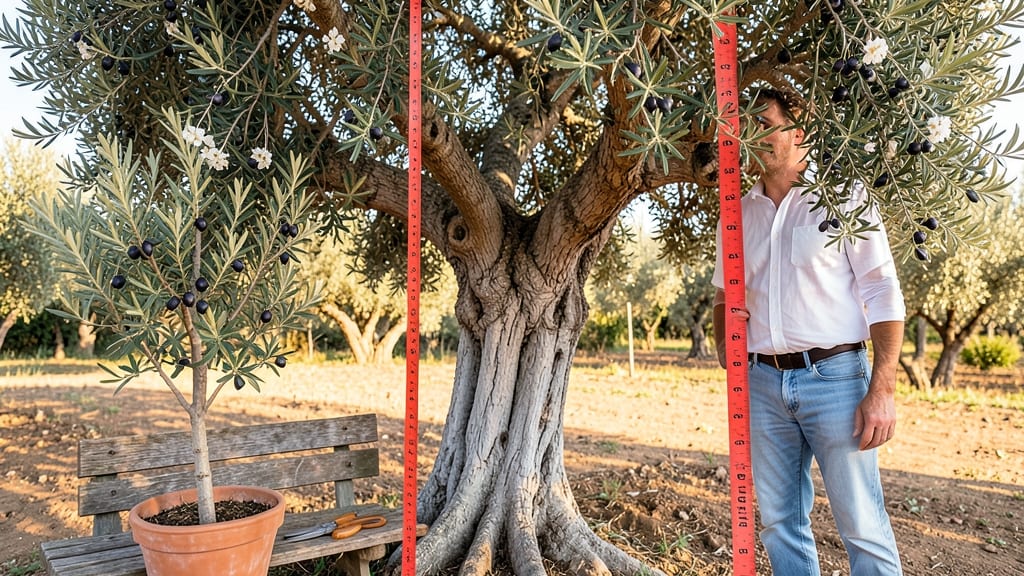
Wondering whether your backyard can accommodate an olive tree? The height of a mature olive tree isn’t just about space—it’s also about choosing the right variety and climate conditions to maximize growth and fruit production.
A standard olive tree can easily reach the height of a two-story house, while dwarf varieties stay compact enough for containers or small gardens.
If you’re in USDA Zone 6a like me, you’ll need to pick a cold-hardy variety (like Arbequina) and plan for winter protection, since most olive trees thrive in warmer climates. The right pruning and soil can also keep a tree from becoming an unmanageable giant.
Below, I break down the exact height ranges for popular varieties, how climate affects growth, and the pruning tricks that keep your olive tree at your desired height—whether that’s a 6-foot patio tree or a 30-foot shade provider.


Olive tree height by variety: dwarf vs standard vs giant sizes
If you're dreaming of growing your own olive tree but worried about space, you're not alone. Olive trees come in a stunning range of sizes—from dwarf varieties perfect for containers to giant trees that can reach the height of a two-story building.
The right choice depends on your space, climate, and whether you want fresh olives or just the beauty of the tree. Let's break down the mature heights of popular olive tree varieties to help you decide what fits your garden best.
One of the first decisions you'll face is whether to grow a standard olive tree, which can soar to 20-50 feet tall, or a dwarf olive tree, which stays between 8-12 feet.
Dwarf varieties are ideal for small gardens, patios, or even large containers, while standard varieties need plenty of room to spread their branches. Below, we’ll compare the most popular varieties and their typical heights, so you can pick the perfect fit for your space.
🌱 Comparison Table: Olive Tree Heights by Variety
Dwarf olive trees like Arbequina and Little Ollie are fantastic choices if you're limited on space. These varieties typically stay between 6-12 feet tall, making them perfect for containers or small gardens. They’re also more cold-hardy, which is a bonus if you live in USDA Zones 7-9.
For example, the Arbequina variety is not only compact but also produces high-quality table olives, making it a favorite among home gardeners.
On the other hand, standard olive tree varieties like Frantoio and Leccino can grow up to 50 feet tall, which means they need plenty of room to spread their roots and branches.
These trees are ideal for large gardens or rural properties where they can thrive without crowding other plants. If you're considering a standard variety, plan for regular pruning to manage its height and shape, especially in the first few years of growth.
If you're torn between a dwarf and a standard olive tree, consider your long-term goals. Dwarf varieties are easier to maintain and harvest, while standard varieties offer a more traditional look and can produce larger yields of olives.
For instance, the Mission olive tree, which falls into the semi-dwarf category, is a great middle ground—it reaches 12-20 feet tall and is well-suited for medium-sized gardens or patios.
Another factor to consider is whether you want to grow your olive
Climate Zones and growth factors that affect olive tree height
Your olive tree's height potential depends heavily on where you live—specifically, your USDA hardiness zone and local climate conditions. Olive trees thrive in zones 7 through 10, where warm winters and hot summers create ideal growing conditions.
Outside these zones, growth slows dramatically, and trees may struggle to reach their full height potential.
In Zone 8-10, olive trees can grow 20-50 feet tall with proper care, while in Zone 7, they typically max out at 15-25 feet. Cold snaps below 20°F can stunt growth or even kill young trees, forcing them to divert energy toward survival rather than height.
Understanding these factors helps you choose the right variety and care approach for your climate.
| Factor | Impact on Height | Ideal Conditions |
|---|---|---|
| USDA Zone | Zones 7-10: 15-50 ft | Zone 6: 8-12 ft (dwarf varieties only) | Zones 7-10 with winter protection in Zone 7 |
| Sunlight | Full sun (6+ hours): 20-30% taller | Partial sun: stunted growth | South-facing exposure, 8+ hours sunlight daily |
| Soil Type | Well-draining soil: full height | Clay soil: 30-50% shorter | Sandy loam with pH 6.0-8.0, amended with compost |
| Water Availability | Consistent moisture: 15-25 ft | Drought: 8-12 ft | Deep watering 2-3x/week in summer, reduce in winter |
| Temperature | Warm winters: full height | Cold winters: 50% shorter | Avoid temps below 20°F; use mulch/winter wraps |
Sunlight is another critical factor—olive trees need at least 6 hours of direct sunlight daily to reach their maximum height. In partial shade, growth slows by 20-30%, and trees may only reach 10-15 feet.
If you're in a cooler climate like Zone 7, prioritize south-facing locations to maximize sunlight exposure and encourage upward growth.
Soil type plays a surprising role in height development. Olive trees hate soggy roots and thrive in well-draining, slightly alkaline soil. In heavy clay soils, roots suffocate, stunting growth by 30-50%.
Amending your soil with sand or compost can help, but even then, expect a 10-15 foot maximum height in less-than-ideal conditions. Always plant on a slight mound to improve drainage.
Water availability affects height indirectly by influencing overall tree health. While olive trees are drought-tolerant once established, young trees need consistent moisture to grow tall.
In arid climates, regular deep watering (every 7-10 days) helps trees reach 20+ feet, while neglect can limit them to 8-12 feet. Mulching around the base retains moisture and encourages deeper root growth, which supports taller stature.
Finally, temperature extremes can drastically alter an olive tree's height potential. In Zone 7 and below, winter cold forces trees to focus on survival rather than growth. Even with winter protection, expect dwarf varieties (8-12 feet) to be your best bet.
In Zones 8-10, where winters rarely drop below 30°F, trees can grow unrestricted to 50 feet with proper care and pruning.