
How To
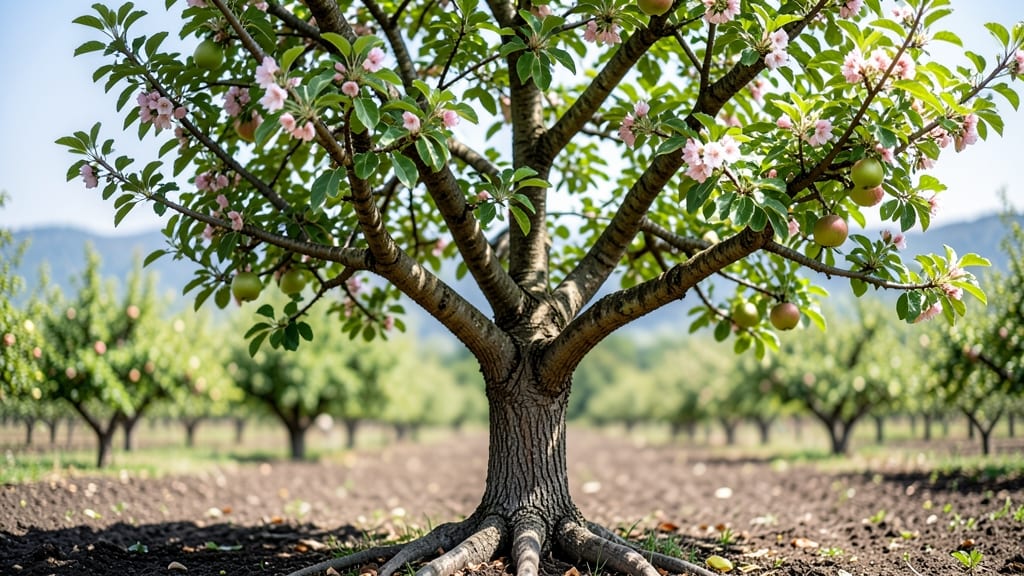
An apple tree’s mature height—how tall does an apple tree grow?—determines whether you’ll be picking fruit from a ladder or a stool—dwarf varieties stay under 12 feet, while standard trees can tower 30 feet or more.
Wondering if your backyard can accommodate an apple tree? The height of your tree will determine everything from harvest accessibility to pruning ease—and choosing the wrong size could mean years of frustration.
Dwarf 🍎 varieties are perfect for small spaces, semi-dwarfs strike a balance for family orchards, and standard trees dominate rural landscapes. Below, I’ll break down how rootstock, pruning, and your yard’s layout influence growth so you can pick the right size for your needs.
You’ll also discover spacing tips, how climate affects height, and why a 6-foot tree might outperform a 25-foot giant in your zone.


Apple tree height comparison: dwarf vs. semi-dwarf vs. standard varieties
Choosing the right apple tree size starts with understanding how rootstock influences mature height. The rootstock—the underground part of the tree—determines whether your apple tree will stay compact or grow tall.
For example, a dwarf apple tree might reach just 8 feet tall, while a standard variety can tower over 25 feet. Your space, sunlight access, and maintenance goals will dictate which size is best for you.
Rootstock also affects fruit production and tree lifespan. Dwarf trees fruit faster—often within 2-3 years—but may have shorter productive lives compared to standard trees. Meanwhile, semi-dwarf trees strike a balance, offering moderate height and long-term productivity.
Let’s break down the key differences so you can pick the perfect fit for your garden.
If you’re working with a small urban garden, a dwarf apple tree is your best bet. These trees thrive in containers or tight spaces, making them ideal for patios or balconies.
Popular dwarf varieties like ‘Liberty’ or ‘Honeycrisp’ on M.9 rootstock stay under 10 feet tall and produce high-quality fruit in just a few years. Just remember: dwarf trees need staking and regular pruning to support their smaller structure.
For backyard orchards or larger properties, semi-dwarf apple trees offer the perfect middle ground. They grow 12–18 feet tall and produce heavier yields than dwarf varieties while remaining manageable for homeowners.
Semi-dwarf trees like ‘Gala’ or ‘Fuji’ on MM.106 rootstock are excellent choices for families who want easy harvest access without sacrificing space. Their canopy spread of 10–15 feet also makes them great for espalier training.
Standard apple trees are the giants of the orchard, reaching 20–30 feet tall with wide canopies of 15–25 feet. These trees are perfect for rural settings or commercial orchards where space isn’t a concern.
Varieties like ‘Granny Smith’ or ‘Jonathan’ on seedling rootstock produce abundant fruit but require heavy-duty pruning and ladder access for maintenance. If you love the idea of a traditional orchard experience, a standard tree delivers the classic look and long-term productivity.
Don’t overlook the role of sunlight and soil quality when choosing your tree size. All apple trees need 6+ hours of full sun daily, but dwarf varieties may struggle if shaded by walls or taller plants.
Well-draining, fertile soil with a pH of 6.0–7.0 is critical for root health, regardless of size. If your soil is poor, consider planting in a raised bed or amending with compost to give your tree the best start.
Another key factor is pollination. Most apple trees are self-pollinating, but some varieties—especially dwarf types—benefit from a second tree
Best apple tree sizes for small gardens, backyards, and commercial orchards
Selecting the right apple tree size depends entirely on your available space and intended use. A standard apple tree can reach 20-30 feet, perfect for rural properties, while dwarf varieties stay under 8 feet—ideal for containers or urban patios.
For most homeowners, semi-dwarf trees (12-18 feet) strike the best balance between yield and manageability.
Your choice impacts everything from harvest accessibility to pruning frequency. A dwarf apple tree might produce fruit at chest height, while a standard tree requires a ladder. Even in small backyards, espalier training can transform a semi-dwarf tree into a space-saving wall feature, maximizing fruit production in tight spaces.
- 🌱 Dwarf Apple Trees (6-12 ft) → Perfect for containers, patios, or small gardens. Requires staking for support. Best for 2-3 people with limited space.
- 🌳 Semi-Dwarf Apple Trees (12-18 ft) → Ideal for family orchards or medium backyards. Needs 6-8 ft clearance around canopy. Produces more fruit than dwarfs.
- 🌿 Standard Apple Trees (20-30 ft) → Best for rural properties or large estates. Requires ladder access for pruning/harvesting. Highest yield but space-intensive.
- 🪴 Espalier Techniques → Train trees flat against walls/fences to save 90% space. Works best with dwarf/semi-dwarf varieties like 'Columnar' or 'Gisela' rootstock.
- ✂️ Pruning Strategies → Dwarf trees need annual pruning to control height; standard trees require structural pruning every 2-3 years.
For commercial orchards, semi-dwarf trees on M.9 or MM.106 rootstock are the gold standard—they produce 80% of commercial apples while staying manageable. In contrast, dwarf trees on B.9 rootstock are popular for high-density plantings in urban farms.
If you're unsure, start with a semi-dwarf tree—it offers flexibility for both home harvests and potential future expansion. Just ensure your soil drains well and you have 6+ hours of sunlight daily, regardless of size.
Remember: Rootstock matters more than variety for controlling height. A 'Granny Smith' apple grafted onto M.9 rootstock will stay dwarf-sized, while the same variety on seedling rootstock could reach 30 feet. Always check the rootstock type when purchasing.
With the right tree size and pruning plan, even a tiny balcony can yield dozens of apples annually. Start small, and scale up as your confidence grows!