
How To
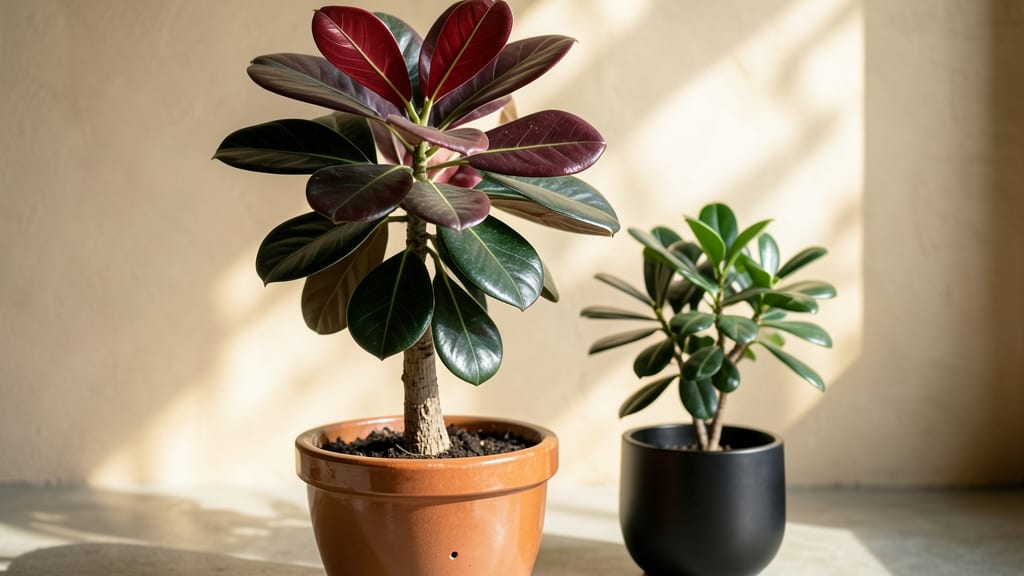
A rubber tree can grow how tall can a rubber tree grow indoors up to 10 feet or more if left unpruned, turning your living room into a jungle before you know it.
If you love rubber plants (Ficus elastica) but worry they’ll outgrow your home, you’re not alone—these tropical giants can reach ceiling heights indoors if left unchecked.
The good news? With strategic pruning and care, you can keep your rubber tree at your ideal height while encouraging bushier, fuller growth.
Indoor rubber trees grow slower than their outdoor counterparts, but without pruning, they’ll still stretch toward the light, sometimes adding a foot or more per year. The key to managing their height lies in understanding their growth habits and when to intervene—before they become unruly.
In this guide, I’ll break down how tall your rubber tree 🌿 can realistically grow indoors, the best pruning techniques to control its size, and how to keep it thriving in your space without sacrificing its health or beauty.


Natural height limits of rubber trees indoors: what to expect without pruning
Rubber trees (Ficus elastica) are stunning indoor plants, but their growth potential often surprises new owners. Without pruning, these tropical beauties can grow 6 to 10 feet tall indoors—similar to a tall bookshelf or ceiling fan.
Unlike their outdoor counterparts, which can reach 30 feet, indoor rubber trees grow much slower due to limited space and controlled conditions.
The key factors influencing your rubber tree’s height are light exposure, pot size, and variety. A tree in a 12-inch pot with bright indirect light will grow faster than one in a small container with low light.
Even the same variety can vary by 2–3 feet depending on these conditions.
Here’s what you need to know about your rubber tree’s natural growth limits, including how to estimate its height based on your care routine.
| Factor | Indoor Growth Impact | Expected Height Range |
|---|---|---|
| Light Conditions | Bright indirect light = faster growth | 6–10 ft (with ideal light) |
| Low Light | Slows growth significantly | 3–6 ft (stunted growth) |
| Pot Size | 12"+ pot = faster vertical growth | 8–10 ft (if unpruned) |
| Small Containers | Restricts root growth = slower height | 4–7 ft (compact growth) |
| Variety | Standard types grow taller; variegated types grow slightly slower | 6–9 ft (variegated) vs. 8–10 ft (standard) |
| Age | Young trees grow 1–2 ft/year; mature trees grow slower | 2–3 ft (Year 1) → 6–10 ft (Mature) |
If you’re wondering how your rubber tree’s height compares to outdoor growth, remember: indoor rubber trees grow 3x slower than their outdoor counterparts. In nature, these trees can reach 30 feet tall within 10 years, but indoors, they take decades to reach similar heights without pruning.
This slower growth is actually a blessing—it gives you plenty of time to shape and prune your plant before it becomes unmanageable.
One common misconception is that rubber trees will always grow tall. In reality, their height is highly dependent on your care routine.
For example, a tree in a small pot with low light might only reach 4–5 feet in 5 years, while one in a large pot with bright light could hit 8–10 feet in the same time. Pay attention to these factors to predict your tree’s future height.
Another factor to consider is seasonal growth. Rubber trees grow most actively in spring and summer, adding 6–12 inches per season if conditions are ideal. During fall and winter, growth slows dramatically, sometimes to just 1–2 inches per month.
This seasonal rhythm is why many growers prune in late winter or early spring—to encourage bushier growth before the active growing season begins.
If you’re concerned about your rubber tree outgrowing its space, don’t worry—pruning is your best friend.
Even without pruning, most indoor rubber trees stay under 10 feet, but if you want to keep them smaller, a simple topping (cutting the top to encourage branching) can transform a tall, leggy tree into a bushy, compact plant.
I’ve seen rubber trees kept at just 3–4 feet tall with regular pruning and proper care.
For those with limited vertical space, consider dwarf varieties like Ficus elastica ‘Tineke’ or ‘Burgundy’, which naturally stay shorter. These varieties can reach 5–7 feet indoors but are easier to manage in small apartments.
Even standard varieties can be kept smaller with regular pruning and root-bound conditions (though avoid letting the roots stay bound for too long).
Finally, remember that healthier trees grow faster. A rubber tree with yellowing leaves or drooping branches will grow slower than one that’s well-cared-for. Focus on consistent watering, balanced fertilization, and proper light exposure to maximize growth while keeping your tree at your desired height.
With the right approach, you can enjoy a tropical giant that fits perfectly in your home—without the worry of it becoming a ceiling obstacle!
Pruning techniques to control rubber tree height: step-by-step guide
Pruning your rubber tree (Ficus elastica) is the secret to keeping it at your desired height while encouraging a fuller, bushier shape.
Without pruning, these tropical plants can grow 6–10 feet tall indoors, but with the right techniques, you can maintain a compact size—even as low as 3–4 feet—while promoting new growth. The key is timing, tools, and proper cutting techniques to avoid stressing your plant.
Spring and early summer are the best times to prune because your rubber tree enters its active growth phase. This is when it can heal quickly and produce new leaves from the cuts.
Avoid pruning in fall or winter, as your plant will be in a dormant phase and may struggle to recover. With the right approach, you’ll not only control height but also create a stunning, multi-branched focal point for your space.
-
Step 1: Gather Your Tools
- ✂️ Sharp pruning shears (sterilized with rubbing alcohol)
- 🪴 Clean cutting board or tray to collect cuttings
- 🧴 Rooting hormone (optional, for propagation)
- 🧼 Disinfectant (to prevent disease spread)
-
Step 2: Identify Pruning Points
- Locate leaf nodes (bumps where leaves grow)
- Cut just above a node at a 45-degree angle
- Avoid cutting into the main trunk unless necessary
-
Step 3: Make the Cut
- Use one smooth motion to avoid tearing
- Remove 1/3 of the plant’s height max in one session
- Focus on top growth to encourage branching
-
Step 4: Propagate Cuttings (Optional)
- Dip cuttings in rooting hormone
- Plant in well-draining soil or water
- Keep in bright, indirect light and humid environment
-
Step 5: Post-Pruning Care
- Water deeply after pruning to reduce stress
- Fertilize with balanced 10-10-10 in 4–6 weeks
- Monitor for new shoots at leaf nodes
When pruning, always aim to cut just above a leaf node—this is where new growth will sprout. The 45-degree angle helps water runoff, reducing the risk of rot. If you’re pruning to encourage branching, focus on the top third of the plant first.
This signals the rubber tree to redirect energy to lateral buds, resulting in a fuller, more compact shape over time.
One of my favorite tricks is to prune in stages throughout the growing season. Instead of doing one heavy pruning session, I remove a few inches at a time every 4–6 weeks. This keeps the plant from getting stressed and allows me to shape it gradually.
Plus, the cuttings I collect can root easily, giving me free mini rubber trees for other parts of my home!
After pruning, keep your rubber tree in bright, indirect light and maintain consistent moisture (but avoid soggy soil). Within 4–6 weeks, you should see new growth emerging from the nodes where you made cuts.
If you notice yellowing leaves or slow recovery, your plant may need more humidity or adjusted light conditions. With patience and practice, you’ll master the art of keeping your rubber tree at the perfect height for your space.
Remember, pruning isn’t just about height control—it’s also about rejuvenating your plant. A well-pruned rubber tree will have healthier foliage, better airflow, and a more balanced structure. Plus, the cuttings you propagate can become stunning additions to your indoor jungle or even gifts for fellow plant lovers! 🌿