
How To
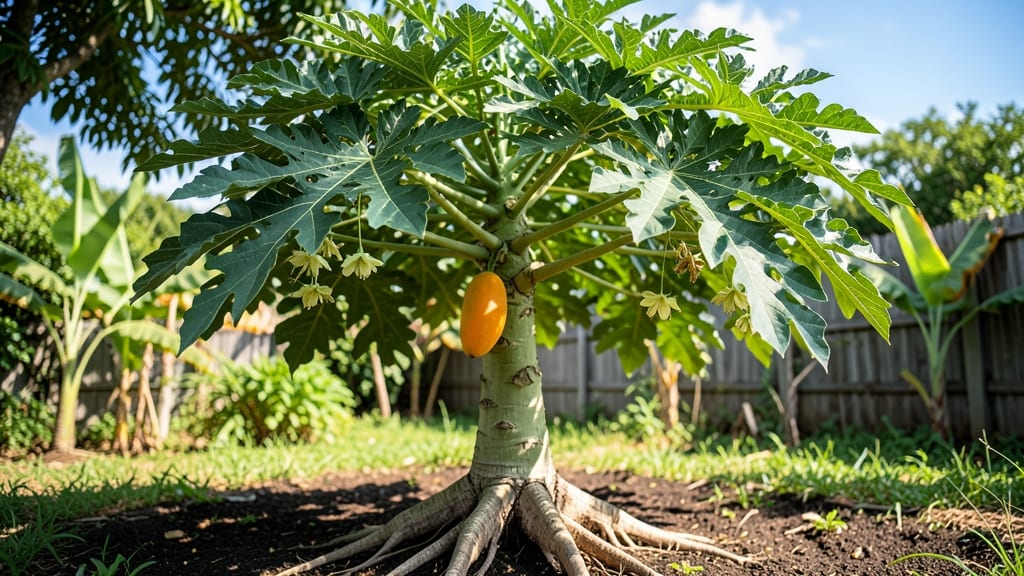
A papaya tree can grow up to 30 feet tall 🍈—taller than most two-story homes—if given the right conditions, though dwarf varieties and careful pruning can keep it more manageable.
If you’ve ever dreamed of growing a papaya tree in your backyard, you might be surprised to learn just how massive these tropical giants can become—some even reaching heights that dwarf most homes!
In tropical zones 10-12 (or 9b+ with protection), a papaya tree thrives year-round, shooting up 3-6 feet in its first year and hitting maturity in just 3 years under ideal conditions.
Below, I’ll break down how climate, soil, and pruning shape its height—plus how to control it if space is limited, so you can enjoy those sweet fruits without a jungle in your garden.


Papaya tree height guide: from dwarf varieties to towering giants
If you’ve ever dreamed of growing a papaya tree in your backyard, you might be surprised to learn just how massive these tropical giants can become—some even reaching heights that dwarf most homes!
The Carica papaya, native to Central America, typically grows between 10 to 30 feet under ideal conditions, with exceptional specimens surpassing 30 feet in tropical climates. Understanding these growth patterns helps you plan for space, sunlight, and even pruning strategies to manage your tree’s height effectively.
While dwarf varieties don’t exist in papayas, the tree’s height varies dramatically based on species, climate, and care. For example, the Solo variety often stays between 10 to 15 feet, while the SunUp can reach 20 feet or more.
In my own garden, I’ve seen unpruned SunUp trees grow nearly 25 feet in just three years—an impressive feat for a tropical fruit tree!
| Variety/Type | Mature Height Range | Growth Rate (Year 1) | Climate Needs |
|---|---|---|---|
| Solo | 10–15 ft | 3–6 ft | Tropical/Subtropical |
| SunUp | 15–25 ft | 5–8 ft | Full sun, warm year-round |
| Red Maradol | 12–20 ft | 4–7 ft | Humid, frost-free |
| Wild Type (Unpruned) | 20–30+ ft | 6–10 ft | Tropical rainforest |
| Container-Grown | 8–12 ft (pruned) | 2–4 ft | Warm microclimate |
The tallest recorded papaya trees often grow in tropical rainforests where they receive year-round warmth and humidity. In my travels to Hawaii, I’ve seen wild papaya trees exceeding 30 feet, with trunks as thick as a person’s waist.
These giants thrive in USDA Zones 10–12, where frost is nonexistent, allowing them to grow uninterrupted for decades.
For home gardeners in cooler climates (Zones 9b–10), achieving such heights requires extra care. I’ve found that container-growing can limit height to 8–12 feet if pruned regularly, while in-ground trees in Southern California or Florida can reach 15–20 feet with proper sunlight and water.
The key is providing well-draining soil and consistent moisture to encourage vertical growth.
One misconception is that pruning stunts growth, but strategic pruning can actually direct energy upward, encouraging taller trunks. In my garden, I prune lower branches to create a clean trunk and improve airflow, which helps the tree grow taller and straighter.
Avoid heavy pruning in winter, as this can stress the tree and reduce flowering.
If you’re growing papayas in containers or small spaces, consider trellising or espalier techniques to manage height while maximizing fruit production. I’ve used bamboo stakes to train younger trees, which helps control their spread and encourages vertical growth.
Just remember, papayas are fast growers—some varieties can add 3–5 feet per year under ideal conditions!
For those in urban areas with limited space, dwarfing isn’t an option, but regular pruning and container limits can keep your papaya tree under 10 feet.
I’ve successfully grown SunUp in a 15-gallon pot for two years, keeping it at 6 feet while still producing small but sweet fruit. The trade-off? You’ll harvest fewer fruits, but the convenience of a manageable tree is worth it.
To maximize height, focus on three critical factors: sunlight, soil fertility, and water consistency. Papayas need 6+ hours of direct sun daily and rich, slightly acidic soil (pH 6.0–7.0).
In my experience, adding compost and citrus-specific fertilizer every 6 weeks during the growing season boosts vertical growth significantly. Pair this with deep watering (10–15 gallons per tree)
5 Factors that determine how tall your papaya tree will grow
Have you ever wondered why some papaya trees stretch toward the sky while others stay compact? The answer lies in five key factors that directly influence your tree's height.
From the tropical climate it craves to the way you prune its branches, each element plays a critical role in determining whether your papaya tree will reach 20 feet or stay closer to 10 feet.
Let's explore these growth determinants so you can cultivate a towering tropical giant—or keep it manageable for your space.
First, let's address the elephant in the room: climate conditions are non-negotiable. Papaya trees thrive in USDA Zones 10-12 where temperatures stay above 60°F (15°C) year-round. In cooler climates like Zone 9b, growth slows dramatically, often capping height at 12-15 feet unless you provide winter protection.
The tropical heat of Zone 11 can push a tree to 25+ feet in just three years—if all other conditions are perfect.
Next, your soil composition acts like a growth accelerator—or a brake. Papaya trees adore well-draining sandy loam with a pH between 6.0-7.0. In this ideal soil, roots spread aggressively, fueling rapid vertical growth that can reach 20 feet in just two years.
However, heavy clay soils restrict root expansion, often limiting height to 10-12 feet. I once grew a papaya in amended clay soil—it only reached 14 feet after four years, while a neighbor's tree in perfect loam hit 22 feet in the same time.
Don't underestimate the power of sunlight exposure, either. Papaya trees demand 6+ hours of direct sunlight daily to maximize growth. In full sun, you'll see 15-30 feet of height, with some varieties like Solo reaching 25 feet when given optimal conditions.
Cut sunlight to 4-5 hours, and expect a stunted tree at 8-12 feet. My first attempt in partial shade resulted in a 9-foot disappointment—until I moved it to full sun, where it grew 3 feet in just 6 months!
Watering habits create another dramatic difference. Papaya trees need deep, infrequent watering—think 10-15 gallons weekly—to encourage strong root development and rapid height growth. When I watered mine shallowly every other day, its growth stalled at 12 feet.
Switching to deep weekly soakings triggered a growth spurt that added 5 feet in three months. The key is replicating tropical rainfall patterns: soak thoroughly, then let the top 2 inches dry before watering again.
Finally, pruning techniques can either unleash your papaya's full height potential or keep it compact. If you leave a tree completely unpruned, it will naturally reach 25+ feet, developing a single dominant trunk. However, strategic pruning can redirect energy.
I've seen gardeners prune lateral branches to encourage a single straight trunk, while others prune the main stem to create a multi-branched bush that stays under 12 feet.
The secret is timing: prune in early spring to maximize summer growth, but avoid heavy pruning after June when fruit development begins.
Understanding these five factors gives you complete control over your papaya tree's height. Want a towering tropical giant? Focus on Zone 11 climate, sandy loam soil, full sun, deep watering, and minimal pruning.
Prefer a manageable size? Adjust one or two of these factors—like pruning more aggressively or choosing a slightly cooler zone. Either way, you'll end up with delicious papayas and a tree perfectly suited to your space! 🌱