
Propagation
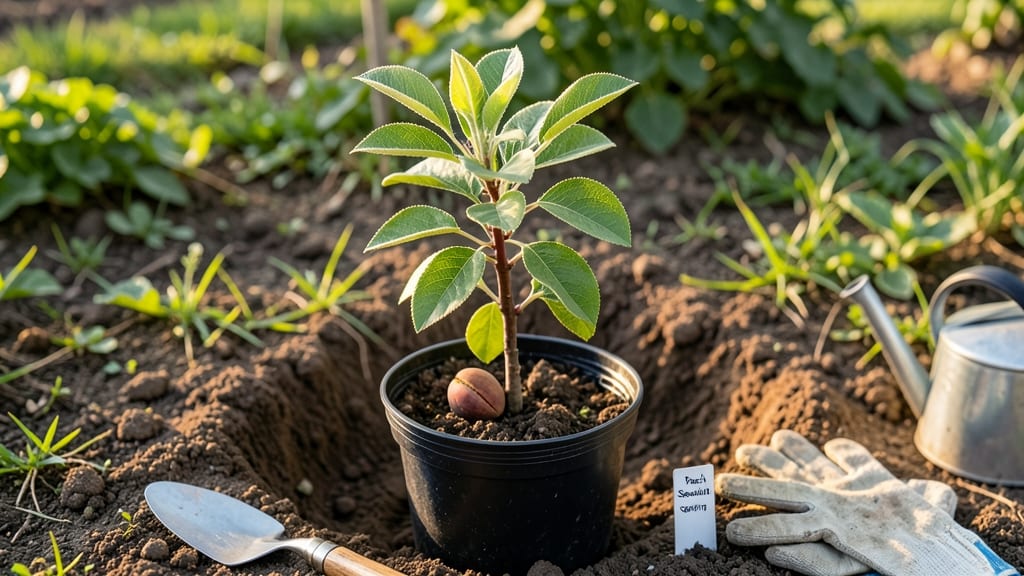
Yes, you can start a peach tree from a pit, but it requires careful cold stratification for 6-8 weeks, followed by planting in well-draining soil with consistent moisture. While possible, success rates are unpredictable, and the resulting trees often produce inferior fruit compared to grafted varieties.
This method mimics nature's process, where peach seeds naturally germinate after winter's cold period. 🌱 The stratification step tricks the seed into thinking winter has passed, breaking dormancy and encouraging root growth.
I've found that using a moist paper towel in the fridge for this phase works best—just keep it damp and check weekly for sprouting. Once planted, young seedlings need warmth and patience, as they can take months to show above-ground growth.
What many gardeners don't realize is how much the growing conditions affect the final tree. Seedlings often develop weaker root systems and may take years to bear fruit, if at all.
The fruit quality from seed-grown trees is typically smaller, less flavorful, and more prone to splitting—a common issue with homegrown varieties. For consistent results, most commercial growers prefer grafting, which preserves the parent tree's desirable traits.
💡 In This Article
- Peach Pit Germination Process Explained
- Pros and Cons of Growing Peach Trees from Seed
Peach pit germination process explained
The peach pit's germination journey begins with its natural dormancy, a survival mechanism that prevents seeds from sprouting in unfavorable conditions. Peach seeds (endocarps) contain a hard outer shell that requires cold stratification—a period of cold, moist conditions—to break dormancy.
This mimics winter's natural cycle, where temperatures between 32-40°F for 6-8 weeks trigger enzymatic changes that prepare the seed for growth. Without this step, most peach pits will remain dormant indefinitely, as their thick seed coat blocks water absorption.
Once stratified, plant the pit 1-2 inches deep in a well-draining potting mix (equal parts perlite, peat moss, and sand works well). The soil should stay consistently moist but not soggy—think of a wrung-out sponge's dampness.
Place the container in a warm spot (around 70°F) with indirect light, as direct sunlight can overheat the soil. Germination typically takes 4-12 weeks, with some varieties showing sprouts in as little as 3 weeks.
The key is patience: roots often form underground before you see any above-ground growth.
What most gardeners overlook is the seedling's delicate transition phase. Once the sprout emerges, move it to a larger pot with 1/3 compost and 2/3 garden soil to strengthen its root system.
Young peach seedlings are particularly vulnerable to damping-off disease (a fungal infection causing stems to rot), so avoid overwatering and ensure good air circulation. After 2-3 months, when the seedling reaches 6-12 inches tall, it's ready for outdoor planting—but only after the last frost date in your zone.
The germination process reveals why peach pits are so particular. Unlike many fruit seeds that germinate readily, peach pits require this multi-stage approach because their genetic programming is designed for forest floor germination, where they'd lie buried under leaf litter through winter.
This explains why some pits sprout while others don't—even from the same fruit. The variability stems from each seed's unique genetic memory of its parent tree's growing conditions, which influences its dormancy requirements.
For best results, use pits from fresh, fully ripe peaches (avoid canned or dried fruit). The fresher the pit, the higher its viability, as storage degrades the seed's internal chemistry.
I've found that pits from Freestone varieties (like Elberta or Redhaven) germinate more reliably than Clingstone types, possibly because their seed coats are slightly thinner. Once you've mastered the stratification technique, you can experiment with different peach varieties to see which thrive best in your climate.
Remember that this process is as much about timing as technique. Planting too early in cold climates risks frost damage to tender new growth, while waiting too long may cause the seedling to outgrow its pot before transplanting.
The ideal window is typically late spring, when nighttime temperatures consistently stay above 50°F. 🌱