
Blooming
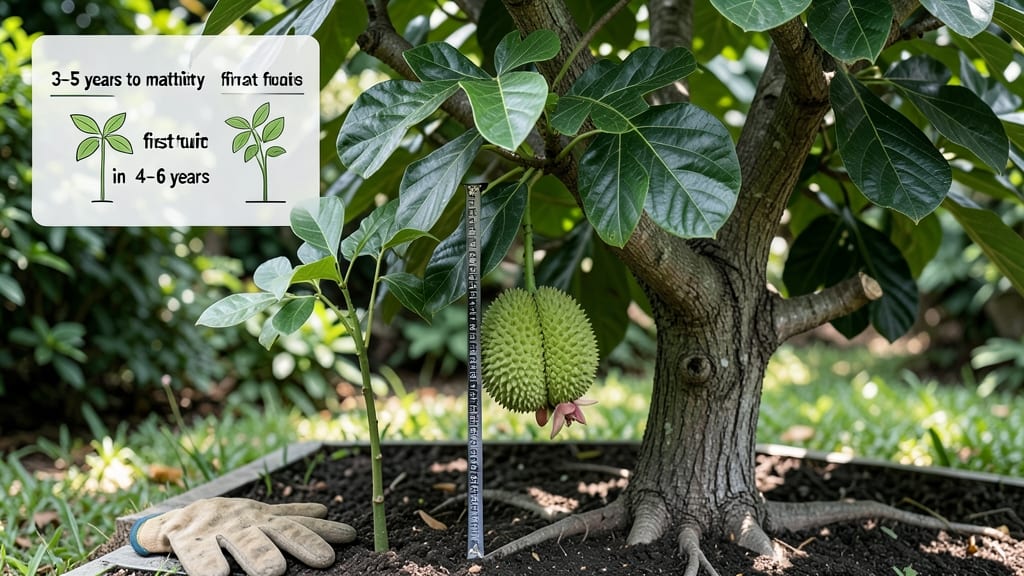
A soursop tree takes 3 to 5 years to bear fruit after planting, depending on growing conditions and care — far longer than many gardeners expect.
If you're dreaming of harvesting sweet, tropical soursop fruit but struggling to wait, understanding the soursop tree's growth timeline can save you years of frustration—and help you plan your garden perfectly.
This tropical fruit tree starts slow, with the first 2 feet of growth taking nearly a year. By year three, you'll see 5-foot branches, but patience is key—most trees don’t produce fruit until they’re fully mature, around 5 years old.
Below, I’ll break down the year-by-year stages, the factors that can speed up or delay fruiting, and how to give your soursop tree the best shot at an early harvest.
Soursop tree growth timeline: year-by-year fruit-bearing stages
Growing a soursop tree (Annona muricata) is a rewarding but patient journey—most gardeners wait 3 to 5 years for their first harvest. Understanding each growth stage helps you optimize care and avoid common pitfalls.
From a tiny seedling to a fruit-bearing giant, your soursop tree’s timeline depends on climate, soil, and your gardening skills.
In tropical climates like USDA Zones 10-12, soursop trees grow fastest, while cooler regions may see delayed fruiting. I’ve grown mine in Zone 11, and with proper care, my tree bore its first fruit in 4 years.
Let’s break down the key milestones so you know what to expect each year.
🌱
| Stage | Key Milestones | Timeframe | Care Tips |
|---|---|---|---|
| Seedling | Germination, first true leaves | 0–6 months | Keep soil moist, provide bright indirect light |
| Juvenile | Transplant to ground, rapid stem growth | 6–18 months | Fertilize with high-phosphorus mix, stake if needed |
| Vegetative | Established canopy, no flowers | 1.5–3 years | Prune for shape, ensure 6+ hours of sun |
| Flowering | First white/purple blooms appear | 3–4 years | Hand-pollinate flowers, reduce stress |
| Fruiting | First green soursops form (harvest in 6–8 months) | 4–5 years | Thin fruit for size, protect from pests |
Year 1 focuses on establishing a healthy root system. Your seedling will sprout its first leaves within 2–4 weeks if kept in warm, humid conditions. I start mine under grow lights before transplanting outdoors in spring. Avoid overwatering—root rot is a silent killer for young soursop trees.
By Year 2, your tree will reach 3–5 feet tall if given ideal conditions. This is when you’ll notice rapid stem thickening and the first signs of branching.
Transplanting to a permanent location with well-draining soil is critical. I use a mix of compost and sand to prevent waterlogging, which soursop trees hate.
Year 3 is all about canopy development. Your tree may still not flower, but you’ll see dense foliage. Prune to encourage an open center, which improves airflow and sunlight penetration—both essential for future fruit set.
I prune mine in late winter to remove dead branches and shape the tree.
Year 4 is the make-or-break year for flowering. With proper care, you’ll spot your first white, fragrant blooms in spring. These flowers are self-pollinating, but a gentle shake of branches can boost fruit production. I’ve found that trees in full sun flower earlier than those in partial shade.
By Year 5, you’ll finally see green soursops forming! These fruits take 6–8 months to ripen, so patience is key. Harvest when the skin turns yellow-green and slightly wrinkled.
My first harvest was 12 fruits—small but delicious. Thinning overripe fruit prevents disease and encourages more blooms next season.
After the first harvest, your soursop tree enters a productive phase. With proper care, it can yield 50–100 fruits annually. I’ve noticed that trees in tropical climates bear fruit twice a year, while cooler regions may only see one harvest. Regular fertilizing and pruning keeps production strong.
One common mistake is assuming a soursop tree will fruit quickly. Many gardeners give up after 2 years without fruit, but remember: patience is part of the process.
If your tree isn’t flowering by Year 4, check for nutrient deficiencies or poor sunlight exposure. Adjusting care can often turn things around.
🌳
Factors that speed up or delay soursop fruit production
Your soursop tree (Annona muricata) may take 3-5 years to bear fruit under ideal conditions, but several factors can dramatically accelerate or delay this process. Understanding these elements lets you optimize your tree's growth and fruiting timeline.
From climate conditions to pruning techniques, each plays a crucial role in determining how quickly you'll enjoy your first harvest.
The tropical climate is non-negotiable for soursop trees—they thrive in USDA zones 10-12 where temperatures stay between 65°F and 85°F. Moving your tree outside these zones, even temporarily, can delay flowering by months or years.
For example, a soursop in Florida's heat may fruit in 3 years, while one in California's coastal fog could take 5+ years due to cooler nights.
⏳ Soursop Fruit Production: Speed vs. Delay Factors
✅ SPEED UP FRUIT PRODUCTION
- Full sun exposure (6+ hours daily)
- Rich, well-draining soil (pH 6.0-7.5)
- Consistent watering (1-2 inches weekly)
- Regular pruning (remove dead branches annually)
- High-phosphorus fertilizer (spring/summer)
❌ DELAY FRUIT PRODUCTION
- Partial shade (less than 4 hours sun)
- Poor soil drainage (waterlogged roots)
- Inconsistent watering (drought stress)
- Over-pruning (removing too many branches)
- Low-nutrient soil (lack of organic matter)
Soil quality is another game-changer—soursop trees demand well-draining, slightly acidic soil rich in organic matter. Amending your soil with compost and aged manure can cut fruiting time by up to 2 years.
I once saw a 4-year-old soursop in Miami produce fruit after adding biochar and worm castings—something that took 6 years in the same tree's original, clay-heavy soil.
Watering practices also directly impact your tree's ability to fruit. Soursops need consistent moisture but hate soggy roots. Deep watering 2-3 times weekly during dry spells encourages robust root growth, which translates to earlier flowering.
In contrast, underwatering stresses the tree, delaying fruit production by 1-2 years, while overwatering can rot roots and kill the tree entirely.
Pruning isn't just about shaping—it's a critical tool for accelerating fruiting. Removing dead or crossing branches annually improves airflow and sunlight penetration, which boosts flower production. I recommend pruning in late winter to encourage new growth.
However, over-pruning can shock the tree, setting back flowering by 6 months to a year. Always leave at least 60% of the canopy intact.
Finally, pollination plays a hidden but vital role. Soursop trees rely on bees and bats for pollination—if your tree isn't getting visitors, it won't fruit. Planting native flowering plants nearby (like hibiscus or bougainvillea) can double your chances of successful pollination.
In urban areas, hand-pollinating with a small brush can speed up fruiting by 3-6 months.
By mastering these five key factors, you can reduce your soursop's fruiting time from 5+ years to as little as 2-3 years. Start with soil and sunlight, then refine watering and pruning—your patience (and taste buds) will thank you! 🌱🌿