
Companion Plants
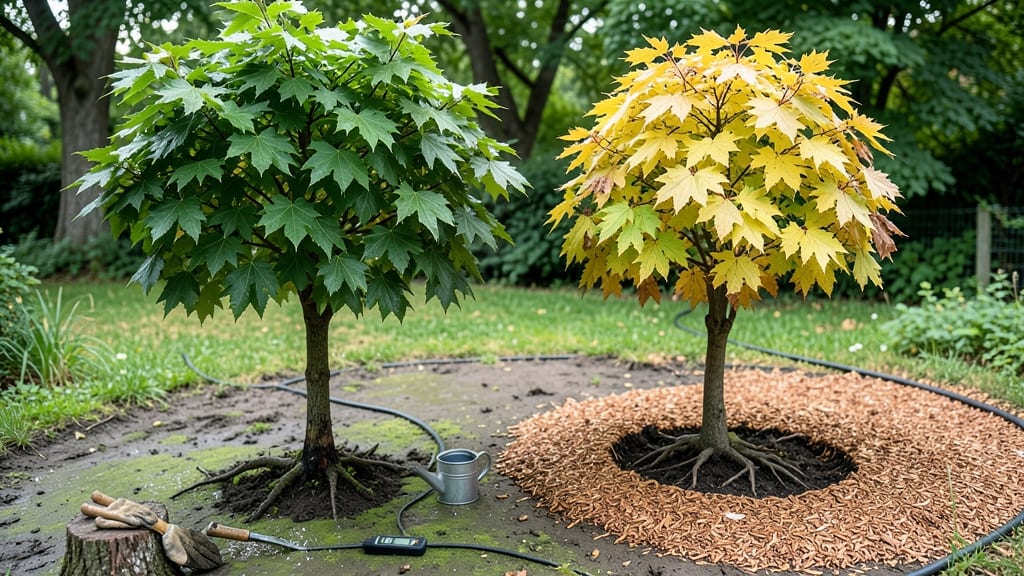
An overwatered tree can recover if you act quickly, but prolonged saturation leads to root rot and irreversible damage. Drain soggy soil, trim affected roots, and adjust your watering schedule immediately—though hardy species like oaks or willows handle stress better than sensitive types like citrus or maples.
Overwatering disrupts a tree's natural balance by suffocating roots and inviting fungal infections, which starve the plant of oxygen. 🌳 The first signs—yellowing leaves or wilting branches—appear within days, but recovery depends on how fast you intervene.
I've seen willows bounce back in weeks with proper care, while delicate fruit trees often need professional help. The key is acting before roots turn mushy and black, which signals permanent damage.
For immediate action, start by loosening compacted soil around the base to improve airflow. If your tree is in a pot, check drainage holes and repot if needed. Over time, adjust watering to match seasonal needs—most trees prefer deep, infrequent watering rather than daily shallow drinks.
Always check soil moisture with your finger before watering; if it's damp just an inch down, wait a few days.
💡 In This Article
- How Overwatering Damages Tree Roots and What Happens Next
- Step-by-Step Guide to Reviving an Overwatered Tree
How overwatering damages tree roots and what happens next
When soil stays too wet, roots suffocate because water displaces the air pockets they need to breathe.
Without oxygen, roots can't absorb nutrients or water efficiently, triggering a cascade of stress responses. 🌱 The first 24-48 hours after overwatering are critical—roots begin to starve for oxygen, and harmful anaerobic bacteria start breaking down root tissues.
This process accelerates when soil temperatures stay above 60°F, creating ideal conditions for fungal pathogens like Phytophthora that thrive in waterlogged conditions.
Symptoms appear quickly: leaves yellow (chlorosis) within 3-7 days as the tree can't transport nutrients, and branches may wilt even when soil feels moist.
Compare this to underwatered trees, which show brown, crispy edges—a sign of dehydration. 🌳 The timeline varies by species: fast-growing willows show recovery in 2-4 weeks if roots aren't rotting, while citrus trees (with shallow root systems) may never fully bounce back.
Oak trees, with deep taproots, can endure brief overwatering better due to their natural resilience.
The real damage happens when roots turn black and mushy—a sign of root rot where fungal hyphae have invaded cells. At this stage, the tree's vascular system clogs, preventing water uptake even if you stop watering. 💀 This is why acting within 72 hours of noticing wilting is crucial.
The longer roots stay waterlogged, the more they decay, and the less chance the tree has of recovery. Even with intervention, some species like magnolias or fruit trees may never regain full vigor after severe root damage.
Consider the soil type too—clay soils hold moisture for weeks after rain, while sandy soils drain within 24 hours.
This explains why identical watering habits can kill a tree in clay soil but save one in raised beds with amended soil. 💧 The key is understanding your tree's native habitat: swamp-dwelling willows tolerate wet feet, while desert-adapted species like junipers need well-draining soil at all times.
This mismatch between care and biology determines whether a tree recovers or declines.
What most people overlook is how overwatering disrupts the soil microbiome. Beneficial mycorrhizal fungi, which help roots absorb nutrients, die off in waterlogged conditions. 🌿 These fungi typically make up 20-30% of a healthy root's surface area—losing them weakens the tree's immune system even after you fix the watering issue.
This is why some trees appear to recover physically but keep declining: their root systems lack the microbial support needed for long-term health.
Here's what's actually happening at the cellular level: Overwatering triggers ethylene gas production in roots, a stress hormone that accelerates aging.
This causes root tips to die back, reducing the tree's ability to explore new soil for moisture and nutrients. 🌱 In severe cases, ethylene levels can rise enough to trigger leaf abscission (dropping leaves) as the tree's survival mechanism to conserve energy. The good news?
Ethylene breaks down quickly when soil dries, giving you a narrow window to reverse damage before it becomes permanent.