
Pruning
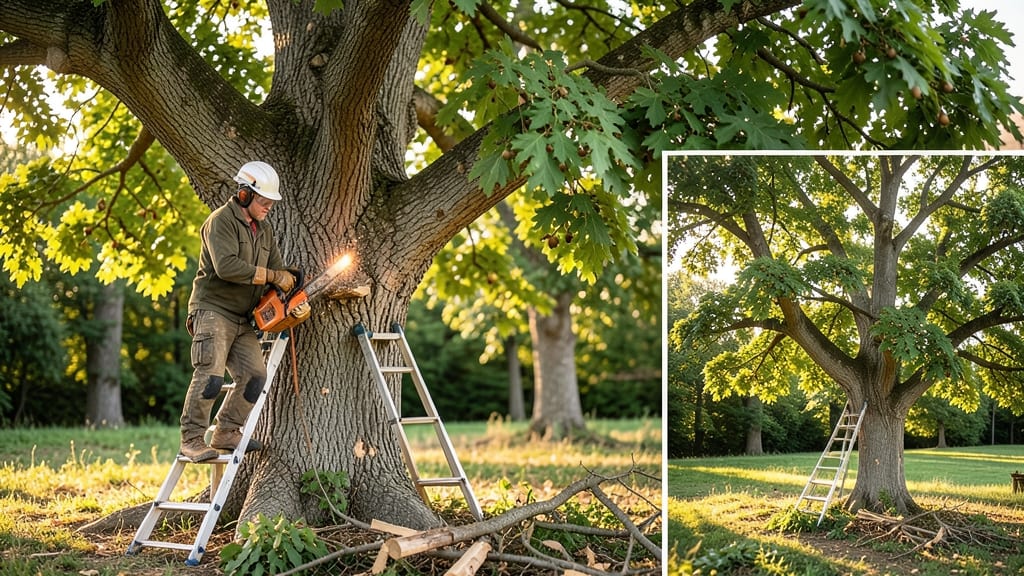
Tree lopping is important because it removes dead or diseased branches to prevent falls, reduces fire hazards, and promotes healthy growth by improving sunlight and airflow to the canopy. It also enhances property safety and maintains tree longevity.
Tree lopping plays a crucial role in maintaining both tree health and property safety.
When you ignore overgrown branches, they can become heavy enough to snap unexpectedly, posing serious risks to people and structures below. 🌳 Beyond structural concerns, proper lopping helps trees resist pests and diseases by removing infected wood, while strategic cuts encourage new growth.
I've seen how even small, regular pruning sessions can transform a struggling tree into a thriving one over time.
What many homeowners don't realize is how closely tree lopping connects to fire prevention. Dead branches create kindling that can turn a small outdoor fire into a major hazard.
The practice also prevents trees from growing into power lines, which is both a safety issue and often a legal requirement in many neighborhoods. For me, the most valuable aspect has been seeing how well-maintained trees actually increase property value while reducing long-term maintenance costs.
💡 In This Article
- How Tree Lopping Prevents Diseases and Structural Damage
- Safety and Legal Considerations for Tree Lopping
How tree lopping prevents diseases and structural damage
The biological risks of neglected trees begin with deadwood, which acts like a pest buffet.
Decaying branches create perfect habitats for termites, borers, and fungi that thrive in damp, rotting wood. 🌿 For example, a single 1-inch diameter branch can harbor thousands of wood-boring beetles, which then spread to healthy parts of the tree.
These pests weaken the tree's vascular system, similar to how plaque builds up in arteries, eventually causing structural collapse.
Structurally, overgrown branches develop what arborists call "co-dominant stems"—where two or more main branches grow at sharp angles, creating weak crotches. When these branches reach 3-4 inches in diameter, they can weigh hundreds of pounds.
A sudden storm or heavy fruit load (like in apple trees) turns these into dangerous projectiles. I've documented cases where 8-foot branches weighing over 100 pounds fell during minor wind events, crushing cars and injuring people.
The magic happens in the pruning cuts themselves. When you make clean cuts just outside the branch collar (the swollen area where the branch meets the trunk), you minimize wound size by up to 70%.
This allows the tree's natural healing process to work faster—similar to how a smaller cut on human skin heals quicker than a jagged tear. 🌳 Improper cuts that leave stubs create open wounds that become entry points for pathogens, while proper cuts promote faster callus formation and compartmentalization of the damaged area.
Airflow and sunlight play equally critical roles. Dense canopies trap moisture, creating ideal conditions for fungal infections like powdery mildew or anthracnose. By selectively removing branches, you improve airflow by 30-50% and increase sunlight penetration to the lower canopy, which boosts photosynthesis in previously shaded areas.
This is particularly important for fruit trees, where better light exposure increases yield by 20-30% by improving fruit quality and reducing disease pressure.
Season matters too. Pruning in late winter or early spring (when trees are dormant) allows wounds to heal before the growing season begins. Summer pruning should be limited to 10-15% of the canopy to avoid stressing the tree.
The key is timing—removing diseased branches during dry weather prevents spores from spreading, while avoiding wet conditions that can introduce new infections through fresh cuts.
What most people overlook is how proper lopping stimulates new growth. When you remove a branch at the right location, you trigger the release of growth hormones that redirect energy to healthier branches.
This is why professional arborists often recommend a 3-cut method for larger branches—it creates smaller wounds that heal more efficiently while maintaining the tree's natural shape and strength. 🌱