
Companion Plants
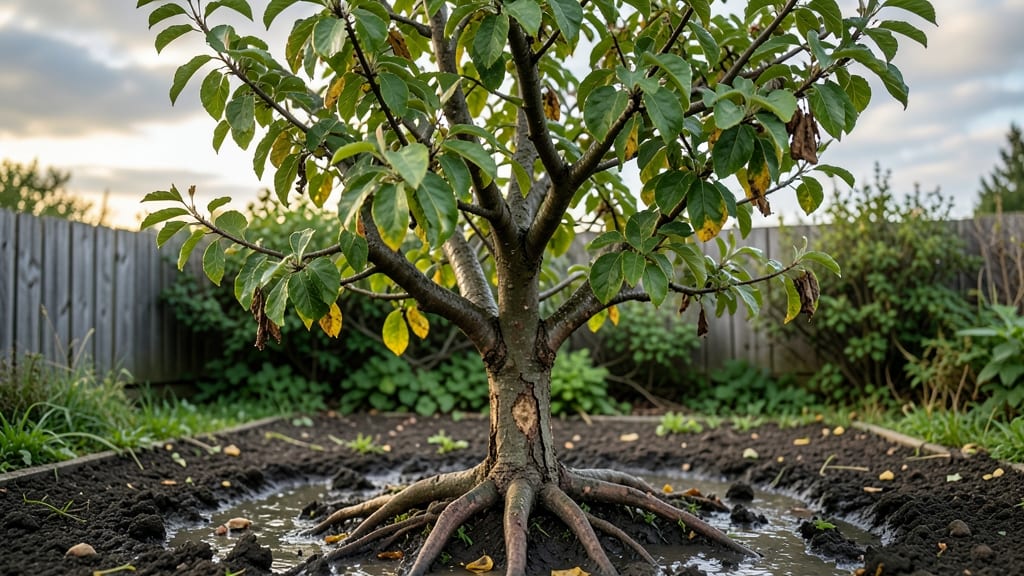
What does an overwatered peach tree look like? When your peach tree’s leaves look sadder than a rainy-day picnic, 🌧️ you’re probably dealing with overwatering—and it’s easier to fix than you think. Drooping, yellowing foliage that feels limp to the touch is your first clue, but the real giveaway is soggy soil that smells like a swamp, not fresh earth. Roots turning mushy or black? That’s root rot setting in, and it’s a peach tree’s worst nightmare.
Compare this to an underwatered tree: its leaves curl upward like they’re begging for water, while overwatered ones flop downward like they’ve given up. The soil around the base stays damp for days, and you might even spot white fungal threads (mushrooms’ cousins) creeping through the dirt.
Pests like aphids or mites often move in when trees are stressed, so don’t assume it’s just water—check for tiny bugs too.
Here’s the good news: fixing it starts with one simple change—waiting until the top 2-3 inches of soil are dry before watering again. Improve drainage by adding compost or sand to heavy clay soil, and prune any mushy roots you find.
Within a few weeks, your tree will perk up, and those peaches will start looking as bright as they should.
Long-term, mulch around the base (but not touching the trunk) to regulate moisture, and water deeply once a week instead of daily shallow sips. Your tree will thank you with glossy leaves and a harvest that puts store-bought peaches to shame.
Trust me, I’ve revived enough sad trees to know this works.
Root Causes of Overwatering
Overwatering a peach tree isn’t just about pouring too much water—it’s a complex interplay of soil conditions, environmental factors, and even human habits. Understanding these root causes can help you prevent future issues and save your tree.
Let’s break down the science behind why peach trees drown when given too much love (or water).
Peach trees thrive in well-draining soil, but when drainage is compromised, excess water lingers around roots, suffocating them. Here’s why this happens:
- Clay or Compacted Soil 🏗️ Clay soils have tiny particles that pack tightly, trapping water like a sponge. Even after rain or irrigation, water doesn’t seep away quickly, leaving roots waterlogged. Compacted soil (often from foot traffic or heavy machinery) worsens this by reducing oxygen flow to roots.
- High Organic Matter Without Structure 🍂🔥 While organic matter improves soil fertility, too much (like unamended compost or mulch piled against the trunk) can create a dense, water-retentive layer. Without proper aeration, roots struggle to breathe, leading to anaerobic conditions—where harmful bacteria and fungi thrive.
- Improper Planting Depth 🕳️🚜 Planting a peach tree too deeply buries the root flare (where roots meet the trunk), trapping moisture. This forces roots to grow upward in search of oxygen, making them more susceptible to rot when overwatered.
Pro Tip: Test your soil’s drainage by digging a hole, filling it with water, and timing how long it takes to drain. If it’s still soggy after 6 hours, amend with coarse sand, perlite, or gypsum to improve airflow.
Even the best-intentioned gardeners can overdo it. Peach trees are drought-tolerant once established, but inconsistent watering habits lead to chronic overwatering:
- Frequent Light Watering 🌧️📅 Short, shallow waterings (like daily sprinkles) encourage roots to stay near the surface, where they’re more prone to drying out and drowning. Peach trees need deep, infrequent watering (1–2 inches per week) to develop strong taproots.
- Ignoring Weather Conditions ☔🌞 Watering on a schedule without checking rainfall or humidity can lead to overwatering. A peach tree in a shaded, humid microclimate needs far less water than one basking in full sun.
- Automatic Irrigation Gone Wrong 🤖💦 Drip systems or sprinklers left running too long (or with clogged emitters) can deliver excess water. Peach trees hate "wet feet"—their roots need oxygen, not a permanent puddle.
Pro Tip: Use a moisture meter or the "squeeze test" (grab a handful of soil—if it stays clumped, it’s too wet) to guide watering decisions.
Not all overwatering is your fault—sometimes, the environment conspires against your peach tree:
- Low-Lying or Swampy Areas 🏞️💦 Planting a peach tree in a natural depression or area with poor slope encourages water pooling. Even after rain, gravity keeps water near the roots.
- Thick Mulch or Weeds 🌿🍂 Mulch is great for moisture retention, but a layer thicker than 2–3 inches can smother roots and trap humidity. Weeds compete for water and block airflow, worsening the problem.
- High Humidity or Rainy Seasons 🌊☁️ Peach trees in tropical or monsoon climates struggle with overwatering because the soil never dries out. Their roots suffocate from lack of oxygen, even if you’re not actively watering.
Pro Tip: Elevate the planting area with a mound of soil or install a French drain if your yard is prone to standing water.
Once overwatering starts, it creates the perfect storm for pests and diseases:
- Phytophthora and Pythium Fungi 🍄🔥 These soil-borne pathogens thrive in waterlogged conditions, attacking root cells and blocking nutrient uptake. Infected roots turn brown, mushy, and emit a foul odor—classic signs of rot.
- Bacterial Soft Rot 🦠🌱 Overwatered peach trees are more vulnerable to Erwinia bacteria, which cause roots to collapse and leaves to wilt despite moist soil. This is often fatal if untreated.
- Nematode Infestations 🐛💨 Microscopic nematodes multiply in soggy soil, piercing roots and disrupting water transport. Heavy infestations lead to stunted growth and yellowing leaves.
Pro Tip: If you suspect root rot, prune affected roots with sterilized tools and apply fungicide (like copper-based sprays) to prevent spread.
Sometimes, well-meaning actions backfire:
- Over-Mulching or Mulching Wrong 🍂🚫 Piling mulch against the trunk (a practice called "volcano mulching") traps moisture and heat, promoting rot. Mulch should form a donut shape, 3–4 inches deep, away from the trunk.
- Fertilizing Wet Soil 🌱💥 Applying nitrogen-heavy fertilizers when the soil is saturated can burn roots. Fertilizers dissolve quickly in water, overwhelming the tree’s ability to absorb nutrients safely.
- Pruning at the Wrong Time ⏳✂️ Pruning during wet seasons (spring or fall) opens wounds that take longer to heal, increasing susceptibility to fungal infections in damp conditions.
Pro Tip: Always water deeply before fertilizing to help dilute nutrients, and prune in late winter or early spring when the tree is dormant.
Revive Your Peach Tree Now
Overwatering can turn your peach tree from a thriving fruit-bearing beauty into a sad, drooping mess—but don’t panic! With the right steps, you can nurse it back to health.
Below, we’ve mapped out practical fixes based on the most common signs of overwatering, along with prevention tips to keep your tree happy long-term.
If your peach tree’s leaves are turning yellow or brown and the branches feel soft or mushy, it’s likely suffering from root rot or nutrient starvation due to excess moisture.
🔥 Step 1: Stop Watering Immediately
- Cut off all water for at least 3–5 days to let the soil dry out.
- If the ground is soggy or smells like rot, delay watering even longer.
- Pro Tip: 💡 Use a moisture meter (or stick your finger 2 inches into the soil) to check moisture levels before watering again.
🍳 Step 2: Improve Soil Drainage
Overwatering thrives in compacted or clay-heavy soil.
Loosen the soil around the base (but avoid damaging roots) and mix in: - Organic matter (compost, coconut coir, or well-rotted manure) to improve aeration. - Perlite or sand (if your soil is extremely dense) to help water drain faster. - Pro Tip: 🌡️ If your tree is in a container, ensure it has drainage holes and use a well-draining potting mix (like a 50/50 blend of soil and perlite).
👨🍳 Step 3: Prune Damaged Foliage
- Remove yellow, brown, or mushy leaves with sterilized pruning shears to prevent fungal spread.
- Focus on lower branches first, as they’re most affected by poor drainage.
- Warning: ⏰ Avoid pruning during wet weather—wait for dry conditions to reduce infection risk.
If you’ve dug around the roots and found them dark, mushy, or smelling like rot, root rot has set in. This is serious but not always fatal if caught early.
🔪 Step 1: Trim the Rotten Roots
- Gently dig around the base (wear gloves!) and snip off black, slimy roots with clean shears.
- Healthy roots should be firm and white or light tan.
- Pro Tip: ✨ If more than 30% of the roots are rotted, consider replanting in fresh, well-draining soil.
🌿 Step 2: Apply Fungicide & Hydrogen Peroxide
- Mix 1 part 3% hydrogen peroxide with 10 parts water and water the soil lightly (this helps kill fungus without harming the tree).
- Sprinkle fungicide (like copper fungicide or neem oil) around the base to prevent further spread.
- Pro Tip: 💪 Avoid chemical fertilizers for at least 4–6 weeks—they can stress the roots further.
🏡 Step 3: Relocate (If Necessary)
If the soil in your garden is chronically waterlogged (e.g., low-lying areas, heavy clay), it’s best to:
- Repot the tree in a raised bed with amended soil.
- Plant in a slope to encourage runoff.
- Pro Tip: 🎯 If replanting, bury the graft union (the bulge near the base) 1–2 inches deeper than before to support regrowth.
Once your tree is on the mend, keep these habits to avoid future overwatering disasters:
| Problem | Solution |
|---|---|
| Too-frequent watering | Water deeply but infrequently (1–2 inches per week, less in rain). |
| Poor drainage | Test soil with a percolation test (dig a hole, fill with water—if it takes >6 hours to drain, amend soil). |
| Mulch buildup | Keep mulch 2–4 inches away from the trunk and no deeper than 3 inches. |
| Container issues | Use self-watering pots with drainage or terracotta (dries faster). |
| Heavy rainfall | Mound soil around the base to create a berm that diverts excess water. |
Final Thought: 🌟 Overwatering is reversible with patience and the right care. Monitor your peach tree closely in the weeks ahead—new growth should appear within 2–4 weeks if the roots are healing. If not, consult a local arborist for a soil test and personalized advice.
(Need a quick checklist? Download our Peach Tree Recovery Guide link for a printable version!)
Frequently asked questions
How can I tell if my peach tree is overwatered vs. underwatered?
Overwatered peach trees have drooping, yellowing leaves that feel soft or mushy, while underwatered trees have crispy, curled leaves that feel dry. Check the soil: overwatered soil stays soggy for days and may smell foul, while underwatered soil is bone-dry. Another clue? Overwatered roots turn black/mushy, while underwatered roots shrink and pull away from the soil.
Can I save a peach tree with root rot from overwatering?
Yes, but act fast! Prune away black, mushy roots immediately, then improve drainage by mixing in perlite or compost. Apply a 1:10 hydrogen peroxide solution to the soil to kill fungus. Stop watering for 5-7 days to let roots dry out. If more than 30% of roots are rotted, consider replanting in fresh, well-draining soil. Early action gives your tree the best chance!
Why does my peach tree keep getting overwatered even when I water less?
Poor drainage is often the culprit! Clay soil or compacted ground traps water like a sponge. Test drainage by digging a hole, filling it with water, and timing how long it takes to drain—if it’s still wet after 6 hours, amend with sand or organic matter. Also check for volcano mulching (mulch piled against the trunk) or low-lying planting areas that pool water.
Will overwatering kill my peach tree quickly, or is it a slow process?
It’s usually a gradual decline. Early signs (yellow leaves, wilting) appear within 1-2 weeks of overwatering, but root rot develops over weeks to months as roots suffocate. The tree may survive for months in this state, but fruit production suffers. The key is catching it early—once roots turn black and mushy, recovery becomes much harder.
Can I use coffee grounds to help fix overwatered peach tree soil?
Coffee grounds can help long-term by improving soil structure, but they’re not a quick fix for overwatering. Mix them into the soil after you’ve improved drainage and reduced moisture. Use sparingly (too much can acidify soil) and pair with compost or perlite for best results. Focus first on stopping waterlogging—coffee grounds alone won’t fix root rot.