
Companion Plants
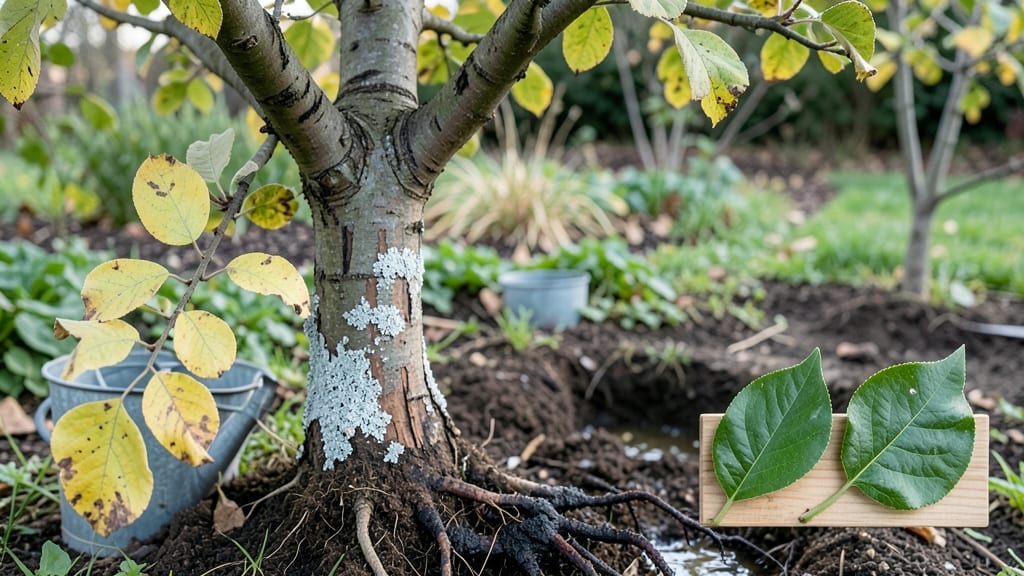
What does an overwatered apple tree look like?
It reveals itself through drooping leaves that feel soft and mushy to the touch—like a sad, waterlogged sponge. 🌿 The first sign is often yellowing foliage starting at the bottom, paired with leaves that curl or fall off prematurely, even when the tree isn’t wilting from drought.
I’ve seen it happen after just a few days of overzealous watering, where roots struggle to breathe beneath soggy soil.
The real giveaway? Mushy, grayish roots that smell foul when pulled from the ground—this is root rot in action. Fungal growth like white mold or black spots on leaves confirms the problem, and the soil around the base stays clingy and waterlogged long after you’ve stopped watering.
The tree’s bark may even develop cracks as it fights to survive in these conditions.
Fixing it starts with a simple soil moisture check: stick your finger 2-3 inches deep—if it’s damp, hold off on watering. Improve drainage by amending the soil with compost or sand, and consider raising the tree slightly if its current spot pools water.
Mulch around the base (but keep it 6 inches from the trunk) to regulate moisture without suffocating the roots.
Recovery takes time, but within a few weeks, you’ll notice leaves perking up and new growth forming. The key is consistency: water deeply but only when the top 2-3 inches of soil are dry.
Your apple tree will thank you with vibrant green leaves and a stronger root system ready for next year’s harvest.
Root Causes of Overwatering
An overwatered apple tree may seem like a gardener’s dream—lush, vibrant, and thriving—but too much water can actually suffocate its roots and trigger a cascade of problems.
Understanding why this happens helps you adjust your care routine before damage sets in. Let’s break down the key culprits behind soggy soil and stressed trees.
Apple trees thrive in well-draining soil, but compacted, clay-heavy, or poorly amended ground can trap excess moisture like a sponge. When water isn’t absorbed or evaporates slowly, roots sit in anaerobic (oxygen-deprived) conditions, leading to:
- Root rot: Fungi like Phytophthora and Pythium flourish in waterlogged soil, breaking down root tissues. Within weeks, roots turn brown, mushy, and emit a foul odor.
- Oxygen starvation: Roots need oxygen to respire and absorb nutrients. Without it, cells die off, and the tree struggles to transport water and sugars—even if the soil is damp.
- Nutrient lockout: Excess water dilutes essential minerals (like nitrogen and potassium) in the soil, making them inaccessible to roots.
Actionable fix: Test your soil’s drainage by digging a 12-inch hole near the tree, filling it with water, and timing how long it takes to drain. If it’s slower than 4–6 hours, amend with compost, sand, or perlite to improve aeration.
Apple trees are resilient, but their water needs shift with seasons, weather, and age. Common mistakes include:
- Ignoring rainfall: Watering on wet days (especially after 0.5–1 inch of rain) drowns roots. A rain gauge or trowel test (poke soil 2 inches deep—if moist, skip watering) prevents this.
- Shallow, frequent watering: Light sprinkles encourage roots to stay near the surface, where they’re more vulnerable to drying out and over-saturation. Deep, infrequent watering (1–2 inches per week) encourages deeper root growth.
- Automatic systems on autopilot: Drip irrigation or sprinklers left running without soil checks can deliver double the needed water, especially in cool, humid climates.
Pro tip: Mature apple trees (3+ years old) often need less water than young saplings. Aim for 1–1.5 inches per week during growing seasons, tapering off in winter.
Mulch is a gardener’s best friend—when used correctly. Too much (especially thick layers of organic mulch like wood chips) can smother roots and trap moisture. Here’s how it backfires:
- Heat and moisture buildup: Decomposing mulch generates heat, which speeds up evaporation but also creates a micro-climate that holds humidity against the trunk.
- Fungal growth: Wet mulch near the base invites Armillaria root rot or sclerotinia, which attack weakened roots.
- Root girdling: Piling mulch against the trunk (a practice called volcano mulching) can strangle the tree and trap excess water.
Actionable fix: Keep mulch 2–4 inches deep and 6 inches away from the trunk. Use inorganic mulches (like gravel) in problem areas if organic matter retains too much moisture.
Potted apple trees or those in raised beds dry out faster—but they’re also prone to overwatering if not monitored. Key issues include:
- No drainage holes: Containers without exit holes act like bathtubs, drowning roots even if you “think” you’re watering lightly.
- Small root zones: Limited soil volume means roots fill up quickly, leaving no room for excess water to escape.
- Overpotting: A tree in a too-large pot (e.g., a dwarf apple tree in a 20-gallon container) struggles to dry out evenly, leading to patchy waterlogging.
Pro tip: Use terracotta pots (which dry faster than plastic) and self-watering containers with moisture meters. For raised beds, ensure they’re elevated and filled with fast-draining mix (e.g., 60% soil, 30% perlite, 10% compost).
Next up: How to spot the telltale signs of overwatering before it’s too late—from wilting leaves to that dreaded “mushy root” moment.
Reviving Your Overwatered Apple Tree
An overwatered apple tree may look like it’s drowning, but with the right steps, you can nurse it back to health. The key is acting quickly to address root rot, improve drainage, and restore balance. Below are targeted solutions based on the most common signs and causes of overwatering.
If your apple tree’s roots are mushy, black, or smelly, root rot has likely set in. This is a serious issue, but recovery is possible with immediate action.
🔧 Step-by-Step Fix:
- Stop Watering Immediately 💧
- Let the soil dry out completely before watering again. Overwatering worsens root rot, so patience is key.
- Improve Drainage 🏗️ - Raise the Tree’s Base: If planted in low-lying ground, mound soil around the base to create a slight slope away from the trunk.
This helps water drain faster. - Add Organic Matter: Mix compost or well-rotted manure into the top 6–12 inches of soil to improve aeration and microbial activity. - Install Drainage Tiles (Advanced): For severe cases, consider installing perforated drainage pipes around the root zone to redirect excess water.
- Prune Damaged Roots ⚔️
- Carefully dig around the root ball (avoid disturbing healthy roots) and trim any black, mushy, or soft roots with sterilized pruners. Healthy roots should be firm and white or light tan.
- Apply Fungicide (If Needed) 🛡️
- Use a copper-based fungicide or hydrogen peroxide solution (3%) to treat the soil and prevent fungal spread. Follow label instructions for application.
- Water Deeply but Less Often 💧⏳
- Once the soil is dry, water deeply once a week (or as needed) rather than frequent shallow waterings. Use a moisture meter to check soil dampness before watering.
Yellow leaves and drooping foliage often signal overwatering, but they can also result from poor nutrient uptake due to compacted soil.
💡 Quick Solutions:
- Thin the Canopy 🌿✂️
- Overwatered trees often have reduced energy due to poor root function. Prune back 10–20% of the foliage to reduce water loss and redirect energy to root recovery.
- Fertilize Lightly 🌱💪
- Apply a balanced, slow-release fertilizer (e.g., 10-10-10) to replenish nutrients. Avoid high-nitrogen fertilizers, which can stress already compromised roots.
- Mulch Properly 🍂🌳
- Spread 2–4 inches of organic mulch (wood chips, straw) around the base, keeping it 6 inches away from the trunk. Mulch helps regulate soil moisture and temperature.
Once your apple tree is on the mend, take proactive steps to avoid repeating the issue.
🔥 Pro Tips for Long-Term Health:
- Test Your Soil 📊💧
- Use a soil moisture meter or the "squeeze test" (grab a handful of soil—if it stays clumped, it’s too wet).
- Ideal soil should feel like a damp sponge, not soggy or bone-dry.
- Adjust Your Watering Schedule ⏰💧
- Water deeply 1–2 times per week (depending on climate) rather than daily shallow waterings.
- Early Morning is Best: Water before 10 AM to allow foliage to dry, reducing fungal risks.
- Upgrade Your Soil 🌱✨
- If your tree is in clay-heavy or compacted soil, amend it with sand, perlite, or coconut coir to improve drainage.
- For container-grown apple trees, ensure pots have drainage holes and use a well-draining potting mix.
- Monitor for Pests 🐜🚫
- Overwatered trees attract fungal pests like aphids or scale insects. Inspect leaves regularly and treat with neem oil if needed.
- Choose the Right Location 🌳📍
- Apple trees need full sun (6+ hours/day) and well-draining soil. Avoid planting in low spots where water pools.
💡 Final Reminder: Recovery takes time—weeks to months—but consistency in drainage improvements and watering habits will help your apple tree thrive again. Keep an eye on progress, and soon, you’ll see fresh green leaves and stronger growth!
Frequently asked questions
Why do my apple tree’s leaves turn yellow first at the bottom?
Yellow leaves starting at the bottom are a classic sign of overwatering. When roots sit in soggy soil, they can’t absorb nutrients or oxygen properly, causing the oldest leaves (at the bottom) to yellow first from nutrient deficiency. This is your tree’s way of shedding damaged foliage to focus energy on survival.
Can my apple tree recover from root rot?
Yes, but it requires immediate action! Start by stopping all watering and improving drainage (add compost or sand). Prune any black, mushy roots and apply a copper-based fungicide. With proper care, new roots can grow within 4-6 weeks, though severe cases may take longer to fully recover.
How often should I water an apple tree?
Apple trees need 1-1.5 inches of water per week during growing seasons, but timing matters. Water deeply 2-3 times per week (early morning) rather than daily shallow waterings. Always check soil moisture first—if the top 2-3 inches are dry, it’s time to water.
What’s the difference between overwatered and underwatered apple trees?
Overwatered trees show yellow leaves, mushy roots, and fungal growth, while underwatered trees have crispy brown edges, wilting despite dry soil, and shallow roots. The key difference? Overwatered trees stay limp even when soil is wet, while underwatered ones feel dry and brittle.
Can mulch help or hurt an overwatered apple tree?
Mulch can backfire if used incorrectly! Use 2-4 inches of organic mulch (wood chips) but keep it 6 inches from the trunk to prevent moisture buildup. Too much mulch traps water, worsening root rot—think of it as a blanket that should breathe, not suffocate.