
Diseases
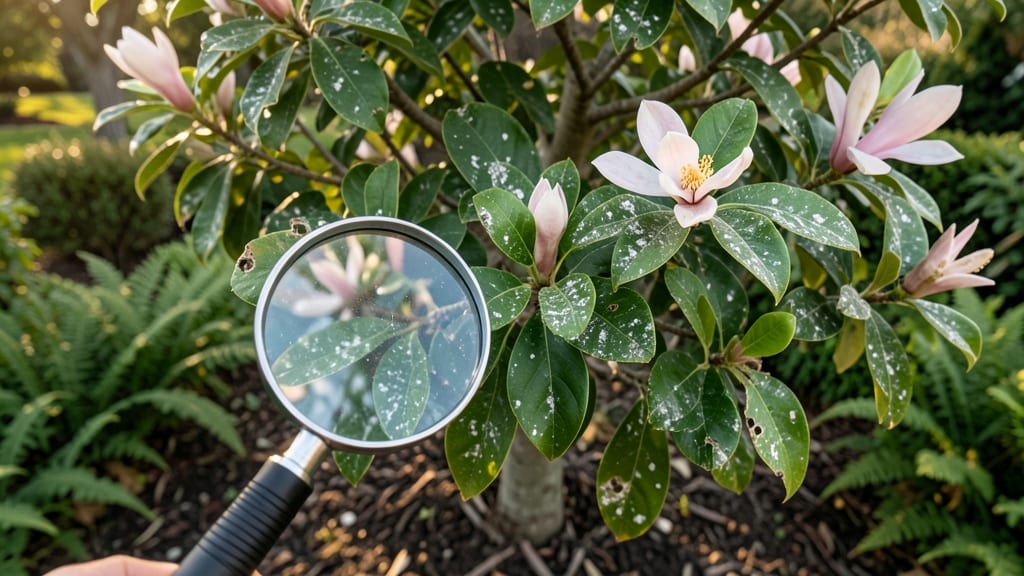
White spots on magnolia leaves could be fungal spot disease—or something else entirely. 🌿 I’ve seen this problem turn a lush tree into a sad, spotted mess, but the good news is most cases are fixable with the right approach.
The key is identifying whether it’s powdery mildew, leaf spot, or even environmental stress before treating it.
Fungal spot diseases like powdery mildew thrive in humid, shady conditions, creating white, powdery patches that spread fast. Spider mites can also cause white webbing and speckling, while nutrient deficiencies might show as yellowing with white edges.
The first step is checking the undersides of leaves and the soil moisture—overwatering or poor drainage often makes things worse.
Once you confirm the issue, treatment is straightforward: prune out infected leaves, apply neem oil or sulfur for fungi, and adjust watering to keep foliage dry. For severe cases, a fungicide like copper spray works, but prevention—like proper spacing and airflow—keeps magnolias thriving year after year.
If spots keep coming back despite your efforts, it might be time to call an arborist. Some magnolias are just more susceptible, and professional help can save your tree before it’s too late.
Root Causes of Leaf Spots
White spots on magnolia leaves are rarely a sign of good health—they’re usually a cry for help from your tree. Understanding the why behind these spots is the first step to saving your magnolia’s lush, disease-free foliage.
Let’s break down the most common culprits, from microscopic invaders to environmental stressors, and how they turn your tree’s leaves into a canvas of discoloration.
---
🍄 Magnolia Leaf Spot (Anthracnose & Others) Fungal pathogens like Gloeodes pomigena (the culprit behind anthracnose) or Phyllostictina magnoliae thrive in damp, humid conditions, turning your magnolia’s leaves into a buffet.
These fungi produce conidia (spore clusters) that land on leaves, germinate in moisture, and create white, gray, or brown spots—often with yellow halos. Over time, spots expand, merge, and may develop dark centers or even shot-hole-like perforations (holes where infected tissue falls out).
Why it spreads: - Overhead watering splashes spores onto leaves, creating a perfect infection highway. - Poor air circulation (think dense foliage or crowded plantings) traps humidity, giving fungi a greenhouse effect. - Stressed trees (from drought, poor soil, or root damage) have weaker defenses, making them prime targets.
---
🌬️ Erysiphe & Podosphaera Species If the white spots look like powdery, chalky residue (almost like someone dusted your leaves with talcum powder), you’re likely dealing with powdery mildew. This fungal disease isn’t just unsightly—it blocks sunlight, stunts growth, and can cause premature leaf drop.
Unlike leaf spots, powdery mildew grows on the leaf surface, not inside the tissue.
Why it takes hold: - High humidity + warm nights (60–80°F) create ideal conditions for spore germination. - Shady or sheltered spots (like under dense canopies) reduce airflow, trapping moisture. - Nitrogen-heavy fertilizers promote soft, succulent growth that fungi love to feast on.
---
🦠 Xanthomonas & Pseudomonas Bacteria Bacterial leaf spots often start as water-soaked, greasy-looking spots that turn white or gray with yellow borders. Unlike fungi, bacteria spread rapidly in wet conditions, especially during rain or overhead irrigation. These spots may ooze a clear or yellowish bacterial slime when wet—a dead giveaway.
Why bacteria win: - Rain or wind-driven splashes spread bacteria from infected leaves to healthy ones. - Wounded leaves (from hail, insects, or pruning cuts) provide entry points. - Cool, wet springs (50–75°F) are peak bacterial growth seasons.
---
🌡️ Sun Scorch & Nutrient Deficiencies Not all white spots are caused by pathogens—sometimes, your magnolia’s leaves are screaming for help due to environmental factors: - Sun scorch: Pale, white, or yellow patches on leaves exposed to sudden intense sunlight (common after winter or in thin-barked young trees). - Chlorosis (iron/zinc deficiency): White or pale spots between leaf veins, often due to alkaline soil or poor drainage. - Winter burn: Freeze damage can cause white, crispy patches, especially on evergreen magnolias.
Why stress weakens defenses: - Improper watering (drought or overwatering) disrupts nutrient uptake. - Compacted or poor soil limits root growth, making trees vulnerable to secondary infections. - Late-season fertilizing encourages tender new growth that’s susceptible to cold snaps.
--- 🐜 Spider Mites, Scale, or Sawfly Larvae While pests don’t directly cause white spots, their feeding can stress leaves, making them prone to fungal/bacterial infections.
For example: - Spider mites suck sap, causing stippled, white or yellow speckling. - Scale insects excrete honeydew, which fosters sooty mold (a black fungal growth). - Sawfly larvae chew leaves into a lace-like pattern, leaving them vulnerable to pathogens.
Why pests thrive: - Drought stress weakens trees, making them easier prey. - Lack of natural predators (like ladybugs or lacewings) tips the balance in favor of pests.
Quick Fixes for Magnolia Leaf Spots
White spots on your magnolia leaves don’t have to mean the end of your tree’s beauty—with the right approach, you can restore its health and prevent future outbreaks. Below, we’ve mapped out practical solutions tailored to the most common causes, from fungal infections to environmental stressors.
Follow these steps to treat the issue and keep your magnolia thriving.
---
If the white spots are fuzzy, powdery, or spreading rapidly, a fungal infection is likely the culprit. Here’s how to tackle it:
#### 🔥 Step 1: Prune Infected Leaves - Why? Removing affected foliage stops the fungus from spreading to healthy parts of the tree. - How? - Use sterilized pruners (wipe with rubbing alcohol between cuts). - Trim only the infected leaves—avoid over-pruning, as magnolias are sensitive. - Dispose of clippings in the trash (not compost) to prevent reinfection.
#### 🍳 Step 2: Apply Fungicide - Best options: - Neem oil (natural, safe for most plants): Mix 1 tbsp per quart of water + a drop of dish soap as a spreader.
Spray every 7–10 days until new growth appears. - Copper fungicide (for severe cases): Follow label instructions—reapply after rain. - Baking soda spray (DIY): Combine 1 tsp baking soda, 1 tbsp oil, and a drop of soap per quart of water.
Spray undersides of leaves where fungi love to hide.
#### 👨🍳 Step 3: Improve Airflow & Light - Thin out branches if the tree is overcrowded (fungi thrive in damp, shaded areas). - Space mulch 3–4 inches away from the trunk to reduce moisture buildup. - Water at the base (not overhead) to keep leaves dry.
#### 💡 Prevention Tips ✅ Water early in the day so leaves dry before evening. ✅ Avoid overhead irrigation—use drip systems or soaker hoses. ✅ Plant in full sun (6+ hours/day) to discourage fungal growth. ✅ Clean up fallen leaves regularly—they harbor spores.
---
If the white spots appear dry, crispy, or paired with yellowing, your magnolia might be struggling with heat, sun exposure, or poor soil.
#### 🌞 Step 1: Adjust Watering & Mulching - Water deeply 1–2 times per week (check soil moisture—top 2 inches should be dry before watering). - Mulch with 2–3 inches of organic material (wood chips or shredded bark) to retain moisture and regulate temperature. - Avoid wetting leaves during hot afternoons to prevent sun scorch.
#### 🍎 Step 2: Test & Amend Soil - Take a soil test (kit from a garden center or local extension office) to check pH and nutrient levels. - Magnolias prefer: - pH 5.0–6.5 (acidic to slightly acidic). - Rich, well-draining soil with compost or aged manure. - Add organic matter if soil is compacted (e.g., compost or peat moss).
#### 🎯 Step 3: Provide Shade Relief - If your magnolia is in a hot, exposed area, consider: - Temporary shade cloth (30–50% coverage) during peak summer months. - Planting nearby shrubs (like hydrangeas or azaleas) to break harsh sunlight.
#### ✨ Prevention Tips 🔹 Group magnolias with other shade-loving plants to create a microclimate. 🔹 Fertilize in early spring with an acid-loving plant formula (e.g., 10-10-10 or cottonseed meal). 🔹 Monitor for pests (like spider mites), which can weaken leaves and make them more susceptible to stress.
---
Tiny white spots that look like specks or webbing? Pests might be sucking sap from your magnolia’s leaves.
#### 🔪 Step 1: Inspect & Identify the Pest - Spider mites: Look for fine webbing on leaf undersides. - Scale insects: Appear as small white bumps stuck to stems/leaves.
#### 🚿 Step 2: Blast Off Pests - Spray with water (strong stream from a hose) to dislodge mites/scale. - Use insecticidal soap (mix 2.5 tbsp per gallon of water) and spray every 5–7 days. - Neem oil (same mix as for fungi) works against both pests.
#### ⏰ Step 3: Encourage Natural Predators - Ladybugs and lacewings eat spider mites—attract them with dill or fennel plants nearby. - Release beneficial nematodes (for scale) into the soil.
#### 💡 Prevention Tips 🔹 Keep the tree healthy—stressed trees attract more pests. 🔹 Avoid broad-spectrum pesticides, which kill beneficial insects. 🔹 Prune regularly to improve airflow and reduce hiding spots for pests.
--- If your magnolia’s white spots persist after 4–6 weeks of treatment, or if the tree shows wilting, dieback, or large areas of defoliation, consult an arborist or local cooperative extension service.
They can diagnose hidden issues (like bacterial leaf spot or root rot) and recommend targeted solutions.
--- Remember: Consistency is key! Fungal diseases and pests won’t disappear overnight, but with diligent care, your magnolia will bounce back stronger. 🌿💚
Frequently asked questions
Are white spots on magnolia leaves always caused by disease?
Not always! While fungal infections like powdery mildew or leaf spot are common causes, white spots can also result from sun scorch (especially after winter), nutrient deficiencies (like iron or zinc), or even pest damage from spider mites. Check for webbing or crispy edges to help identify the root cause.
How do I tell if my magnolia has powdery mildew vs. leaf spot?
Powdery mildew appears as white, chalky patches on leaf surfaces (like dust), while leaf spot shows up as irregular brown/white spots with yellow halos. Mildew grows on the leaf surface, while leaf spot often has dark centers or holes as it progresses. Inspect both leaf sides for clues.
Can I use household items to treat white spots on magnolia leaves?
Yes! For mild cases, a baking soda spray (1 tsp baking soda + 1 tbsp oil + drop of soap per quart of water) works well against fungal spots. For pests, neem oil (1 tbsp per quart) or insecticidal soap (2.5 tbsp per gallon) are effective. Always test sprays on a small area first to avoid leaf damage.
Why do my magnolia leaves keep getting white spots even after treatment?
Persistent spots often mean the underlying issue isn't fully addressed. Check for poor drainage, overcrowded branches (reducing airflow), or overwatering. Fungal spores can also linger in fallen leaves—remove debris regularly. If problems continue, test your soil pH (magnolias prefer 5.0–6.5).
Is it safe to prune magnolia leaves with white spots?
Yes, but use sterilized pruners (wipe with rubbing alcohol) to prevent spreading spores. Remove only the infected leaves—avoid heavy pruning, as magnolias are sensitive. Dispose of clippings in the trash (not compost) to break the disease cycle. Always prune in dry weather to help wounds heal faster.