
Plants
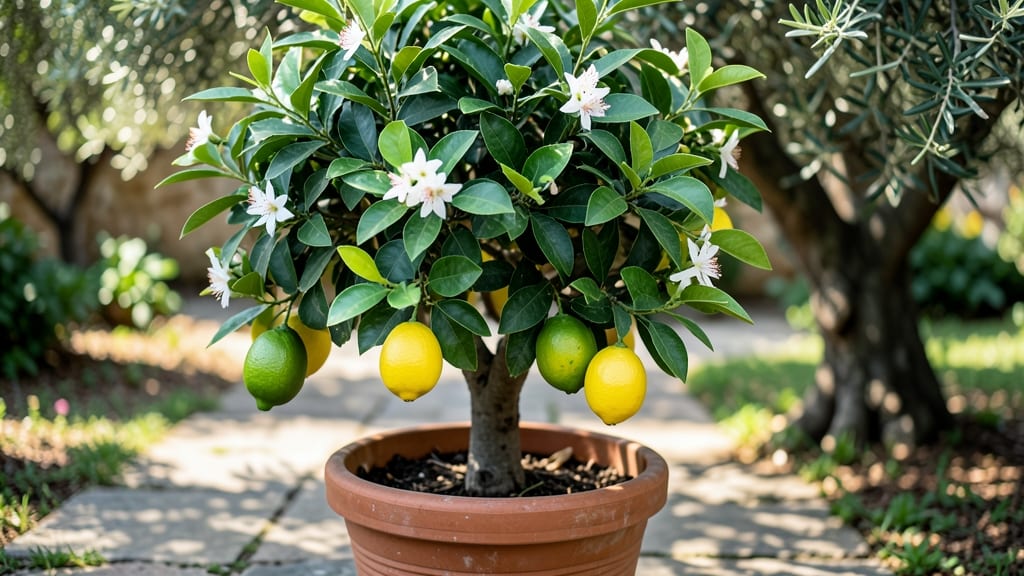
A lemon tree leaf looks like an elongated, glossy dark green oval with smooth edges, typically 2 to 4 inches long and 1 to 2 inches wide, featuring serrated edges and a prominent central vein with parallel side veins. Young leaves appear lighter green and softer in texture.
A lemon tree leaf's distinctive features set it apart from other citrus varieties.
The dark green hue and smooth, slightly pointed shape make it instantly recognizable, while the serrated edges help differentiate it from lime leaves, which tend to be more rounded. 🌿 The glossy finish isn't just for looks—it helps the leaf retain moisture in sunny climates, a key adaptation for Mediterranean citrus trees.
Unlike orange leaves, which often have a slightly duller finish, lemon leaves maintain their shine year-round, even as they mature.
What's fascinating is how the leaf's aromatic qualities evolve as it grows. New shoots emit a fresh, almost herbal scent, while mature leaves release that classic citrus fragrance when crushed—a telltale sign you're dealing with a true lemon tree.
This scent difference is your secret weapon for identification when visual clues are ambiguous.
💡 In This Article
- Lemon Tree Leaf Anatomy and Growth Patterns
- How to Identify Lemon Tree Leaves vs Other Citrus
Lemon tree leaf anatomy and growth patterns
Lemon tree leaves develop through distinct stages that reveal their unique structure. The mature leaf typically measures 2.5 to 3.5 inches long and 1 to 1.5 inches wide, with a slightly elliptical shape that tapers to a pointed tip.
What sets them apart is the prominent central vein flanked by 10-15 parallel secondary veins on each side, creating a symmetrical pattern that's easily visible when held up to light.
This vein structure helps distribute water and nutrients efficiently, supporting the leaf's glossy surface which reflects up to 60% more light than duller citrus leaves.
The leaf's serrated edges (called crenate margins) have tiny, rounded teeth spaced about 1/8 inch apart, creating a saw-like appearance when viewed closely. Young leaves emerge as light green, velvety shoots that gradually harden and darken over 4-6 weeks as they mature.
Interestingly, lemon leaves maintain their glossy finish year-round, unlike some citrus varieties whose leaves dull during winter. This constant shine is due to a waxy cuticle layer that's 20% thicker than on orange leaves, helping prevent water loss in hot climates.
Seasonal variations affect leaf growth patterns significantly. In spring and summer, new leaves grow 20-30% faster than in fall or winter, producing 10-15% larger mature leaves.
The aromatic compounds that give lemon leaves their signature scent—primarily limonene and citral—are most concentrated in mature leaves, with levels peaking in late summer when the tree is most productive. When crushed, these compounds release instantly, creating that unmistakable citrus aroma that's 3-5 times stronger than in orange leaves.
Comparing lemon leaves to other citrus reveals key differences in their anatomy. While lime leaves are similar in size, they typically have smoother edges with fewer serrations and a slightly darker green color with a more pronounced lemony scent when crushed.
Orange leaves, on the other hand, tend to be 10-15% larger with more pronounced veins and a duller finish, especially as they age. The lemon leaf's uniform glossiness and consistent serration pattern make it one of the most visually distinctive citrus leaves.
One fascinating adaptation is how lemon leaves respond to environmental stress. When water-stressed, they'll often curl slightly at the edges while maintaining their glossy appearance—unlike grapefruit leaves which may develop brown tips under similar conditions.
This resilience helps lemon trees thrive in Mediterranean climates where water availability fluctuates seasonally. The leaf's thick cuticle layer also makes it more resistant to fungal infections compared to more delicate citrus varieties.
For gardeners, understanding these growth patterns helps identify healthy lemon trees. A mature tree typically produces 500-1,000 leaves per year, with each leaf lasting 2-3 years before naturally falling.
The aromatic intensity of leaves is your best indicator of tree health—strong, fresh citrus scent means the tree is thriving, while weak or musty smells may signal problems like nutrient deficiencies or pest damage.