
Pruning
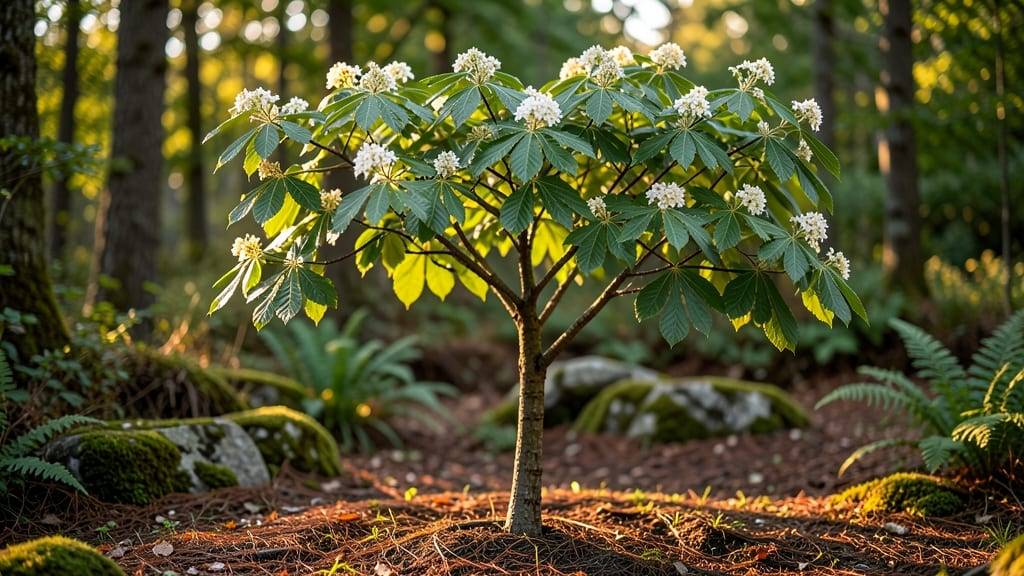
Mastering mountain ash tree leaf identification saves you from misdiagnosing pests or diseases—those jagged edges and lobed shapes are your first clue. 🌿 I’ve spent years comparing them to rowan and serviceberry, and the differences matter when it comes to care.
A quick look at the veins, color, and serrations can tell you exactly what you’re dealing with before you reach for the pruners.
The leaves are typically 5-7 inches long, with 5-7 lobes and fine, serrated edges that look like tiny teeth. The veins fan out from the center, creating a delicate lacework. In spring, they’re bright green, but by fall, they turn fiery orange or red—a telltale sign if you’re unsure.
Rowan and serviceberry leaves often lack this bold lobing or vibrant fall color.
When in doubt, snap a photo and compare it to a trusted guide or use a plant ID app. Correct identification means you’ll treat pests like spider mites or diseases like fire blight the right way.
Mountain ash trees are tough but need precise care—don’t let a misidentified leaf lead to over-pruning or wrong treatments.
For gardeners in cooler climates, this skill is especially useful since mountain ash thrives in zones 3-6. Once you master the leaf shape, you’ll spot them in forests, parks, or even your own yard with confidence. No more guessing—just accurate care.
Understanding Leaf Changes in Mountain Ash
Mountain ash trees (Sorbus spp.) are known for their striking foliage, but their leaves can sometimes exhibit unexpected shapes, edges, or discoloration. These changes often stem from natural biological processes or environmental stressors.
Below, we break down the why behind the most common leaf variations in mountain ash trees—so you can diagnose issues with confidence.
Mountain ash leaves don’t stay the same throughout the growing season. Young leaves emerge soft, smooth, and slightly rounded, while mature leaves develop deep serrations (sharp, saw-like edges) and lobed or pinnate shapes. This transformation is driven by:
- Cell Differentiation: As leaves mature, meristematic cells (undifferentiated growth cells) along the edges specialize into sclerified (hardened) tissue, forming serrations.
This is a genetic trait—some mountain ash varieties (like Sorbus aucuparia) have more pronounced lobes, while others remain simpler. - Photomorphogenesis: Sunlight triggers phytochrome-mediated responses, causing leaves to expand and develop jagged edges as they seek optimal light absorption.
Shady-grown mountain ash may have less pronounced serrations due to reduced light exposure. - Seasonal Shifts: In late summer, leaves often yellow or reddish edges as chlorophyll breaks down (a natural senescence process). This is especially common in autumn-colored cultivars like the ‘Joseph Rock’ mountain ash.
Pro Tip: 🌡️ If leaves are uniformly serrated and lobed without discoloration, it’s likely just their natural form—not a problem!
Pests don’t just eat leaves—they alter their structure in telltale ways. Here’s how insects and mites mess with mountain ash foliage:
| Pest | Leaf Damage Pattern | Why It Happens |
|---|---|---|
| Sawfly Larvae | Notched or skeletonized edges (like scissors cuts) | Larvae chew between veins, leaving serrated gaps. They target young leaves first. |
| Japanese Beetles | Irregular holes + scalloped edges | Adults clip leaf tissue for feeding, creating a "lace-like" appearance. |
| Spider Mites | Stippled, yellowed leaves with webbing | Mites pierce cells to feed, causing chlorotic (white/yellow) speckling. |
| Aphids | Curled, sticky leaves (honeydew) | Aphids inject toxins while feeding, distorting growth and causing leaf puckering. |
Actionable Fix: 🔥 Blast off pests with a strong stream of water (disrupts mites/aphids) or apply neem oil (smothers larvae). For severe infestations, insecticidal soap works best on soft-bodied pests like aphids.
Mountain ash trees are hardy, but extreme conditions can warp their leaves. Here’s how:
- Drought Stress:
- Symptoms: Thin, brittle leaves with rolled or cupped edges.
- Why? Water scarcity triggers abscisic acid (a stress hormone) that reduces cell turgor pressure, causing leaves to curl inward to conserve moisture.
- Fix: Deep water 1–2x per week during dry spells. Mulch heavily (3–4 inches) to retain soil moisture.
- Overwatering/Root Rot: - Symptoms: Yellowing between veins + mushy, drooping leaves. - Why? Fungal pathogens (Phytophthora spp.) thrive in soggy soil, blocking nutrient uptake and causing leaf chlorosis (yellowing). - Fix: Improve drainage with sand or gravel in the root zone.
Avoid watering until the top 2 inches of soil are dry.
- Temperature Extremes:
- Cold Damage: Leaves may develop brown, crispy edges after sudden freezes. Ice crystals rupture cell walls, leading to necrosis (dead tissue).
- Heat Stress: Scorched leaf tips or bleached patches occur when temperatures exceed 90°F (32°C). Stomata close to prevent water loss, but photosynthesis halts, causing oxidative stress.
- Fix: Provide afternoon shade in hot climates. Mulch to regulate soil temps.
Mountain ash trees are heavy feeders, and poor soil nutrition directly impacts leaf shape and health. Key deficiencies include:
- Iron (Fe) Deficiency:
- Symptoms: Yellowing between veins (interveinal chlorosis) + small, narrow leaves.
- Why? Iron is immobile in plants, so new leaves show symptoms first. Alkaline soil (pH > 7.0) locks out iron, even if it’s present.
- Fix: Apply chelated iron (like Ironite) or sulfur to lower pH. Avoid lime near the tree.
- Magnesium (Mg) Deficiency:
- Symptoms: Yellow patches between veins that spread to entire leaf, then brown edges.
- Why? Magnesium is central to chlorophyll production. Over-fertilizing with nitrogen (without potassium) can deplete Mg.
- Fix: Use Epsom salt (magnesium sulfate)—1 tbsp per gallon of water, sprayed on leaves or soil.
- Nitrogen (N) Deficiency:
- Symptoms: Pale green or yellow leaves + stunted growth.
- Why? Nitrogen is the building block of chlorophyll. Poor soil or leaching (common in sandy soils) washes it away.
- Fix: Apply slow-release nitrogen (like blood meal) in early spring. Compost improves soil retention.
Pathogens infect leaf tissue, causing distorted growth, spots, or premature drop. Common culprits:
- **Fire Blight (Erwinia amylovora): - Symptoms: Blackened, wilted leaves with oozing bacterial ooze.
Leaves may curl and crisp at edges. - Why? Bacteria enter through wounds (pruning cuts, storms) and clog xylem vessels, starving leaves of water. - Fix: Prune infected branches 6+ inches below damage (sterilize tools with 70% alcohol). Apply copper fungicide preventively.
- Powdery Mildew (Podosphaera spp.): - Symptoms: White, powdery coating on leaves + yellowing between veins. - Why? Fungal spores germinate in humid conditions (70–80% RH), suffocating leaf tissue and reducing photosynthesis. - Fix: Improve airflow (thin canopy).
Spray with baking soda mix (1 tbsp/L water + 1 tsp soap) or neem oil.
- Anthracnose (Gloeosporium spp.):
- Why? Fungal spores overwinter in debris, infecting leaves via rain splash.
- Fix: Rake and destroy fallen leaves in autumn. Water at the base** (not overhead) to reduce spore spread.
Quick Fixes for Leaf Issues
When your mountain ash tree’s leaves show signs of distress—whether it’s jagged edges, discoloration, or unexpected shapes—acting fast can save the tree and restore its health. Below are practical, step-by-step solutions tailored to common problems, along with prevention tips to keep your tree thriving.
Mountain ash leaves naturally have lobed or serrated edges, but if they appear excessively jagged, torn, or deformed, it could signal environmental stress or pests.
🔥 Cause: Over-Pruning or Mechanical Damage
✅ Solution:
- Stop aggressive pruning immediately—only remove dead, diseased, or crossing branches (never more than 25% of the canopy at once).
- Avoid heavy-handed trimming with sharp tools; use bypass pruners for clean cuts.
- Support weak branches with tree ties or stakes if wind damage is suspected.
💡 Prevention Tip:
- Prune only in late winter or early spring (before new growth).
- Mulch around the base (2–4 inches deep) to protect roots from erosion.
🐛 Cause: Pest Infestation (Sawfly Larvae, Cankerworms, or Spider Mites)
✅ Solution:
- Handpick large caterpillars (like cankerworms) in the early morning when they’re sluggish.
- Spray with neem oil (1 tbsp per gallon of water) for mild infestations—reapply every 7–10 days.
- For severe cases, use Bt (Bacillus thuringiensis)—a natural bacterial spray safe for pollinators.
🌡️ Prevention Tip:
- Encourage natural predators like birds and ladybugs by planting native flowers nearby.
- Inspect leaves weekly during peak pest seasons (spring/summer).
Yellowing, brown spots, or blackened veins often mean fungal infections, nutrient deficiencies, or overwatering.
🍄 Cause: Fungal Diseases (Anthracnose, Leaf Spot)
✅ Solution:
- Remove and destroy infected leaves (do not compost them).
- Apply copper fungicide (follow label instructions) at first signs of spots.
- Improve air circulation by thinning dense branches (but avoid over-pruning).
🎯 Prevention Tip:
- Water at the base (not overhead) to keep leaves dry.
- Avoid overhead sprinklers during rainy seasons.
💧 Cause: Overwatering or Poor Drainage
✅ Solution:
- Check soil moisture—stick your finger 2 inches deep; water only if dry.
- Aerate compacted soil with a garden fork to improve drainage.
- Adjust watering to 1–1.5 inches per week (less in winter).
✨ Prevention Tip:
- Test soil pH (ideal: 5.0–6.5 for mountain ash).
- Plant in well-draining soil—amend clay soil with compost or sand.
If leaves are small, stunted, or misshapen, it’s often due to nutrient deficiencies or root stress.
🍎 Cause: Nitrogen or Iron Deficiency
✅ Solution:
- Fertilize in early spring with a balanced 10-10-10 fertilizer (follow package rates).
- For iron deficiency (yellowing between veins), apply chelated iron or Epsom salt (1 tbsp per gallon of water).
💪 Prevention Tip:
- Mulch annually with organic matter (like wood chips) to slowly release nutrients.
- Avoid heavy fertilizers in fall—they can burn roots before dormancy.
🌱 Cause: Root Compaction or Transplant Shock
✅ Solution:
- Gently loosen roots (if recently planted) and water deeply to encourage spread.
- Add compost around the root zone to boost microbial activity.
🔪 Prevention Tip:
- Plant in early fall or spring for best root establishment.
- Avoid disturbing roots during landscaping near the tree.
| Issue | Quick Fix | Prevention |
|---|---|---|
| Serrated edges | Prune carefully, check for pests | Mulch, prune in dormant season |
| Discoloration | Fungicide, adjust watering | Improve airflow, avoid overhead water |
| Small/misshapen leaves | Fertilize, test soil pH | Mulch, plant in well-draining soil |
| Pest damage | Neem oil, handpick larvae | Attract predators, inspect regularly |
Final Pro Tip: 🌟 When in doubt, observe! Take close-up photos of affected leaves and compare them to online guides (like the [University of Minnesota’s tree pest ID](https://extension.umn.edu/)) for a definitive diagnosis.
With these targeted fixes, your mountain ash should bounce back with vibrant, healthy leaves in no time! 🌿💚
Frequently asked questions
How do I tell the difference between mountain ash and rowan leaves?
Mountain ash leaves typically have 5-7 deep lobes with serrated edges, while rowan leaves are usually more rounded with fewer lobes (3-5). Mountain ash leaves also have a more pronounced fan-shaped vein pattern and often turn vibrant orange/red in fall, whereas rowan leaves stay greener longer.
Why are my mountain ash leaves developing uneven serrations?
Uneven serrations could signal pest damage (like sawfly larvae) or nutrient deficiencies. Check for tiny caterpillars along leaf edges or yellowing between veins (iron deficiency). If you see notched edges without other symptoms, it might just be natural variation—mountain ash leaves mature unevenly in shady conditions.
Can I use leaf shape alone to identify mountain ash?
No—always check 3 key features: lobed shape, serrated edges, and vein pattern. Mountain ash leaves also grow in alternate arrangement on stems. For tricky cases, compare with a reference photo or use a plant ID app like PictureThis—leaf shape alone can be misleading with similar species like serviceberry.
What do mountain ash leaves look like in spring vs. fall?
Spring leaves start soft and smooth with light green color, developing full serrations by summer. In fall, they turn bright orange-red (especially in cultivars like 'Edith Bogue'), while the leaf structure remains lobed. If your leaves stay green or turn brown without color, it may indicate stress or disease.
Are there any toxic look-alikes for mountain ash?
Yes—yew trees have similar evergreen foliage but with needle-like leaves and high toxicity. Mountain ash berries are also toxic to humans (though birds eat them), so never consume them. Always verify with multiple sources if you suspect toxicity in your yard.