
Trees
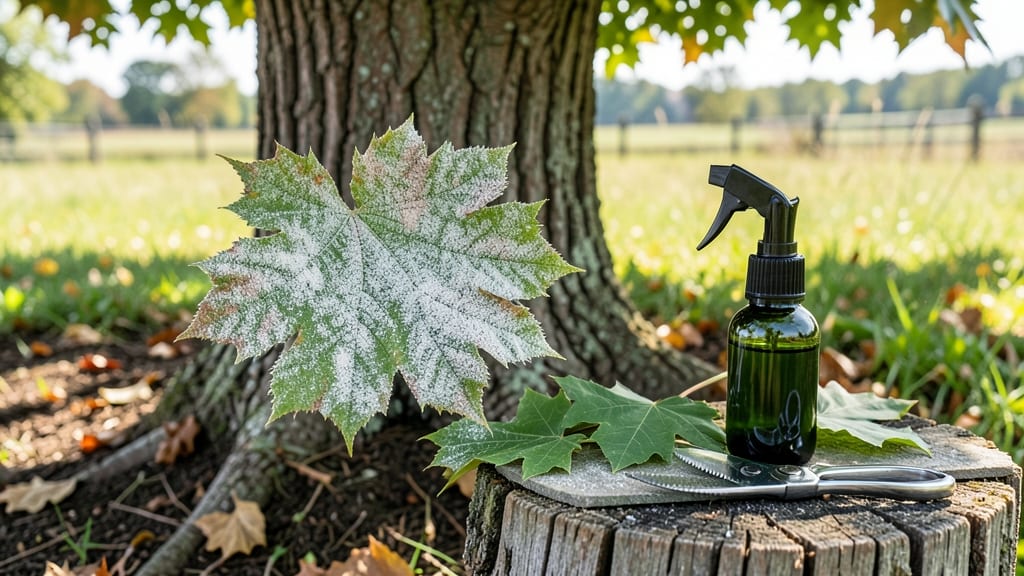
That white, flour-like dust on your maple leaves isn’t just dust—it’s maple tree powdery mildew, and ignoring it means weaker branches and fewer fall colors. 🌿 I’ve battled this fungus for years, and I’ll show you how to stop it fast without harsh chemicals that harm bees and soil.
The key is acting early before mildew spreads to new leaves. Most sprays take days to work, but my go-to mix—baking soda, neem oil, and a drop of dish soap—stops new growth in 24-48 hours. You’ll see fresh leaves emerge clean and vibrant, not dusted white.
By late summer, your tree will bounce back with stronger growth and those signature red-orange fall hues. The trick is consistency: spray every 7-10 days until the first frost, and you’ll break the mildew cycle for next year. This works for sugar, red, and silver maples alike.
No more watching your tree struggle—just healthier leaves and fewer fungal battles ahead.
The Hidden Triggers Behind Fungal Growth
Powdery mildew on maple trees isn’t just a random nuisance—it’s the result of a perfect storm of environmental and biological factors working together. Understanding these causes is the first step to stopping the spread and protecting your trees.
Below, we break down the key reasons this fungal infection takes hold, so you can address the root of the problem.
Fungi like powdery mildew thrive in stagnant, humid air—conditions that often develop when maple trees are too closely planted or overgrown. Here’s why:
- Limited airflow: Dense foliage traps moisture, creating a damp microclimate that fungi love. Maple trees with thick, tangled branches are especially vulnerable.
- Shaded leaves: When lower branches block sunlight, leaves stay cooler and wetter longer, slowing evaporation and extending the window for fungal spores to germinate.
- Water droplets linger: Morning dew or overhead irrigation (like sprinklers) can sit on leaves for hours, giving spores the moisture they need to infect new tissue.
Actionable fix: Prune your maple tree to open up the canopy, allowing sunlight and air to circulate. Aim for a spread-out, vase-like shape rather than a dense, bushy one. 💡 Pro tip: Prune in late winter or early spring before new growth begins to minimize stress on the tree.
Water is the fungal equivalent of an all-you-can-eat buffet. Powdery mildew spores require moisture to activate and infect leaves, and maple trees are particularly sensitive to wet foliage. Here’s how watering habits contribute:
- Sprinkler irrigation: Overhead watering (especially in the evening) soaks leaves, creating prolonged moisture that spores exploit.
- Poor drainage: If the soil stays soggy, roots struggle to absorb water efficiently, forcing the tree to transpire more—leaving leaves damp longer.
- Frequent rain or humidity: Maple trees in humid climates (like the Midwest or Southeast) are at higher risk, especially if rainfall is consistent without dry spells.
Actionable fix: Switch to drip irrigation or soaker hoses to water at the base of the tree, not the leaves. Water early in the day so foliage has time to dry. If your area is prone to humidity, consider mulching with pine straw or wood chips to improve soil drainage and reduce fungal pressure.
Powdery mildew isn’t a year-round pest—it peaks in specific conditions. Maple trees are most susceptible when:
- Temperatures hover between 60–80°F (15–27°C): This is the sweet spot for fungal growth. Cooler nights and warm days create the perfect humidity balance for spores.
- Spring and early summer: New growth is tender and less resistant to infection. If mildew appears in late winter or fall, it’s often a sign the tree was already stressed.
- Nutrient deficiencies: Trees lacking nitrogen, phosphorus, or potassium are weaker and more prone to fungal attacks. Yellowing leaves or stunted growth can signal a deficiency.
Actionable fix: Monitor your tree’s health year-round. If you notice yellowing leaves or slow growth, conduct a soil test and amend with balanced organic fertilizer (like compost or fish emulsion). In high-risk seasons, apply a preventive fungicide spray (like neem oil or baking soda mix) to create a protective barrier.
Stressed trees are like open doors for fungi—they’re far more likely to succumb to powdery mildew. Common stressors for maple trees include:
- Drought or root damage: Even brief periods of drought can weaken a tree’s defenses. Root-compacting soil or construction damage also disrupts nutrient uptake.
- Pests like aphids or mites: These insects feed on sap, leaving behind sticky residue (honeydew) that fosters fungal growth. Aphid infestations often precede mildew outbreaks.
- Transplant shock: Recently planted maple trees are especially vulnerable as they adjust to new soil conditions.
Actionable fix: Keep soil consistently moist but not waterlogged and mulch to retain moisture. If pests are present, treat with insecticidal soap or horticultural oil before mildew appears. For newly planted trees, water deeply 2–3 times per week for the first year to reduce shock.
By tackling these underlying causes—airflow, watering habits, temperature, and tree health—you can dramatically reduce the risk of powdery mildew taking hold. The key is proactive care, not just reactive treatments.
Once you identify what’s fueling the fungus in your specific maple tree, you can customize a plan to starve the problem at its source.
Quick Fixes for Fungal Foliage Foes
Powdery mildew on maple trees can feel like a losing battle, but with the right approach, you can restore your tree’s health—naturally and effectively. Below are targeted solutions based on the root causes of this fungal issue, from quick fixes to long-term prevention.
Think of these as your organic toolkit for a mildew-free maple tree.
Cause: Dense foliage or overcrowded planting traps moisture, creating the perfect mildew party. Fix:
- Prune strategically 🔪: Remove 10–20% of the thickest branches to open up the canopy. Focus on crossing or rubbing branches that block airflow.
- Space it out 🌳: If your maple is planted too close to other trees or structures, consider transplanting (spring or fall) or adding a windbreak to encourage airflow.
- Rake up debris 🍃: Fallen leaves and twigs harbor spores—collect and compost them far from your tree.
Prevention Pro Tip: 💡 After pruning, sterilize your tools with rubbing alcohol to avoid spreading spores to healthy branches.
Cause: Overhead watering or poor drainage keeps leaves damp for too long. Fix:
- Water at the roots 💧: Use a soaker hose or drip irrigation to deliver water directly to the soil. Avoid wetting leaves, especially in the late afternoon or evening (when humidity peaks).
- Check drainage 🏗️: If your tree sits in a low spot where water pools, amend the soil with compost or sand to improve drainage. Consider a French drain if needed.
- Morning watering only ⏰: Water before 10 AM so leaves dry quickly in sunlight.
Prevention Pro Tip: 🌡️ If your area has high humidity, water every other day during mildew outbreaks to keep leaves just moist—not soggy.
Cause: Existing mildew patches need immediate treatment to prevent spread. Fix: Mix one of these DIY sprays and apply when leaves are dry and temperatures are below 85°F (heat deactivates some ingredients):
| Spray Recipe | How to Use | Frequency |
|---|---|---|
| Baking Soda + Soap | 1 tbsp baking soda + 1 tsp horticultural oil soap + 1 gallon water. Shake well. | Every 7–10 days until mildew clears. |
| Neem Oil Solution | 1 tbsp neem oil + 1 tsp mild dish soap + 1 quart water. Shake before use. | Every 5–7 days (rotate with other sprays). |
| Milk Spray | 1 part milk (whole or skim) + 9 parts water. Spray undersides of leaves. | Every 3–4 days (best for prevention). |
| Potassium Bicarbonate | 1 tbsp potassium bicarbonate + 1 tsp soap + 1 gallon water. | Every 10 days for severe cases. |
Application Tips:
- Spray undersides 🍃: Mildew loves the back of leaves—use a hose-end sprayer or pump sprayer for thorough coverage.
- Early morning or late evening ⏳: Avoid midday heat to prevent leaf burn.
- Reapply after rain 🌧️: Fungicides wash off—schedule sprays 24–48 hours after rainfall.
Prevention Pro Tip: ✨ Add 1 tbsp of hydrogen peroxide (3%) to your baking soda spray for extra antifungal power.
Cause: Weak or nutrient-deficient trees are mildew magnets. Fix:
- Fertilize in early spring 🌱: Use a balanced organic fertilizer (like 10-10-10) or a tree-specific formula with micronutrients like zinc and magnesium (common deficiencies in maples).
- Mulch properly 🍂: Apply 2–4 inches of organic mulch (wood chips, shredded bark) around the drip line, keeping it 6 inches away from the trunk.
- Avoid over-fertilizing 🚫: Too much nitrogen = soft, mildew-loving growth. Stick to recommended doses.
Prevention Pro Tip: 💪 A seaweed extract spray (every 4 weeks) strengthens cell walls, making leaves less susceptible to fungi.
- Plant resistant varieties 🌳: If possible, choose Norway or Silver maples (less prone to mildew) for future plantings. - Monitor regularly 👀: Check leaves weekly in spring/summer.
Catch mildew early with a 10x magnifying glass for tiny white spots. - Encourage beneficial insects 🐞: Ladybugs and lacewings eat mildew spores. Plant dill, fennel, or marigolds nearby to attract them. - Fall cleanup 🍁: Remove all infected leaves and sterilize pruning tools before winter.
Final Thought: 🎯 Consistency is key—mildew won’t disappear overnight, but with these steps, your maple will bounce back stronger. Start with one or two fixes this week, then layer in prevention for next season!
Frequently asked questions
What does powdery mildew look like on maple leaves?
The first sign is a white, powdery coating on leaf surfaces, often starting on the undersides. As it spreads, the mildew turns grayish-brown and leaves may yellow or curl. In severe cases, you’ll see black spots where spores cluster. Check both sides of leaves—mildew hides on undersides!
Can I use store-bought fungicides on my maple tree?
Yes, but opt for organic options like neem oil or potassium bicarbonate sprays first. If mildew is severe, copper fungicides (like Copper Soap) work well but can harm beneficial insects. Always follow label instructions and reapply after rain. For chemical-free control, try the baking soda spray mentioned in the guide.
How long does it take to see results after treating?
With consistent spraying (every 5–7 days), you’ll see new growth emerge clean within 2–3 weeks. Existing mildew may take longer to fade, but the key is stopping the spread. For fastest results, combine sprays with pruning and proper watering to break the fungal cycle.
Will pruning alone fix powdery mildew?
Pruning helps by improving airflow, but it’s only part of the solution. Remove heavily infected branches (sterilize tools between cuts!) and pair it with fungicide sprays. Without treatment, spores will linger on remaining leaves. Think of pruning as prevention, not a cure.
Can powdery mildew kill my maple tree?
While rarely fatal, severe mildew weakens trees by blocking sunlight and reducing photosynthesis. Over time, this stress makes maples vulnerable to other pests/diseases. Act fast—treating early ensures your tree stays healthy and vibrant for years. Most maples recover fully with proper care!