
Pests and Diseases
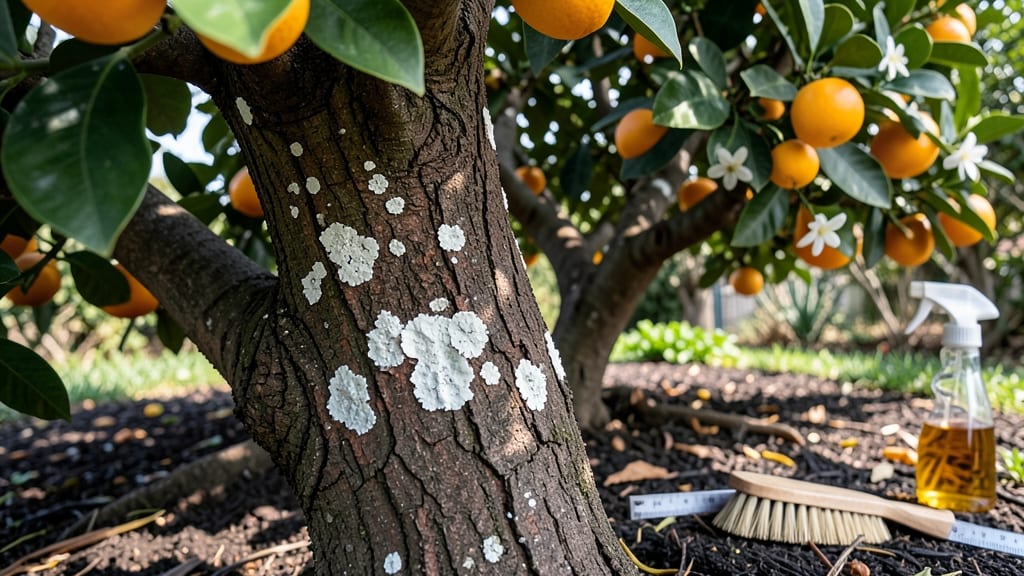
White spots on your orange tree trunk could mean scale insects or a fungal infection—and both need different fixes. 🌿 I’ve seen this ruin trees fast, but the good news is you can turn it around with the right approach.
The key is figuring out what’s causing the spots first: are they waxy, fuzzy, or powdery?
Scale insects leave sticky, waxy white spots that don’t brush off easily, while fungal infections like citrus scab create powdery or crusty patches that spread fast in damp weather.
Check for tiny bumps under the spots—those are scale. If it’s fuzzy, it’s likely mildew. Either way, act fast before it spreads.
For scale, you’ll need neem oil or horticultural oil—spray it thoroughly and repeat every 7-10 days until the spots disappear. Fungal infections respond best to copper fungicide or a baking soda mix (1 tsp baking soda + 1 quart water + a drop of dish soap).
Prune infected branches 6 inches below the spots to stop the spread.
Prevention is easier than cleanup: sanitize tools, avoid overhead watering, and keep your tree healthy with balanced fertilizer. If the spots keep coming back or the tree looks weak, call a local arborist—they can test for deeper issues. Your tree can bounce back, but time is the biggest factor.
Root Causes Of Trunk Discoloration
When you spot those mysterious white patches on your orange tree trunk, it’s rarely a coincidence—it’s a sign of something actively disrupting your tree’s health. Understanding the why behind these spots is the first step to restoring your citrus tree’s vitality.
Below, we break down the most common culprits, their science-backed mechanisms, and how they manifest on your tree’s bark.
Scale insects are one of the most common pests responsible for white spots on orange tree trunks. These tiny, immobile insects (often no bigger than a pinhead) latch onto the bark and feed on sap, excreting a sticky, sugary substance called honeydew.
Over time, this honeydew hardens into a white, waxy crust—what you’re likely seeing on your trunk.
- How it happens: Scale insects pierce the bark with their mouthparts, sucking out nutrients and weakening the tree. Their waste attracts sooty mold, a black fungus that thrives on honeydew, creating a dual visual problem (white spots + black streaks).
- Types to watch for:
- Armored scale – Produces a hard, shell-like covering (often white or gray).
- Soft scale – Appears as fluffy, cottony white patches.
- Citrus snow scale – Common in Florida and California, leaving a frosty white residue.
- Red flags: Sticky residue on leaves below the trunk, yellowing leaves, or a general decline in fruit production.
💡 Pro Tip: Run your fingernail over a white spot—if it leaves a scrape-resistant waxy film, it’s likely scale. If it smears like dust, it could be fungal.
Fungi thrive in warm, humid conditions and can turn your orange tree trunk into a buffet. White spots from fungal infections often appear as powdery mildew, sooty mold (secondary to honeydew), or bark canker.
Unlike scale, fungi don’t feed on the tree directly—they feed on the debris left behind by pests or environmental stress.
- How it happens:
- Powdery mildew – Forms a white, talcum-like coating on the bark, caused by Oidium or Erysiphe fungi. It spreads via wind and spores.
- Sooty mold – A black or dark gray fungus that grows on honeydew (often Capnodium species). While it looks dramatic, it’s usually harmless to the tree but obscures sunlight.
- Bark canker – A more serious issue where fungi like Phomopsis create sunken, white-to-brown lesions that can girdle the trunk over time.
- Environmental triggers: Overhead irrigation, poor air circulation, or dense foliage that traps moisture.
- Red flags: White spots that brush off easily (powdery mildew) or lesions that ooze sap (canker).
🌡️ Warning Sign: If the white spots spread rapidly in damp weather or appear alongside yellowing leaves, fungal growth is likely the culprit.
Not all white spots are caused by pests or pathogens—sometimes, your orange tree’s trunk reacts to physical or chemical stress. Sun scald, lime buildup, or even improper pruning can create conditions where white residue forms.
- How it happens:
- Sun scald – Intense afternoon sun on thin-barked trees causes white, cracked patches (often on the south or west side of the trunk).
- Lime or fertilizer burn – Excessive calcium (from lime) or salt buildup on the bark creates a white, crusty deposit, especially in container-grown trees.
- Physical damage – Scrapes or cuts expose sap, which oxidizes into a white, chalky residue when dry.
- Red flags: Spots confined to one side of the trunk (sun scald) or a powdery, non-living texture (lime buildup).
✨ Quick Fix: Gently wipe the trunk with a damp cloth to test—if the white substance wipes away without resistance, it’s likely environmental, not biological.
Now that you know why those white spots appeared, the next step is identifying the exact cause and taking targeted action. Check out our solutions section to learn how to treat scale, fungi, or environmental damage effectively.
Fixing White Spots on Trees
Now that you’ve identified whether your orange tree’s white spots are caused by scale insects, fungal infections, or mineral deposits, it’s time to take action. Below are practical, step-by-step solutions tailored to each issue—plus prevention tips to keep your tree thriving long-term.
---
Scale insects are stubborn but beatable. Here’s how to eliminate them without harming your tree:
#### 🍳 Step 1: Prune Infested Branches - 🔪 Trim heavily infested branches with sterilized pruners (wipe with rubbing alcohol between cuts). - 🗑️ Bag and dispose of pruned branches in sealed trash—do not compost (eggs can survive). - Focus on new growth and undersides of leaves, where scales hide.
#### 👨🍳 Step 2: Apply Horticultural Oil (Best for Young Infestations) - 🛡️ Mix 1–2 tbsp horticultural oil (like Neem Oil or Summer Oil) per gallon of water. - 🌿 Spray thoroughly on trunk, branches, and leaves—especially crevices where scales cluster. - ⏰ Repeat every 7–10 days for 3–4 weeks (scales have multiple life stages). - ⚠️ Apply in early morning or late evening to avoid burning foliage in direct sun.
#### 🥘 Step 3: Use Systemic Insecticide for Severe Cases - 💊 Imidacloprid (e.g., Merit 75 DF) is a soil drench that moves through the tree’s system. - 🌱 Follow label instructions—typically 1–2 tbsp per gallon of water per 100 sq ft of soil. - 🌱 Water deeply after application to distribute the chemical. - ⏳ Results take 2–4 weeks, but it’s highly effective for stubborn infestations.
#### 🔪 Step 4: Scrape Off Adult Scales (Manual Control) - 🧼 Mix 1 part dish soap with 10 parts water (or use rubbing alcohol for a stronger kill). - 🧽 Scrub the trunk and branches with a stiff brush to dislodge scales. - 💦 Rinse with water to remove residue. - 🔄 Repeat weekly until no more scales appear.
#### 💡 Prevention Tips for Scale Insects - 🌿 Keep your tree healthy—water deeply but infrequently (scales love stressed trees). - 🍃 Encourage natural predators: ladybugs, lacewings, and parasitic wasps eat scales. - 🌱 Avoid over-fertilizing (soft new growth attracts scales). - 🕵️ Inspect new plants before bringing them near your orange tree.
---
Fungal infections thrive in moisture and poor airflow. Here’s how to stop the spread and restore your tree’s health:
#### 🌿 Step 1: Remove Infected Areas - ✂️ Prune branches with white, powdery, or sunken spots using sterilized tools. - 🔥 Dispose of infected debris in the trash (not compost). - 🌱 Thin out dense foliage to improve airflow around the trunk.
#### 🧼 Step 2: Clean the Trunk and Soil - 🧽 Scrub the trunk with a mix of 1 tbsp baking soda + 1 gallon water + a drop of dish soap. - 🌱 Rake away mulch from the trunk base (fungi love damp mulch touching bark). - 💦 Water at the base (not overhead) to keep foliage dry.
#### 💊 Step 3: Apply Fungicide (Organic or Chemical) | Option | How to Use | Best For | |--------------------------|---------------------------------------------------------------------------------|-----------------------------------| | Neem Oil | Mix 1 tbsp neem oil + 1 tsp soap per gallon of water.
Spray every 7–10 days. | Early-stage infections | | Copper Fungicide | Follow label rates (e.g., Cheshunt Compound).
Spray at first sign of fungus. | Severe or recurring infections | | Baking Soda Spray | 1 tbsp baking soda + 1 quart water + 1 tsp oil. Spray weekly. | Mild powdery mildew |
#### 🌡️ Step 4: Adjust Watering and Environment - 💧 Water in the morning so foliage dries by evening. - 🌳 Space trees properly (fungi spread via spores in crowded areas). - 🌿 Avoid overhead irrigation (use drip irrigation instead).
#### ✨ Prevention Tips for Fungal Infections - 🌱 Choose resistant varieties (some citrus trees are less prone to fungal issues). - 🍂 Clean up fallen leaves/debris (fungi overwinter in organic matter). - 🌿 Mulch correctly: Keep mulch 3–4 inches away from the trunk. - 🌱 Sterilize pruners between cuts to prevent spreading spores.
---
If your white spots are lime or mineral buildup, they’re harmless but unsightly. Here’s how to remove them safely:
#### 🧽 Step 1: Gentle Scrubbing - 🧼 Mix 1 part white vinegar + 1 part water in a spray bottle. - 🧽 Spray the trunk and let sit for 10–15 minutes. - 🧽 Scrub with a soft brush (avoid abrasive tools—citrus bark is delicate). - 💦 Rinse thoroughly with water.
#### 🌿 Step 2: Prevent Future Buildup - 💧 Use filtered or rainwater for irrigation (tap water often has high mineral content). - 🌱 Flush the soil occasionally with pure water to reduce salt accumulation. - 🌿 Avoid over-fertilizing with synthetic fertilizers (opt for slow-release organic options).
--- - 🔍 Inspect regularly: Catch issues early before they spread. - 🌱 Balance is key: Healthy trees resist pests and diseases better. - 📅 Timing matters: Treat scale in winter/dormancy and fungus in dry seasons. - 🚫 Avoid pesticides near fruit: If treating before harvest, use organic methods to keep fruit safe.
With these targeted solutions, your orange tree’s white spots will be history—and your tree will be stronger than ever! 🌳🍊
Frequently asked questions
Are white spots on my orange tree trunk always harmful?
Not always! While some white spots indicate pests like scale insects or fungal infections, others may be harmless mineral deposits from hard water or lime buildup. Test by gently wiping a spot—if it smears like powder, it's likely environmental. If it's waxy or crusty, it's probably biological and needs treatment.
How do I tell if white spots are scale insects vs. fungus?
Scale insects leave sticky, waxy white patches that don't brush off easily, while fungal spots (like powdery mildew) appear powdery and can be wiped away. Look for tiny bumps under the spots—those are scale. Fungal spots often spread faster in damp weather and may appear alongside yellowing leaves.
Can I use household items to treat white spots?
Yes! For scale insects, mix 1 part dish soap with 10 parts water and scrub the trunk. For fungus, try a baking soda spray (1 tbsp baking soda + 1 quart water + 1 tsp oil). Both are safe for your tree when used correctly. Just avoid harsh chemicals near fruit-bearing branches.
Will pruning help stop the spread of white spots?
Prune 6 inches below any infected branches to remove the source of the problem. Sterilize your tools with rubbing alcohol between cuts, and dispose of pruned branches in sealed bags—not compost—to prevent reinfestation. This is especially important for fungal infections and scale.
How often should I check my orange tree for white spots?
Check your tree every 2-4 weeks, especially after rain or during humid seasons when fungal growth thrives. Early detection is key—catching issues before they spread makes treatment much easier. Keep an eye on new growth and undersides of leaves, where pests often hide first.