
Pruning
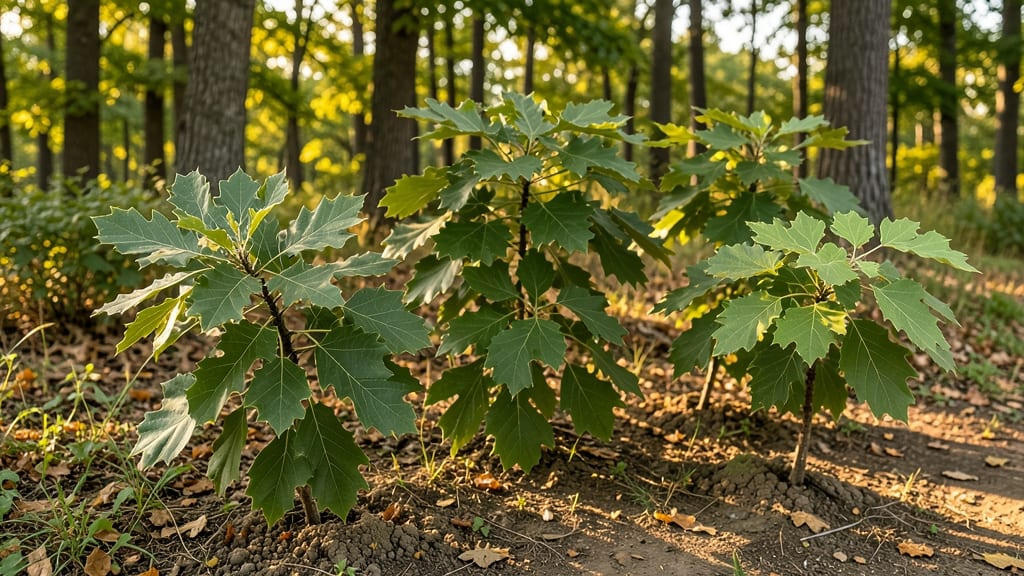
Mastering Oklahoma tree leaf identification saves you from guessing when planning your yard. 🌳 The wrong cut can damage—or even kill—a tree, so knowing the difference between a southern magnolia and a redbud matters more than you’d think.
I’ve spent years studying these trees, and the leaf is often the easiest clue to get right. Start with basic traits: leaf shape (lobed, needle-like, or smooth?), edges (toothed, smooth, or wavy?), and how they attach to the stem.
A bur oak has rounded lobes with bristly tips, while a sycamore has mottled bark and star-shaped leaves. Seasonal changes—like fall’s fiery reds or spring’s fresh greens—can also help narrow it down.
By the end, you’ll spot the subtle differences that tell you whether that tree needs pruning, removal, or just some extra love. Oklahoma’s native species are tough once you learn their language. For tricky cases, the Oklahoma State University Extension offers free resources to double-check your work.
This isn’t just about naming trees—it’s about understanding the ones that shape your landscape. Grab a notebook and let’s get started!
📚 In This Guide
- What you need
- Instructions
- Tips and common mistakes
- Wrapping up and next steps
What you need
- ● Leaf samples: 3–5 fresh, intact leaves per tree (avoid diseased or damaged ones).
- ● Notebook or field guide: A small spiral-bound notebook or a digital app (like iNaturalist or LeafSnap) to record details.
- ● Magnifying glass (5x–10x): For examining leaf veins, edges, and tiny features like hairs or glands.
- ● Ruler or measuring tape: To measure leaf length/width (in inches or centimeters).
- ● Camera or smartphone: For high-resolution photos (natural light preferred!).
- ● Field guide or printed ID chart: Focus on Oklahoma-specific trees (e.g., Oklahoma Trees: A Field Guide by Stan Tekiela).
- ● Leaf press: To preserve samples for later study (or use heavy books!).
- ● Pruning shears: For safely collecting small branches with leaves.
- ● GPS or mapping app: To log tree locations in your yard or neighborhood.
- ● UV flashlight: Some leaf veins glow under UV light—great for tricky IDs!
- ● Local Facebook groups or forums: Connect with Oklahoma arborists for expert tips.
How to identify Oklahoma trees by their leaves
Here's the method I use to confidently spot common Oklahoma trees—no botanist degree required.
🌿 Step 1: Examine Leaf Shape and Arrangement
Start by holding the leaf against a bright background to see its true shape. Oklahoma's most common trees have distinct leaf silhouettes: sugar maples have 5-7 pointed lobes with serrated edges, while redbuds feature heart-shaped leaves on bare branches before spring blooms. Notice whether leaves grow alternately (one per node, like oaks) or oppositely (paired at each node, like ash).
Run your thumb along the leaf's midrib—smooth edges suggest a hickory, while deep sinuses between lobes point to white oak. I always check the leaf base too: asymmetrical bases (uneven sides) are a dead giveaway for walnut or butternut trees. Grab a notebook and sketch 3-4 key features you notice.
☀️ Step 2: Observe Leaf Texture and Venation
Rub the leaf surface between your fingers—rough, sandpapery leaves belong to blackjack oak, while smooth, leathery leaves are likely southern magnolia. Press gently on the underside: hairy or fuzzy leaves often indicate cottonwood or willow. Venation patterns reveal more: palmate (veins radiating from one point, like sugar maple) vs. pinnate (central vein with side branches, like elm).
Flip the leaf over and look for stipules (small leaf-like structures at the base of the stem). Redbuds have prominent, marcescent stipules that stay attached through winter. I keep a magnifying glass handy—some details, like glandular dots on hackberry leaves, are easier to spot up close. Compare what you see to a field guide or digital app.
🌱 Step 3: Check Bark and Branch Patterns
While you're at the tree, glance up at the bark—it often confirms your leaf guess. Shagbark hickory has plates of bark that peel away, while American elm has deep furrows and corky ridges. Look at how branches grow: horizontal branches with buds in pairs scream ash, while spreading branches with buds in clusters are classic honey locust. I snap a quick photo of the bark and compare it to my notes.
Notice the bud shape too: pointy, sharp buds belong to maples, while round, fuzzy buds are sycamore. If you see thorns, you're likely dealing with hawthorn or mulberry. This step is where I catch my biggest mistakes—assuming a tree is one species based on leaves alone, only to see the bark tell a different story.
⏰ Step 4: Time Your Observation for Seasonal Clues
Fall is the best time to identify trees in Oklahoma—color changes are unmistakable. Sugar maples turn bright red, while red oaks develop rusty brown hues. In spring, watch for flowering before leaves: redbuds bloom pink in March, while dogwoods show white bracts in April. I always check fruit/seeds too: winged samaras (helicopter seeds) mean maple, while spiky balls are osage orange.
If you're stumped, wait until late summer when leaves are fully mature. Young leaves can be misleading—white oak seedlings look similar to bur oak, but mature leaves have different lobe depths. Keep a seasonal journal of your observations—next year, you'll spot patterns you missed before.
📸 Step 5: Use a Reference Guide or App
Pull up a digital field guide (like iNaturalist or LeafSnap) and input the features you've noted. Upload a photo of the leaf, bark, and branch together—apps use all three to narrow down possibilities. I've found that leaf arrangement + bark texture cuts the guesswork in half. If the app suggests multiple matches, cross-reference with your seasonal observations (e.g., "Does this tree have fall color?" or "Are the flowers spring-blooming?").
For a physical guide, grab a copy of "Trees of Oklahoma and the South Central States" by B. Eugene Wofford. Flip to the leaf shape index in the back—it's organized by lobes, edges, and venation, making it easier than flipping through pages. I keep mine in my glove box for roadside ID trips. When in doubt, take a sample leaf (with permission) and press it in a book for later study.
Tips & tricks for mastering Oklahoma tree leaf identification
Between us, I've spent years misidentifying trees in Oklahoma—until I learned these key tricks that cut the guesswork in half.
Leaf Base is Your Secret Weapon: In Step 1, when examining leaf shape, pay special attention to the leaf base—this is where most identification mistakes happen. Walnut and butternut trees have asymmetrical bases (uneven sides), while hickory leaves typically have symmetric bases. I keep a small ruler in my field kit to measure the angle of the base—acute angles (less than 90 degrees) often indicate maples, while obtuse angles (greater than 90 degrees) suggest oaks. This one detail has saved me from countless wrong identifications.
Texture Tells the Real Story: The tactile clues in Step 2 are non-negotiable. Blackjack oak leaves feel like sandpaper because of their rough, papery texture, while southern magnolia leaves have a leathery smoothness that's unmistakable once you've felt both. Pro tip: If you're near water, cottonwood leaves with their fuzzy undersides will stick to your fingers—this is a dead giveaway. I always test three leaves from different parts of the tree to account for variations.
Seasonal Timing is Everything: When you're stumped in Step 4, remember that late summer is the golden window for identification. Young leaves in spring can be deceptive—white oak seedlings might look like bur oak until their lobe depths mature. I've made the mistake of identifying trees in early spring only to realize my error when the leaves fully developed. Keep a seasonal checklist of when each species typically reaches full maturity in Oklahoma—this will prevent you from making my same error.
Bark Cross-Referencing is Non-Negotiable: In Step 3, I can't stress enough how critical it is to always check the bark after examining leaves. Shagbark hickory bark looks completely different from mockernut hickory, yet their leaves can appear similar. I've seen people confidently identify a tree as white oak based on leaves, only to discover it was post oak when they looked at the bark. Take a photo of both the leaf and bark—this visual record will save you from future confusion.
Pro Tips for Oklahoma Tree Leaf Identification
- Between us, I've spent years misidentifying trees in Oklahoma—until I learned these key tricks that cut the guesswork in half.
- Leaf Base is Your Secret Weapon: In Step 1, when examining leaf shape, pay special attention to the leaf base—this is where most identification mistakes happen.
- Texture Tells the Real Story: The tactile clues in Step 2 are non-negotiable.
Frequently asked questions
Got questions about identifying Oklahoma tree leaves? You’re not alone!
Here are some of the most common queries—and straightforward answers—to help you navigate the great outdoors with confidence.
How do I tell the difference between oak and maple leaves?
Oak leaves are typically lobed but rounded (like a bramble), while maple leaves have pointed lobes that look like fingers spreading out. Check the edges too—oaks often have jagged or wavy edges, whereas maples are smoother. Hold them up to light: maple leaves often have a more symmetrical, "hand-like" shape!
When is the best time of year to identify tree leaves?
The ideal time is late spring to early summer (May–July), when leaves are fully mature but before fall colors muddy the details. Avoid winter (bare branches!) or late fall (dry, curled leaves). Early morning is best—dew keeps leaves crisp, making veins and textures easier to spot. Pro tip: Use a magnifying glass for tricky details!
Can I use my phone to identify leaves? Yes—but here’s how to get it right.
Apps like PictureThis or LeafSnap work well, but follow these steps for accuracy:
- Take photos in natural light (no shadows or filters!).
- Include the whole leaf (top and bottom sides) and branch for context.
- Avoid close-ups of just the edge—apps need the full shape.
- Note leaf arrangement (alternate vs. opposite) and bark texture if possible.
What if my tree’s leaves look weird—could it be diseased?
Yellowing, spots, or holes? It might be normal stress (drought, pests) or a disease like anthracnose or powdery mildew. Start with these checks:
- Inspect the underside of leaves for webbing (mites) or mold.
- Look for buds or fruit on the tree—some issues are species-specific.
- Compare to healthy leaves nearby. If 50%+ are affected, consult the OSU Extension.
I found a leaf but don’t know which tree it’s from—what now?
No tree in sight? No problem! Try this:
Step
Action
1⃣ Leaf Shape
Search "[leaf shape] + Oklahoma" (e.g., "palmate leaf Oklahoma").
2⃣ Veins
Are veins parallel (like a palm) or branched (like a maple)?
3⃣ Local Clues
Check nearby trees, soil type (clay vs. sandy), or sun exposure.
Wrapping up and next steps
Identifying Oklahoma’s tree leaves is a rewarding way to connect with nature—and now you’re equipped with the tools to do it! 🌿 Whether you’re a gardening enthusiast, a homeowner, or simply curious, recognizing common species like American Elm or Redbud adds a fun, practical skill to your outdoor adventures.
Ready to go deeper? Grab a magnifying glass and explore your yard with fresh eyes—or share your finds with local arborists for expert insights. Every leaf tells a story—what will yours reveal? 🌳