
Flowers
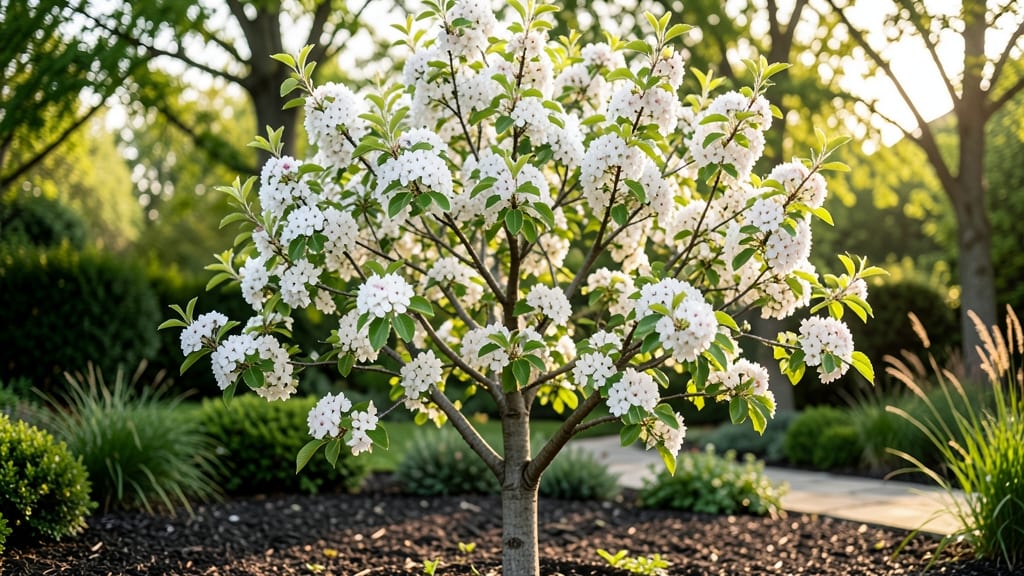
Five-petaled white flowers on trees create the kind of dreamy, romantic garden vibes that make neighbors stop and stare. 🌸 I’ve always loved how Magnolia stellata and crabapple varieties turn spring into a cloud of delicate blooms, softening any landscape with their ethereal beauty.
These trees don’t just look stunning—they’re the quiet stars of small gardens, pollinator magnets, and perfect focal points that elevate even the simplest yard.
The magic lies in their simplicity: five delicate petals, pure white, and a natural grace that feels timeless. Unlike flashy annuals, these trees offer years of effortless elegance, with some varieties like Crabapple ‘Royalty’ producing clusters that last for weeks.
They thrive in full sun to partial shade, making them adaptable to almost any spot where you want a touch of sophistication. Plus, their spring blooms pair beautifully with early spring bulbs like daffodils, creating a layered effect that feels like a curated art piece.
Imagine a tree like Magnolia stellata ‘Waterlily’—its star-shaped flowers open in waves, creating a dramatic show that transforms your garden into a living painting. Or picture a crabapple’s delicate blossoms drifting over a patio, their scent mingling with the first warm breezes.
These trees aren’t just pretty; they’re low-maintenance workhorses that attract bees, butterflies, and birds while requiring minimal fuss once established. They’re the kind of garden investment that pays dividends in beauty and tranquility every spring.
Whether you’re designing a cozy courtyard, a pollinator-friendly border, or a statement piece for your front yard, these five-petaled white bloomers deliver. They’re the secret weapon for gardens that feel intentional, serene, and impossibly chic—without the upkeep of annuals or the drama of bold colors.
Let’s talk about how to make them the centerpiece of your outdoor space.
Nature’s Floral Clockwork Explained
Those delicate five-petaled white blooms adorning your garden aren’t just a pretty sight—they’re a masterclass in botanical timing and survival. Understanding why these flowers appear when they do (and sometimes not at all) reveals the intricate dance between genetics, environment, and seasonal cues.
Let’s break down the science behind their bloom cycles, so you can nurture—or troubleshoot—their appearance with confidence.
Every tree with five-petaled white flowers follows a genetic script that dictates when—and if—it will bloom. Here’s how biology sets the stage:
- Species-Specific Rhythms:
- Some trees, like the Crabapple or Dogwood, are hardwired to bloom in early spring as a survival strategy. Their flowers appear before leaves to attract pollinators when food is scarce, ensuring reproduction before summer’s heat sets in.
- Others, such as the Bradford Pear, may bloom later in spring or early summer when temperatures stabilize. Pro tip: Check your tree’s species—its DNA is the first clue to its bloom schedule! 🌿
- Dormancy Genes:
- Many trees enter a period of endodormancy (a deep rest phase) in winter. Cold temperatures trigger genes that produce antifreeze proteins, protecting buds from frost. Only when chilling hours (typically 500–1,500 hours below 45°F) are met will the tree “wake up” and signal blooming. Skip the cold? Skip the flowers.
- Floral Meristem Activation:
- Inside the bud, a cluster of meristem cells (stem cells for flowers) waits for the right cues. Hormones like florigen (produced in leaves) travel to the bud, “switching on” the genetic code for petal formation. Without this signal, buds may stay dormant—or worse, abort entirely.
Genetics set the stage, but the environment pulls the curtain. These factors can advance, delay, or cancel the bloom show:
- Temperature Thresholds:
- Most five-petaled white flowers need a warm-up period after dormancy. If spring arrives too early (or too late), buds may freeze or bake before opening.
- Example: Fringe Tree (Chionanthus) blooms best in zones 4–8 when daytime temps hit 50–70°F. Push it into a heatwave, and you’ll get drooping buds or no flowers at all.
- Day Length (Photoperiodism):
- Some trees, like the Japanese Snowbell, are long-day plants—they bloom when daylight exceeds 12–14 hours. Others, like Serviceberry, are short-day and may bloom earlier in northern latitudes where nights are longer.
- Actionable fix: If your tree isn’t blooming, note your local sunset/sunrise times—it might be waiting for the right light cue!
- Moisture Matters:
- Drought stress before blooming can shut down flower production. Trees allocate water to leaf growth over flowers when soil is dry.
- Overwatering in winter can delay dormancy, confusing the tree’s internal clock. Aim for moderate moisture in fall to prep for spring blooms.
Not all white flowers bloom for show—some are pollinator magnets, and their timing depends on who’s visiting:
- Bee and Butterfly Dependence:
- Trees like Eastern Redbud rely on early-season pollinators (bees, syrphid flies). If bees are scarce due to pesticide use or late frost, flowers may fail to set fruit or drop prematurely.
- Solution: Plant native pollinator-friendly flowers (like Dandelions or Crocuses) nearby to boost early-season activity.
- Wind-Pollinated Exceptions:
- Some trees (e.g., Bradford Pear) release pollen before petals fully open to catch wind currents. If humidity is too high, pollen grains clump together and miss their target, leading to poor fruit set.
- Self-Pollination Limits:
- Trees like Saucer Magnolia can self-pollinate, but cross-pollination (from another tree) often yields healthier blooms. If you have only one tree, its flowers may still open but produce fewer or weaker offspring.
Not all bloom delays are natural—sometimes, your tree is sending an SOS. Watch for these red flags:
| Symptom | Likely Cause | Fix It |
|---|---|---|
| Buds form but blacken and drop before opening | Late frost or fungal infection (e.g., Botrytis) | Apply dormant oil spray in late winter or cover young buds with frost cloth. |
| Leaves emerge before flowers (or no flowers at all) | Nitrogen overload (too much fertilizer) or root stress | Switch to a balanced fertilizer (10-10-10) and mulch deeply to protect roots. |
| Flowers are small, sparse, or green-tinged | Phosphorus deficiency (critical for flower development) | Add bone meal or a phosphorus-rich fertilizer in early spring. |
| Tree blooms late (summer/fall) instead of spring | Heat stress or poor dormancy (e.g., from urban heat islands) | Plant in a cooler microclimate or provide afternoon shade in hot zones. |
Revitalizing Your Five-Petal Blooms
If your tree’s delicate white, five-petal flowers aren’t thriving—or worse, aren’t appearing at all—don’t fret! With the right care, you can coax your botanical beauty back to full, fragrant glory.
Below, we’ve mapped out practical solutions tailored to common issues, from environmental stressors to pests, along with proactive tips to keep your tree blooming for years. Let’s get your garden back to its ethereal best! 🌸🌿
If your tree sports lush foliage but skips the showstopping white blooms, the issue likely lies in its care routine. Trees like the Crabapple, Dogwood, or Magnolia (all known for their five-petal white flowers) need specific conditions to trigger flowering. Here’s how to fix it:
🔥 Step 1: Check Light Requirements
Most five-petal white-flowering trees crave full sun to partial shade (6+ hours of sunlight daily for sun-lovers like Crabapple, or dappled shade for Dogwood). If your tree is underperforming:
- 🌞 Move it: Gradually shift the tree to a sunnier spot over a few weeks to avoid shock.
- 🌳 Prune overgrowth: Trim nearby branches or structures blocking sunlight.
- 💡 Supplement with grow lights: For container-grown trees, use a full-spectrum LED grow light for 12–14 hours/day in winter.
🍳 Step 2: Adjust Watering Practices
Overwatering or drought stress can halt bloom production. Strike the balance:
- 💧 Water deeply but infrequently: Aim for 1–1.5 inches of water per week, letting the top 2–3 inches of soil dry out between waterings.
- 🌡️ Monitor soil moisture: Stick your finger 2 inches into the soil—if it’s dry, water; if soggy, hold off.
- ✨ Mulch properly: Apply 2–4 inches of organic mulch (like wood chips) around the base (but not touching the trunk) to retain moisture and regulate temperature.
👨🍳 Step 3: Feed for Flowering
Trees need nutrients to produce blooms. Use a balanced, slow-release fertilizer (10-10-10 or 20-20-20) in early spring, followed by a phosphorus-rich fertilizer (like 5-10-5) when buds form. For organic options:
- 🌿 Compost tea: Brew a batch and apply as a soil drench monthly.
- 🥚 Eggshells or banana peels: Crush and bury near the roots for potassium and calcium.
⏰ Step 4: Time It Right
Some trees need a winter chill period (40–70 days below 45°F) to bloom. If you’re in a warm climate:
- 🌡️ Simulate chill: Place the tree in a cooler garage or basement for 6–8 weeks in late fall.
- 📅 Prune after blooming: Avoid heavy pruning in late winter—this can remove next year’s flower buds.
Yellowing leaves, brown spots, or missing petals? Pests or diseases might be sabotaging your tree’s beauty. Act fast with these targeted fixes:
🔪 Combating common pests
| Pest | Signs | Solution |
|---|---|---|
| Aphids | Sticky residue (honeydew), curled leaves, black sooty mold. | 💦 Blast off with a strong stream of water. Spray with neem oil or introduce ladybugs. |
| Japanese Beetles | Skeletonized leaves, chewed petals. | 🕳️ Handpick beetles into soapy water. Use milky spore or kaolin clay as a barrier. |
| Scale Insects | Bumpy, waxy spots on branches/stems. | 🧼 Scrub off with a cotton swab dipped in rubbing alcohol. Apply horticultural oil in dormant season. |
🌡️ Treating fungal issues
If your tree’s leaves sport black spots, powdery mildew, or canker sores, improve airflow and treat aggressively:
- 🌬️ Prune for airflow: Remove crowded branches and thin out foliage.
- 💧 Water at the base: Avoid overhead watering to prevent spore spread.
- 🍄 Apply fungicide:
- For powdery mildew: Spray with baking soda mix (1 tsp baking soda + 1 quart water + a drop of soap).
- For black spot: Use copper fungicide every 2–3 weeks until cured.
Prevention is the best cure! Follow these golden rules to ensure your five-petal white flowers stay showy season after season:
- 🌡️ Know your tree’s climate zone: Choose varieties suited to your hardiness zone (e.g., Serviceberry for zones 3–7, Fringe Tree for zones 4–9). - 🎯 Prune strategically: Trim dead or crossing branches in late winter/early spring (after blooms fade for spring-flowering trees). - 🌱 Test your soil: Use a soil pH test kit—most flowering trees prefer slightly acidic to neutral soil (pH 6.0–7.0).
Amend with lime or sulfur as needed. - ✨ Encourage pollinators: Plant companion flowers like lavender or bee balm nearby to attract bees and butterflies, which boost fruit/seed set (and next year’s blooms!). - 🚫 Avoid over-fertilizing: Too much nitrogen = leafy growth, fewer flowers.
Stick to a balanced formula and follow package rates.
With these fixes, your tree should be back to its radiant, white-blooming self in no time. Happy gardening—and may your petals stay pristine! 🌿✨
Frequently asked questions
Which trees have the most elegant five-petaled white flowers?
For timeless beauty, Magnolia stellata (Star Magnolia) and Crabapple varieties like 'Royalty' or 'Sargent' are top picks. These trees produce clusters of star-shaped blooms that create a dreamy, ethereal effect in any garden. Japanese Snowbell and Fringe Tree also deliver delicate white flowers with five petals, perfect for pollinator-friendly landscapes.
Why do some trees with five-petaled flowers not bloom every year?
Many flowering trees need a winter chill period (40–70 days below 45°F) to trigger blooming. Without proper cold exposure, buds may fail to open. Other factors like over-fertilizing with nitrogen or drought stress can also redirect energy toward leaf growth instead of flowers. Check your tree’s specific needs—some varieties, like Bradford Pear, are more forgiving than others.
Can I grow a five-petaled white-flowering tree in a small garden?
Dwarf varieties like Magnolia 'Little Gem' or Crabapple 'Centennial' stay under 10–15 feet tall, making them ideal for compact spaces. These trees still produce abundant five-petaled white blooms while fitting neatly into patios or small yards. Just ensure they get the right light—most prefer full sun to partial shade.
Do these flowers attract pollinators like bees and butterflies?
Yes! Many five-petaled white flowers, such as those on Serviceberry or Eastern Redbud, are pollinator magnets. Their delicate blooms provide early-season nectar for bees and butterflies, supporting local ecosystems. Planting these trees alongside native flowers (like Dandelions or Crocuses) creates a pollinator-friendly haven that boosts biodiversity in your garden.
How do I know if my tree’s flowers are healthy or diseased?
Healthy five-petaled white flowers should be vibrant, fully open, and free of spots. Look for signs like blackened buds (possible frost damage), yellowing leaves (nutrient deficiency), or chewed petals (pests like Japanese beetles). If you spot powdery mildew or sooty mold, improve airflow and treat with neem oil or fungicide.