
Pruning
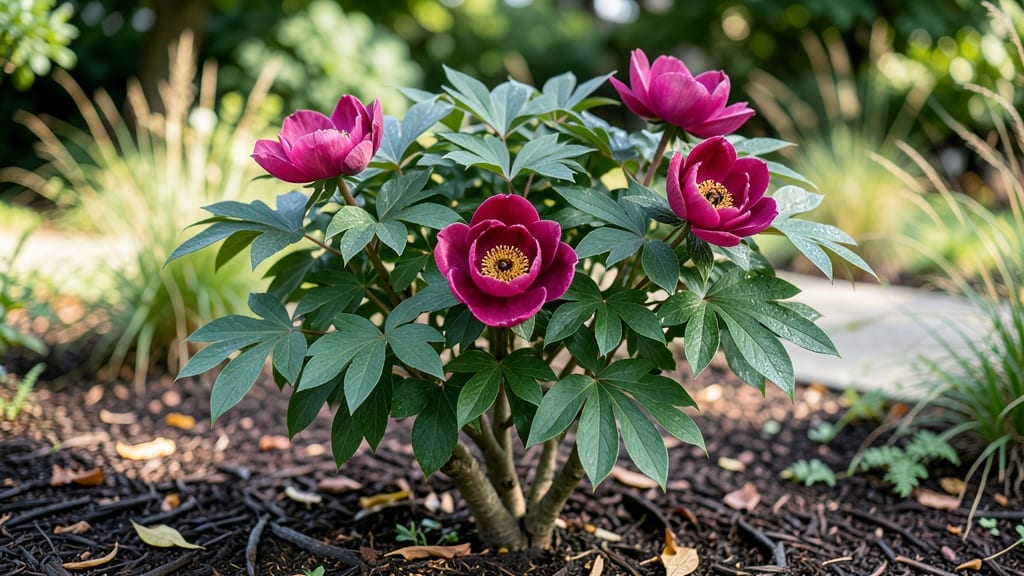
If you’ve ever wondered how to distinguish between tree peony varieties just by looking at their leaves, you’re not alone—foliage patterns hold the key to unlocking these stunning plants’ secrets.
From the bold, rounded lobes of ‘Shishi Gashira’ to the finely serrated edges of ‘Hong E’, each variety’s leaf shape tells a story about its growth habits and care needs.
Here’s how to decode those patterns, spot rare mutations, and use leaf morphology to make smarter pruning and disease-detection decisions in your garden.
Tree peony leaf shape variations: key characteristics by species
Tree peonies (Paeonia suffruticosa) are famous for their stunning blooms, but their leaves offer just as many clues about variety and health. The leaf shape, lobing depth, and serration patterns vary dramatically between cultivars, making foliage a gardener’s secret weapon for identification.
Whether you’re admiring a ‘Shishi Gashira’ with its delicate lobes or a ‘Hong E’ with bold serrations, understanding these traits helps you care for your plants with precision.
Leaf morphology isn’t just about aesthetics—it also influences how a tree peony grows, responds to pruning, and even resists disease. For example, varieties with deeper lobing often have a more vigorous growth habit, while those with smoother edges may require less aggressive pruning.
Let’s explore the key characteristics that set apart some of the most popular tree peony varieties.
🌿 Comparison Table: Tree Peony Leaf Morphology by Variety
Take ‘Shishi Gashira’, for instance—a variety prized for its delicate, shallow lobes and fine serrations. These traits make its leaves appear almost feather-like, contrasting sharply with the bold, rounded lobes of ‘Hong E’.
The latter’s coarse, double-serrated edges give it a rugged charm, while ‘Lavender Lad’ strikes a balance with its moderate lobing and wavy serrations, adding texture to any garden.
The leaf color also plays a crucial role in identification. For example, ‘Kifu’ boasts a gray-green hue that sets it apart from the deep green of ‘Shishi Gashira’ or the blue-green of ‘Lavender Lad’.
These color variations aren’t just for show—they can indicate the plant’s hardiness and even its light requirements. Lighter-colored leaves, like those of ‘Kifu’, often thrive in partial shade, while darker leaves, such as ‘Hong E’s’, may need full sun to maintain their vibrancy.
One often-overlooked detail is how leaf shape influences pruning decisions
How to use leaf shape for tree peony identification: a gardener’s guide
Tree peony leaves (Paeonia suffruticosa) are like nature’s fingerprints—each variety has unique patterns that help you identify them with confidence. The key lies in examining leaf lobing, serration depth, and color variations.
For example, ‘Shishi Gashira’ features deep, rounded lobes, while ‘Hong E’ has more elongated, pointed shapes. These differences become even clearer when comparing spring foliage (fresh and vibrant) to fall leaves (often yellowing or browning).
Seasonal changes can trick even experienced gardeners. In spring, leaves emerge as soft, bright green with distinct veins, but by fall, they may develop purple or bronze hues—a sign of anthocyanins building up.
Always check both new growth and mature leaves to avoid misidentification. For instance, ‘Lavender Lad’ shows silvery undersides in spring, while ‘Kifu’ develops a waxy sheen by midsummer.
🌿 Key Leaf Features for Tree Peony ID
| Feature | Variation | Identification Tip |
|---|---|---|
| Lobe Shape | Rounded vs. Pointed | Rounded lobes = ‘Shishi Gashira’; pointed = ‘Hong E’ |
| Serrations | Fine vs. Coarse | Fine teeth = ‘Lavender Lad’; coarse = ‘Kifu’ |
| Underside | Silvery vs. Green | Silvery = ‘Lavender Lad’; solid green = ‘Shishi Gashira’ |
| Fall Color | Bronze vs. Purple | Bronze = ‘Hong E’; purple = ‘Kifu’ |
💡 Pro Tip: Use a hand lens to inspect serrations—tiny details make all the difference!
Common misidentifications happen when gardeners confuse tree peonies with herbaceous peonies (Paeonia lactiflora). Herbaceous types have more divided leaves with longer stems, while tree peonies grow directly from woody stems.
Another pitfall? Variegated leaves—some hybrids (like ‘Yuetsu’) show cream or yellow edges, but these are rare and often sold as unique cultivars. If you spot unusual patterns, take close-up photos of both the leaf underside and buds for expert verification.
Photographing leaves for identification is easier than you think. Use natural light (avoid harsh shadows) and include a ruler or coin for scale. Focus on 3 key areas: the leaf base (where it attaches to the stem), the midsection (lobing pattern), and the leaf tip.
Apps like iNaturalist or PlantNet can help cross-reference your photos with known varieties. For tricky cases, share images in gardening forums—experts often spot details you might miss!
Leaf shape also influences pruning decisions. Varieties with dense lobing (like ‘Shishi Gashira’) benefit from light pruning to maintain bushiness, while those with elongated leaves (like ‘Hong E’) can handle harder cuts to encourage new growth.
Always prune after flowering (late summer) to avoid removing next year’s buds. And remember: healthy leaves mean stronger blooms—so monitor for yellowing (nutrient deficiency) or spotting (fungal issues) year-round.
Next time you’re admiring your tree peonies, take a closer look at their leaves—they’re not just pretty; they’re your garden’s secret ID tags! With practice, you’ll recognize varieties by sight alone, making your garden both beautiful and knowledgable. Happy identifying! 🌸