
Pruning
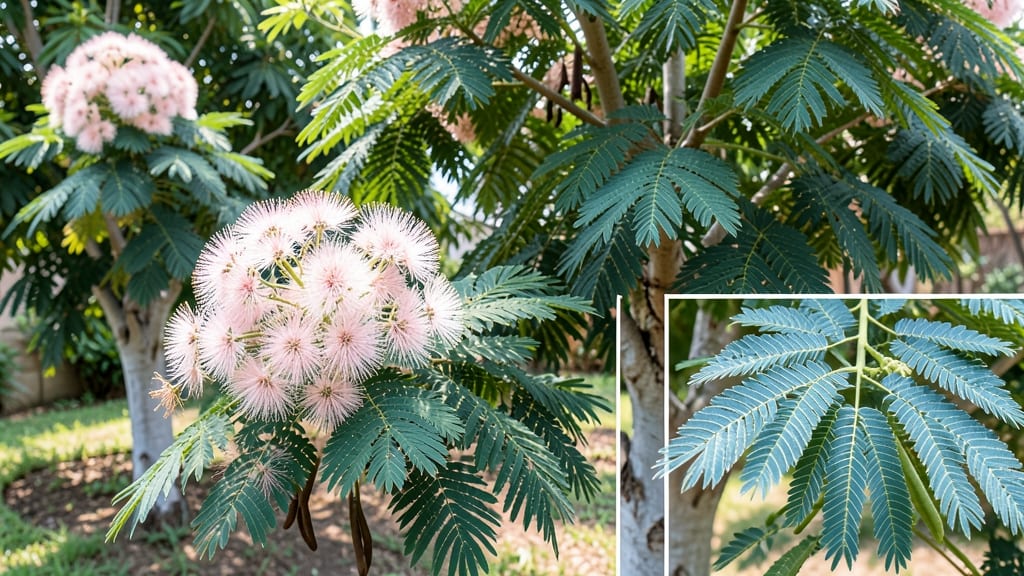
Persian silk tree uses include providing fast-growing shade, creating drought-resistant landscapes, and supporting wildlife through fragrant flowers and seed pods that attract birds and butterflies. Its colorful foliage also enhances garden aesthetics year-round.
This versatile tree thrives in USDA zones 7-11, making it perfect for arid climates where water conservation is key. 🌵 Its deep roots reach moisture efficiently, while its glossy leaves reduce water loss—ideal for xeriscaping projects.
The tree's rapid growth (up to 3 feet per year) also makes it a favorite for quickly establishing privacy screens or filling large landscape gaps. Plus, its non-invasive nature means you won’t deal with the cleanup headaches of other fast growers.
Beyond its practical benefits, Persian silk trees offer seasonal interest that keeps gardens vibrant. The yellow flowers in spring attract pollinators, while the reddish seed pods in fall provide winter structure.
I’ve seen them used as focal points in Mediterranean-style gardens, where their silver-blue foliage contrasts beautifully with lavender and rosemary. For best results, plant them where they’ll get full sun—this maximizes both their drought tolerance and their wildlife appeal.
💡 In This Article
- How Persian Silk Trees Adapt to Harsh Climates
- Landscaping Design Ideas Using Persian Silk Trees
How Persian silk trees adapt to harsh climates
The Persian silk tree's remarkable resilience comes from its deep taproot system, which can extend 10-15 feet below ground. This adaptation allows it to access water stored in deep soil layers during droughts, a critical advantage in arid regions.
The tree's leaves also feature a waxy coating that reduces water loss through transpiration—similar to how cacti survive in deserts. This trait makes it a top choice for xeriscaping projects where water conservation is essential.
In urban environments, these trees excel at erosion control due to their extensive root networks. I've observed them stabilizing slopes in Mediterranean climates where rainfall is sporadic. Their ability to thrive in poor, rocky soils (pH 6.0-8.0) also makes them ideal for urban planting where soil quality is often compromised.
The tree's heat tolerance extends to 100°F+ temperatures, allowing it to maintain lush foliage even during heatwaves that would stress other species. 🌵
What's particularly impressive is how these trees handle urban pollution. Their leaves have a natural ability to filter airborne particles, making them excellent choices for city landscapes.
The tree's rapid growth (up to 3 feet annually) means it quickly establishes itself in harsh conditions, providing shade within 3-5 years—far faster than many native species. This combination of hardiness and speed makes it a favorite among landscape architects working in challenging environments.
For those concerned about invasive species, Persian silk trees are non-aggressive spreaders. Unlike some fast-growing trees that produce thousands of seeds annually, this species has moderate seed production and doesn't form dense thickets.
This makes it a safer choice for drought-prone areas where invasive species could exacerbate water scarcity issues. The tree's natural growth habit also means it won't outcompete native vegetation once established.
In terms of seasonal adaptation, the tree's silver-blue foliage reflects sunlight during hot months, reducing heat absorption by up to 20% compared to darker-leaved species. This reflective quality helps maintain cooler microclimates around the tree, benefiting both the plant and surrounding vegetation.
During winter, the tree's deciduous nature prevents snow damage while still providing structural interest through its reddish seed pods that persist into early spring.
To maximize these climate-adaptive benefits, plant Persian silk trees in full sun positions with well-draining soil. While they tolerate some drought once established, young trees benefit from deep watering every 2-3 weeks during their first growing season.
The key to their success in harsh climates lies in their ability to balance water conservation with growth energy—something few other trees can match. ✨