
Blooming
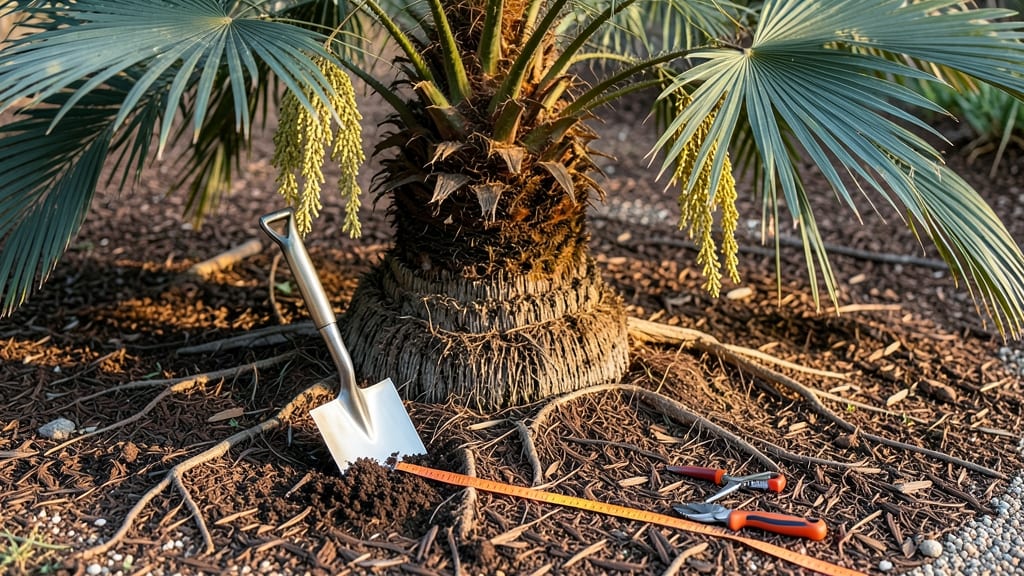
Palm tree roots spread 3 to 5 times the tree’s height horizontally, rarely extending deeper than 3 to 6 feet unless in nutrient-poor or rocky soil. Their shallow, fibrous network requires loose, well-draining soil and adequate spacing to prevent structural damage or competition.
Understanding how palm tree roots grow is key to planting and maintaining them successfully. 🌿 These trees prioritize lateral expansion over depth because their massive canopies need strong anchorage to balance weight.
In sandy soils, roots may spread even wider to find stability, while clay-heavy soils can restrict growth and lead to stress. The fibrous root structure also makes palms more vulnerable to drought and poor drainage, so choosing the right location is critical for long-term health.
For gardeners, this means digging planting holes twice as wide as the root ball to encourage outward growth. 🌱 Adding organic matter like compost helps create ideal conditions for root development.
If you notice your palm tilting or fronds yellowing, it could signal root issues—often a sign of overcrowding or compacted soil.
💡 In This Article
- Palm Tree Root System: Depth vs Spread Explained
- Planting Palm Trees: Soil and Space Requirements
Palm tree root system: depth vs spread explained
The shallow, wide-spreading nature of palm tree roots is a direct adaptation to their tropical habitats. Unlike deep-rooted trees like oaks or pines, palms prioritize lateral expansion because their tall, heavy canopies need broad anchorage to resist wind and storms.
The root system typically forms a dense mat within the top 6 inches of soil, with individual roots rarely exceeding 3 to 6 feet in depth.
This shallow spread allows them to quickly access surface moisture and nutrients in nutrient-poor tropical soils, where deeper roots would struggle to penetrate hardpan or bedrock.
Soil composition dramatically influences root depth. In loose, sandy soils, roots may spread 5 to 7 times the tree's height laterally, creating a vast network that stabilizes the trunk. For example, a 30-foot-tall palm like a coconut palm (Cocos nucifera) might have roots extending 150 to 210 feet horizontally.
Conversely, clay-heavy soils restrict this spread, forcing roots to grow deeper—sometimes up to 8 feet—but at the cost of structural stability. The fibrous nature of palm roots also means they lack the thick, woody taproots seen in other trees, making them more sensitive to soil compaction and poor drainage.
This root structure plays a crucial role in weight distribution. A mature palm can weigh 2,000 to 5,000 pounds, with most of that mass concentrated in the fronds and trunk. The wide root spread acts like a tripod, distributing the tree's weight evenly to prevent tipping.
For instance, the Royal Palm (Roystonea regia), which can reach 60 feet tall, relies on roots spreading 300 feet wide to maintain balance. In contrast, deep-rooted trees like redwoods can grow much taller because their central taproots anchor them like a single support beam.
One fascinating mechanism is how palm roots adapt to their environment. In areas with seasonal droughts, roots may grow slightly deeper (1 to 2 feet) to access moisture, but they never develop the extensive vertical growth seen in drought-resistant trees like mesquite.
Instead, they rely on their fibrous network to quickly absorb water after rains. This adaptation is why palms often struggle in heavy, waterlogged soils—their shallow roots can't penetrate compacted layers, leading to root rot and stress.
For gardeners, this root behavior explains why palms require ample spacing (typically 10 to 15 feet between trees) and well-draining soil. Planting too close can cause roots to compete, leading to stunted growth or leaning trunks.
The root mat also makes palms sensitive to soil disturbance—digging near the trunk can sever critical roots, causing the tree to tilt or weaken. Understanding this growth pattern helps in choosing the right location, preparing the soil with organic matter, and avoiding overcrowding.
Here’s a quick comparison of how palm roots differ from other trees:
- Palm Trees: Shallow (3-6 feet deep), wide-spreading (3-5x height laterally), fibrous and non-woody
- Oak Trees: Deep taproot (10-30 feet), narrow spread (1-2x height), woody and strong
- Willows: Shallow but deep lateral roots (50+ feet wide), flexible and water-seeking
This unique structure is what makes palms both resilient and delicate—resilient in their ability to thrive in tropical conditions, but delicate in their need for the right soil and space to grow strong. 🌿