
Pruning
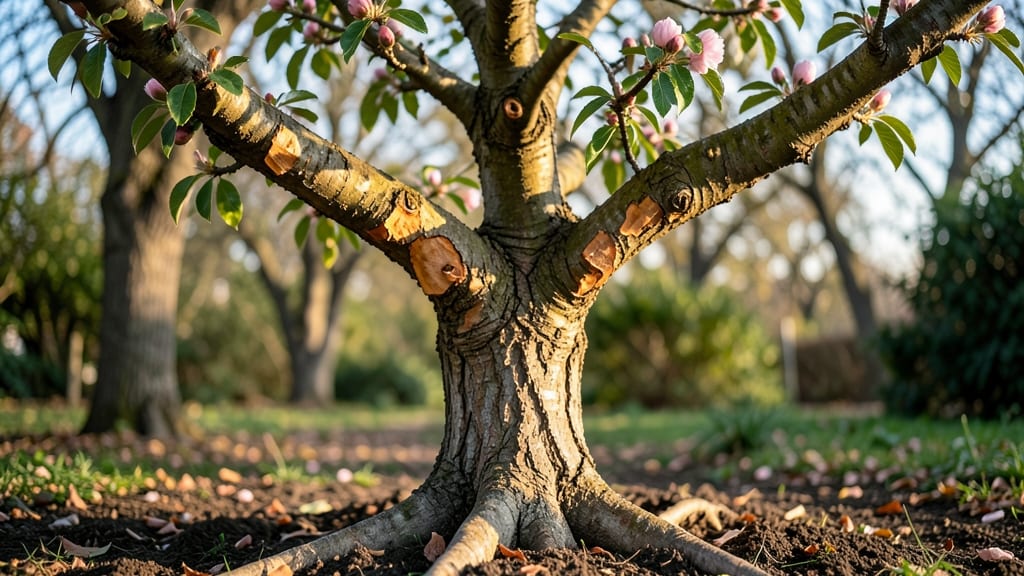
Peach tree bark peeling isn’t just unsightly—it’s a cry for help from your tree. 🌳 I’ve seen sun-scorched branches, frost cracks, and even beetle damage that made trees look like they’d been wrapped in peeling wallpaper.
The good news? Most cases are fixable with the right approach, and early action keeps your tree thriving for years.
Common causes range from sun scald (when winter sun warms bark too fast) to frost cracks (sudden temperature swings) or pests like bark beetles. Bacterial infections can also create oozing wounds under peeling strips.
The key is identifying the damage early—healthy bark should be smooth, with no sunken patches or dark streaks beneath the peel.
Start by pruning away damaged branches with sterilized tools and sealing wounds with pruning sealant. For sun scald, paint trunks with white latex paint in late fall to reflect light.
If pests are the issue, apply horticultural oil or insecticide early in the season. Most trees recover fully with proper care—just act before the damage spreads deeper.
When in doubt, consult an arborist. Some infections or severe infestations need professional treatment, but 90% of cases improve with basic care. Your peach tree’s health depends on quick action—don’t wait until the bark falls off entirely. Let’s get those branches back to smooth, strong, and productive.
Root Causes Of Bark Peeling
Understanding why your peach tree’s bark is peeling is the first step toward restoring its health. This common issue often stems from a mix of environmental stress, biological factors, or improper care.
Below, we break down the key culprits behind bark peeling in peach trees, backed by science and actionable insights.
Peach trees are sensitive to rapid temperature shifts, especially between hot days and freezing nights. When bark expands and contracts too quickly, it weakens the outer layer, leading to peeling or cracking.
This is most common in: - Late spring frost after buds have swollen (a phenomenon called frost crack). - Summer heatwaves followed by sudden cold snaps. - Urban heat islands, where pavement and buildings trap heat during the day and release it at night, creating microclimates that stress trees.
Why it matters: The bark’s phloem layer (responsible for transporting nutrients) can split when subjected to extreme stress. Over time, this exposes the tree to pests, disease, and moisture loss.
Certain fungi thrive on peach tree bark, causing superficial peeling or deep rot.
The most common offenders include: - Venturia carpophila (Peach Leaf Curl): While primarily a leaf disease, severe infections can weaken bark integrity, leading to peeling. - Botryosphaeria dothidea (Botryosphaeria Canker): This fungus invades wounded bark, causing sunken, peeling lesions that ooze gum-like sap. - Armillaria root rot (Honey Fungus): A stealthy underground pathogen that spreads through roots, causing bark to slough off in patches as the tree’s vascular system fails.
Signs to watch for:
- Dark, raised cankers (fungal growths).
- Gummy sap oozing from cracks.
- Wilting leaves despite adequate water (a sign of internal decay).
Insects don’t just cause peeling—they exploit weakened bark.
Here’s how: - Peach Tree Borers (Synanthedon spp.): Larvae burrow under the bark, creating tunnels that sever nutrient flow and trigger peeling as the tree attempts to heal. - Scale Insects: These sap-sucking pests stress the tree, reducing its ability to maintain healthy bark.
Heavy infestations lead to dry, flaky bark that peels easily. - Beetles & Wasps: Some species (like the peach tree borer) lay eggs in cracks, and their larvae chew through the cambium layer, causing bark to lift and peel.
Red flags:
- Sawdust-like frass (insect droppings) at the base of the tree.
- Holes or tunnels in the bark.
- Honeydew (sticky residue) on leaves or trunk (a sign of scale).
Both overwatering and drought stress can trigger bark peeling by disrupting the tree’s moisture balance. Here’s how: - Overwatering: Soggy soil reduces oxygen in the root zone, leading to anaerobic conditions that weaken bark cells.
This is especially risky in clay soils, where water pools and suffocates roots. - Underwatering: Chronic drought causes the bark to dry out and harden, making it brittle. When the tree finally gets water, the sudden expansion can split the bark as it rehydrates.
The science behind it: Peach tree bark contains lignin and cellulose, which rely on consistent moisture to stay flexible. When either extreme occurs, the bark loses elasticity, leading to peeling or cracking.
Mechanical damage is a silent cause of peeling bark.
Common culprits: - Aggressive pruning cuts: Using dull tools or making tear-out wounds (instead of clean cuts) creates entry points for pathogens. - Lawnmower or string trimmer damage: Scraping the trunk or large branches removes protective bark, exposing the tree to sun scald and disease. - Hail or wind damage: Physical trauma can bruise the bark, leading to peeling as the tree attempts to heal.
Key takeaway: Every cut should be 1/4-inch above a bud and made at a 45-degree angle to promote proper healing. Seal pruning wounds with pruning sealant (for large cuts) to prevent moisture loss.
Peach trees need a balanced diet of nitrogen, potassium, and calcium to maintain healthy bark. Deficiencies lead to: - Nitrogen (N) deficiency: Causes thin, weak bark that peels easily.
Leaves may also yellow between veins. - Potassium (K) deficiency: Weakens cell wall integrity, making bark prone to splitting. Look for brown leaf edges or weak stems. - Calcium (Ca) deficiency: Leads to poor bark development, especially in young trees.
Symptoms include blossom end rot (in fruit) and cracked bark.
Soil test tip: If your tree shows signs of deficiency, amend the soil with:
- Compost (for organic matter).
- Wood ash (for potassium).
- Lime (for calcium, if soil is acidic).
Peach trees with thin or damaged bark are vulnerable to sun scald, where intense UV rays cause the bark to dry out, crack, and peel.
This is common in: - Young trees with smooth bark. - South- or west-facing sides of the trunk (most exposed to sun). - Winter conditions: Bark can freeze and thaw, leading to frost cracks that peel in spring.
Prevention tips:
- Wrap the trunk in tree guard or burlap during winter.
- Apply a white latex paint (diluted) to protect from sun exposure.
- Mulch heavily (3–4 inches) to stabilize soil temperature.
Quick Fixes for Damaged Tree Bark
When your peach tree’s bark starts peeling, it’s often a sign of stress—but don’t panic! With the right approach, you can restore your tree’s health and prevent further damage.
Below, we break down the most common causes of peeling bark and provide practical, step-by-step solutions to get your tree back on track.
Fix: Protect the bark and promote recovery.
Step 1: Apply a Protective Layer 🛡️
- If peeling is due to sun scald (common in winter), wrap the trunk in tree bark wrap or burlap before cold snaps. Secure it loosely with twine or tape.
- For frost cracks, avoid pruning in late fall/winter—this can worsen damage.
Step 2: Mulch Properly 🌿
- Spread 2–4 inches of organic mulch (wood chips, straw) around the base, keeping it 6 inches away from the trunk to prevent moisture buildup.
- Water deeply once a week during dry spells to reduce stress.
Step 3: Prune Strategically ✂️
- Remove damaged or dead branches (they drain energy) but avoid heavy pruning in winter—wait until early spring when the tree is dormant.
💡 Prevention Tip:
- Plant peach trees in sheltered spots (near fences or buildings) to shield them from harsh winds and winter sun.
- Use white latex paint on young trunks in cold climates to reflect sunlight and prevent scalding.
Fix: Treat the underlying issue and restore bark health.
Step 1: Inspect for Pests 🔍
- Look for exit holes, sawdust-like frass, or tunnels in the bark—signs of peach tree borers or beetles.
- If you spot black, oozy spots or cracked bark, it could be bacterial canker or fungal infection.
Step 2: Apply Targeted Treatments 💊
- For borers: Drench the soil with beneficial nematodes (like Heterorhabditis bacteriophora) or use neem oil spray on the trunk.
- For fungal issues: Clean the bark with a 10% bleach solution (1 part bleach to 9 parts water) and apply copper fungicide as a preventive spray.
Step 3: Promote Healing 🌱
- Scrape off loose, infected bark with a sterilized knife and seal the wound with pruning sealant (only on cuts larger than ½ inch).
- Avoid over-fertilizing—too much nitrogen weakens defenses.
💡 Prevention Tip:
- Monitor trees regularly for early signs of pests (check under bark with a screwdriver).
- Remove fallen leaves/debris in autumn to reduce fungal spores.
Fix: Balance moisture and nutrients for strong bark.
Step 1: Adjust Your Watering Routine 💧
- Overwatering? Let the soil dry 2–3 inches deep between waterings.
- Underwatering? Water deeply 2–3 times per week (not just surface-level).
- Test soil moisture with a soil probe—if dry past 4 inches, water more.
Step 2: Fertilize Smartly 🌿
- Apply a balanced fertilizer (10-10-10) in early spring and late summer.
- For zinc or calcium deficiencies (common in peach trees), use a chelated micronutrient spray.
- Avoid high-nitrogen fertilizers in late summer—they encourage weak, peeling bark.
💡 Prevention Tip:
- Mulch with compost to slowly release nutrients and improve soil structure.
- Avoid compacted soil—amend with sand or perlite if drainage is poor.
Fix: Repair wounds and prevent future harm.
Step 1: Clean and Seal Wounds 🧹
- Remove sharp or torn edges with sterilized pruners to prevent disease entry.
- Seal large wounds (over ½ inch) with pruning sealant (for cuts) or tree wound dressing (temporarily).
Step 2: Protect the Trunk 🛡️
- Install a tree guard (plastic or metal) if lawnmowers or string trimmers frequently hit the trunk.
- Fence off the area if deer or rabbits are gnawing on bark.
Step 3: Prune Correctly ✂️
- Cut at a 45-degree angle just outside the branch collar (the swollen area where the branch meets the trunk).
- Never leave stubs—they invite rot and pests.
💡 Prevention Tip:
- Mark the tree’s drip line with flagging tape to remind gardeners to avoid mowing too close.
- Train young trees with stakes and ties to encourage strong, straight growth.
To keep your peach tree’s bark smooth and healthy: ✅ Inspect monthly for peeling, cracks, or pests. ✅ Prune in late winter/early spring (avoid summer cuts). ✅ Maintain 3–4 inches of mulch (renew annually). ✅ Avoid wounding the trunk—even small cuts can lead to peeling over time.
With these simple, actionable steps, your peach tree will bounce back—and you’ll enjoy smooth bark and bountiful harvests for years! 🍑✨
Frequently asked questions
Is peeling bark always a sign of a serious problem?
Not necessarily! Some peeling is natural as peach trees mature, but excessive peeling—especially with cracks, oozing sap, or dark streaks—usually signals stress. Healthy bark should be smooth with no exposed wood. If you see sunken patches or fungal growth, act quickly to prevent deeper damage.
Can I fix sun-scalded bark myself?
For sun scald, wrap the trunk in tree guard or burlap before winter, and apply white latex paint (diluted) to reflect sunlight. In spring, seal small cracks with pruning sealant. Avoid pruning damaged branches until the tree is fully healed to prevent further stress.
How do I tell if pests are causing the peeling?
Look for exit holes, sawdust-like frass (insect droppings), or tunnels in the bark—these are classic signs of peach tree borers or beetles. If you spot honeydew (sticky residue) or scale insects, treat with neem oil or horticultural oil early in the season.
Should I remove peeling bark myself?
Only if it’s loose and infected. Use sterilized tools to scrape away damaged sections, then seal the wound with pruning sealant (for cuts over ½ inch). Avoid peeling healthy bark—it won’t help and can expose the tree to pests. Let the tree heal naturally where possible.
When should I call an arborist?
If you see large cankers, oozing sap, or wilted leaves despite watering, it could be a fungal infection like Botryosphaeria canker or root rot. Severe cases may need professional treatment. Also consult an arborist if 50%+ of the bark is damaged—early intervention is key to saving the tree!