
Pruning
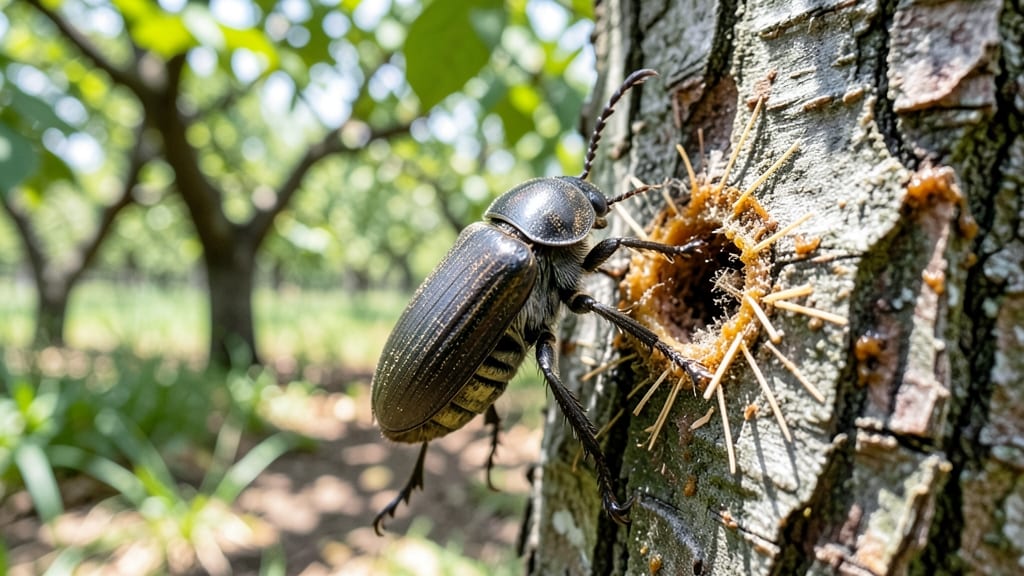
Swollen cankers on your fruit tree mean one thing: borers are tunneling beneath the bark. 🌳 I’ve seen these pests turn healthy trees into sad, wilting skeletons, but I’ve also saved trees using just three organic treatments—no harsh chemicals needed. The key is acting fast before the larvae spread deeper.
Look for sawdust-like frass at the base of the tree or oozing sap from cracks in the bark—those are the dead giveaways. Borers thrive in stressed trees, so poor pruning, drought, or overwatering often invite them in.
Once you spot the signs, you’ve got a small window to stop the damage before it’s irreversible.
With the right tools—like neem oil, beneficial nematodes, or a simple manual drill-out—you can kill the larvae and seal the tree’s wounds. Within weeks, new growth will push out, and your tree will bounce back stronger.
The best part? These methods work for organic certifications and keep your orchard safe long-term.
Whether you’re dealing with peach trees, apple orchards, or backyard plums, these steps apply. The sooner you act, the easier it is to save your tree—and your harvest. Let’s get those borers out for good.
Root Causes of Fruit Tree Borer Infestations
Fruit tree borers—those sneaky pests that tunnel into your trees—don’t just appear out of nowhere. Their presence is usually a sign of underlying stress or environmental conditions that make your trees vulnerable. Understanding why these borers target your fruit trees is the first step to preventing them.
Below, we break down the key factors that turn your once-healthy trees into a buffet for these destructive insects.
Borer larvae thrive in trees that are already struggling. When a tree’s natural defenses are compromised, it becomes an easy target. Here’s what weakens a tree’s resilience:
- Nutrient Deficiencies: Trees lacking essential nutrients (like nitrogen, potassium, or calcium) produce thinner bark and weaker sap flow—both of which make it easier for borers to penetrate. Example: A zinc-deficient tree may develop poor wound healing, leaving entry points exposed longer.
- Water Stress: Overwatering or drought can stress trees, reducing their ability to produce resin (a natural borer repellent). Fun fact: Some trees, like peaches, are especially sensitive to inconsistent moisture, making them prime targets.
- Physical Damage: Cracks, broken branches, or pruning wounds create perfect entry points. Borers detect these vulnerabilities using pheromones and chemical cues from injured trees.
💡 Pro Tip: Conduct a soil test to check nutrient levels and adjust fertilization accordingly. Mulching around the base of the tree (but not touching the trunk) helps retain moisture and improve root health.
Borer populations explode when the environment becomes hospitable. These pests are highly responsive to temperature, humidity, and even seasonal changes. Here’s how climate plays a role:
- Warm, Dry Conditions: Borers like the peach tree borer are most active during hot, dry summers. Heat stress weakens trees, and dry wood is easier for larvae to bore into. Example: Southern states often see outbreaks after prolonged droughts.
- High Humidity: While dryness helps borers penetrate, high humidity after infestation encourages fungal growth in the tunnels, further damaging the tree. Think of it as: The perfect storm for borer success.
- Seasonal Timing: Adult borers emerge in late spring to early summer, coinciding with new tree growth. If your tree is already stressed from winter damage or early-season pruning, it’s an open invitation.
🌡️ Climate Hack: Monitor local weather patterns and water trees deeply during dry spells to maintain moisture levels. Avoid late-season pruning, as fresh cuts attract borers during peak activity.
Pruning is essential for tree health, but how you prune can either prevent or invite borers. Improper techniques create ideal conditions for infestation:
- Large, Jagged Cuts: When you make oversized or uneven pruning cuts, you remove too much bark, exposing the cambium layer (the tree’s growth tissue). Borers detect these wounds and lay eggs nearby. Rule of thumb: Always cut at a 45-degree angle, just outside the branch collar.
- Infected Tools: Using dull or contaminated pruners can spread fungal or bacterial infections, weakening the tree. Borers are quick to exploit these secondary infections. Solution: Sterilize tools with rubbing alcohol between cuts.
- Over-Pruning: Removing too many branches at once stresses the tree, reducing its ability to produce protective resins. Best practice: Prune in stages, never removing more than 25% of the canopy in one season.
✨ Pruning Gold Standard: Prune during the dormant season (late winter/early spring) to minimize stress. Seal larger wounds with a tree wound dressing (like pruning sealant) to deter borers temporarily.
Borer infestations rarely happen in isolation. Often, they follow other pests or diseases that have already compromised the tree. Here’s the domino effect:
- Sap-Sucking Insects: Pests like aphids, scale, or spider mites weaken trees by feeding on sap, reducing the tree’s energy reserves. Borers then move in to exploit the already-stressed host. Example: A tree heavily infested with aphids may attract borers within weeks.
- Fungal Infections: Diseases like canker or root rot create soft, decaying wood—an all-you-can-eat buffet for borer larvae. The fungi break down the tree’s structural integrity, making it easier for borers to tunnel.
- Competing Weeds/Grass: Overgrown vegetation around the tree’s base competes for water and nutrients, further stressing the tree. Borers capitalize on this weakened state. Quick fix: Maintain a 3-foot radius of clear ground around the trunk.
🎯 Prevention Strategy: Regularly inspect your trees for early signs of sap-sucking insects or fungal spots. Treat these issues promptly with organic sprays (like neem oil or horticultural oil) to reduce borer risk.
Quick Fixes for Fruit Tree Borers
Fruit tree borers can turn your once-thriving orchard into a sad, sawdust-spewing mess—but don’t panic! With the right approach, you can stop the damage fast and restore your trees to health.
Below, we’ve mapped out practical, step-by-step solutions tailored to the root causes of infestations, from early signs to severe cases. Plus, we’ll share prevention tips to keep borers from crashing your harvest again.
Cause: Larvae have just tunneled in, but the tree is still fighting back.
🛠️ How to Treat It 1. 🔍 Spot & Scrape the Entry Points
- Inspect the bark for tiny holes (1/16"–1/8" wide) or sawdust-like frass (borer poop) oozing out.
- Use a sharp knife or spoon to gently scrape away the frass and expose the hole.
This helps you locate the tunnel.
- 💀 Drown the Larvae (No Chemicals Needed!) - Fill the hole with undiluted rubbing alcohol or soapy water (1 tbsp dish soap per cup of water). - Let it sit for 10–15 minutes, then flush with water.
The alcohol suffocates the larvae while being safe for the tree.
- 🛡️ Seal the Wound
- Apply pruning sealant or bee’s wax to the hole to prevent reinfestation.
- Pro tip: 🌡️ Do this on a warm, dry day—cool temps can stress the tree further.
Cause: Borers have been feeding for weeks, weakening the tree’s defenses.
🔪 Surgical Strike: Remove the Infested Wood
- 🪓 Cut Out the Canker (Like a Surgeon!)
- Use sterilized pruning shears to remove the infected branch or bark—cut at least 2–3 inches beyond the visible damage.
- Dispose of the cuttings in a sealed bag (not your compost!).
- 🧴 Apply a Natural Antiseptic
- Mix 1 part hydrogen peroxide (3%) + 2 parts water and brush it onto the wound.
- Alternatively, use neem oil spray (2 tbsp neem oil + 1 tsp dish soap + 1 quart water) to repel future borers.
- 🌿 Boost Tree Immunity
- Fertilize with compost or a balanced organic fertilizer (like fish emulsion) to help the tree recover.
- Pro tip: 💡 Water deeply after treatment—stressed trees are borer magnets!
Cause: Late-stage borer activity has killed vascular tissue, and the tree is struggling to survive.
🚨 Emergency Action Plan
- 🪓 Prune Aggressively (But Strategically)
- Remove all heavily infested branches—even if it means sacrificing part of the tree.
- Do not leave stubs! Cut back to a healthy bud or lateral branch.
- 🐛 Trap & Kill Adult Borers
- Set up pheromone traps (like GypCheck traps) to catch emerging adult borers.
- Handpick any visible beetles and drown them in soapy water.
- 🌱 Consider Tree Replacement (If Necessary)
- If the tree is beyond saving, remove it completely and burn or chip the wood (do not compost!).
- Plant a borer-resistant variety (e.g., peach trees on Lovell rootstock or apple trees on M.9 rootstock).
Borers hate healthy, well-maintained trees. Here’s how to outsmart them before they strike:
| Prevention Step | How to Do It | Best Time to Act |
|---|---|---|
| 🌱 Plant Resistant Varieties | Choose disease-resistant rootstocks (e.g., peach ‘Redhaven’ on Nemaguard). | Before planting new trees. |
| 🪓 Prune Properly | Remove dead/dying wood in late winter (when borers are dormant). | February–March. |
| 🌿 Mulch & Water Deeply | Apply 2–3 inches of organic mulch and water at the roots (not leaves). | Spring & summer. |
| 🐝 Encourage Beneficial Insects | Attract parasitic wasps (natural borer predators) with dill, fennel, or marigolds. | Plant flowers near trees. |
| 🧴 Use Preventative Sprays | Spray neem oil or kaolin clay every 4–6 weeks during borer season. | Early spring & summer. |
🎯 Final Pro Tip: Monitor your trees weekly during spring and summer—early detection is the #1 weapon against borers! With these steps, your fruit trees will stay strong, productive, and borer-free for years to come. 🍏🍑🍊
Frequently asked questions
What does fruit tree borer damage look like?
Look for sawdust-like frass (borer waste) oozing from tiny holes in the bark, swollen cankers (raised, oozing wounds), or yellowing leaves on one side of the tree. The bark may also split open, revealing tunnels where larvae hide. Check the trunk and larger branches first—they’re favorite entry points.
Can I use chemical pesticides for fruit tree borers?
Yes, but organic options work just as well! For severe cases, use imidacloprid (systemic insecticide) or permethrin sprays—but follow label instructions carefully. Organic alternatives like beneficial nematodes (applied to soil) or kaolin clay sprays are safer for pollinators and long-term tree health.
How often should I check my trees for borers?
Inspect your trees every 2–4 weeks during spring and summer (peak borer season). Focus on new wounds, cracks, or unusual sap flow. Early detection is key—borers can kill a tree in as little as 6–8 weeks if left untreated. Keep a log of any damage spots to track progress.
Will removing one infested branch stop the spread?
Not always! Borers can spread through root grafts or adjacent trees, so treat the whole orchard. After pruning, apply neem oil or horticultural oil to nearby trees to prevent reinfestation. Sterilize your pruning tools between cuts to avoid spreading larvae or diseases.
Can I save a tree if the borers have already killed the roots?
Unfortunately, no—root damage is usually irreversible. If you see wilted leaves, cracked bark, or no new growth despite treatment, the tree is likely beyond saving. Remove it completely (including roots) and replace it with a borer-resistant variety to prevent future outbreaks.