
Pruning
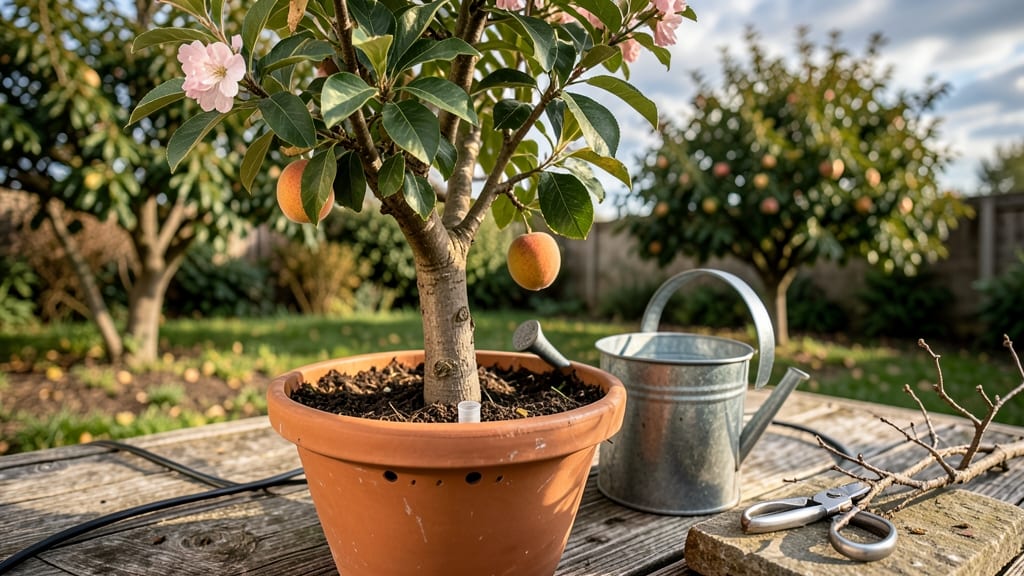
Your patio peach tree care can yield sweet, juicy fruit every year—if you avoid these three critical mistakes. 🌸 I’ve grown peaches in small spaces for years, and the difference between a thriving tree and a struggling one comes down to light, pruning, and winter prep.
Most people overlook how much peaches hate winter winds or how much they love morning sun, and that’s what kills their harvest.
Start with the right spot: 6+ hours of sunlight, shelter from cold winds, and well-draining soil mixed with compost. A 5-gallon container works for dwarf varieties, but standard peach trees need 15-gallon pots to avoid root-bound stress.
Water deeply twice a week in summer, but never let them sit in soggy soil—peaches despise wet feet. Prune in late winter to open the canopy for airflow, which cuts down on fungal diseases that ruin fruit.
By summer, you’ll see blossoms turning into fruit, and with proper thinning (remove extra peaches early), each remaining one grows larger and sweeter. The key is consistency: year-round care—winter mulch, spring fertilizing, and summer pest checks—keeps the tree productive for decades.
Even in small spaces, a well-cared-for peach tree outshines store-bought fruit every time.
Works for dwarf varieties like ‘Bonanza’ or ‘Redhaven’ in containers, or standard trees in-ground if your patio borders the yard. The same principles apply whether you’re growing in pots or soil—just scale the container size. Let’s get that tree fruiting like a pro!
📚 In This Guide
- What you need
- Instructions
- Tips and common mistakes
- Wrapping up and next steps
What you need
- ● Pruning shears: Bypass pruners (sharp, clean, and sterilized with rubbing alcohol between cuts). Quantity: 1 pair.
- ● Hand pruners: For smaller branches (3/8"–1" thick). Quantity: 1 pair.
- ● Loppers: For thicker branches (1"–2" thick). Quantity: 1 pair.
- ● Gloves: Heavy-duty gardening gloves (to protect from thorns and sap). Quantity: 1 pair.
- ● Disposable pruning saw: For branches over 2" thick. Quantity: 1.
- ○ Pruning sealant: Optional but helpful for sealing larger cuts (e.g., Tree Seal or Pruning Wax). Quantity: Small jar.
- ● Garden hose or watering can: For post-pruning hydration. Quantity: 1.
- ● Fertilizer: Balanced, slow-release fertilizer (e.g., 10-10-10 or citrus-specific if applicable). Quantity: As per package instructions.
- ● Mulch: Organic mulch (e.g., wood chips or straw) to retain moisture. Quantity: 2–3 inches around the base.
- ● Tree tie or stretchy fabric: To support young or weak branches during pruning.
- ● Spray bottle with water: For cleaning tools between cuts (prevents disease spread).
- ● Pest control: Neem oil or horticultural oil (if pests like aphids or scale are a concern).
- ● Stake and ties: For newly planted or top-heavy trees (if needed).
- ● Wheelbarrow or bucket: For collecting pruned branches and debris.
- ● Timing: Prune during dormant season (late winter/early spring) or right after harvest (summer). Avoid pruning in fall.
- ● Weather: Choose a dry, overcast day to prevent stress on the tree.
- ● Safety first: Wear long sleeves and closed-toe shoes—patio peach trees can be thorny!
- ● Clean workspace: Remove weeds and debris from the base of the tree before starting.
Step-by-Step instructions for patio peach tree care
Here’s how to keep your patio peach tree lush, productive, and hassle-free—no orchard skills required.
☀️ Step 1: Position for Sunlight and Wind Protection
Peaches crave 6-8 hours of direct sun daily, so place your patio tree in the sunniest spot possible. A south-facing location works best in most climates, but even west-facing spots can work if you supplement with afternoon shade during scorching summers. I’ve seen patio peaches thrive in containers on balconies—just rotate the pot quarter-turn weekly to prevent lopsided growth.
Wind is the silent killer of patio peaches. Even gentle breezes can snap delicate branches or dry out leaves. If your patio is exposed, position the tree near a wall or fence, or use a burlap windscreen on the windward side. You’ll notice leaves stay plump and vibrant when protected—wilting or browning edges are your first warning signs of wind stress.
💧 Step 2: Water Deeply and Consistently
Container-grown peach trees dry out 3-5 times faster than in-ground trees, so check soil moisture daily during the first month after planting. Stick your finger 2 inches deep—if it feels dry, water until it runs freely from the drainage holes. Overwatering is just as deadly as underwatering; soggy roots invite root rot, which will kill your tree in weeks.
Once established, water when the top 3 inches of soil feel dry. In summer, this might mean watering every 2-3 days, while winter care drops to once a week. I like to water in the morning so leaves dry quickly, reducing fungal risks. Mulch with 2-3 inches of organic material (like shredded bark) to retain moisture and regulate soil temperature.
✂️ Step 3: Prune for Shape and Fruit Production
Prune your patio peach tree in late winter or early spring, before buds swell but before leaves appear. Remove any dead, crossing, or inward-growing branches first—these compete for energy and create disease traps. Next, thin out branches to open the center of the tree; peaches need airflow to prevent fungal issues. Aim for an open vase shape that lets sunlight reach all branches.
For fruit production, cut back last year’s growth by 1/3 to encourage new, vigorous shoots. These new branches will bear next year’s fruit. Avoid heavy pruning in summer, as it stresses the tree and stunts growth. If you see suckers growing from the base, remove them immediately—they drain energy from your main tree.
🌱 Step 4: Fertilize for Strong Growth and Sweet Fruit
Feed your patio peach tree with a balanced, slow-release fertilizer (like 10-10-10) in early spring, just as new growth begins. Follow package instructions for container plants—over-fertilizing burns roots and can lead to leaf scorch. I also add a handful of compost or worm castings to the topsoil each spring to boost organic matter and microbial activity.
Peaches need more phosphorus and potassium than nitrogen to produce sweet, flavorful fruit. In mid-summer, switch to a low-nitrogen, high-phosphorus fertilizer (like 5-10-10) to support flowering and fruiting. You’ll know it’s working when leaves stay deep green and fruit develops a rich, golden blush.
⏰ Step 5: Protect Against Pests and Diseases
Patio peaches face fewer pests than in-ground trees, but aphids, peach leaf curl, and borers can still strike. Inspect leaves weekly for sticky residue (aphids), curled edges (leaf curl), or sawdust-like frass (borers). At the first sign of trouble, spray with neem oil or insecticidal soap—both are safe for patio trees and effective against soft-bodied pests.
Prevent peach leaf curl, a fungal disease that causes puckered leaves, by applying a copper fungicide spray in late fall or early winter. This single step can save your tree from unsightly (and unproductive) damage. If you notice brown, oozing spots on branches, prune those areas immediately and sterilize your pruners with rubbing alcohol to prevent spread.
Tips & tricks for perfect patio peach tree care
These essential strategies will help you keep your patio peach tree thriving year after year with minimal effort.
Sunlight Strategy: The 6-8 hours of direct sunlight your peach tree needs isn't just about placement—it's about consistency. If your patio gets intense afternoon sun, provide temporary shade during peak hours (12-4 PM) to prevent leaf scorch. I've seen patio trees in west-facing spots thrive with a simple shade cloth during summer afternoons, which prevents sunburn while still allowing plenty of light for fruit production.
Watering Wisdom: That 2-inch soil moisture check in Step 2 is your golden rule, but here's what nobody tells you: Morning watering isn't just about fungal prevention—it's about giving roots time to absorb moisture before evening heat evaporates it. For container trees, I like to water until you see runoff from the drainage holes, then wait 10 minutes before moving the pot. This ensures water penetrates all the way to the root ball.
Pruning Precision: When cutting back last year's growth by 1/3 in Step 3, focus on removing branches that are thinner than a pencil—they won't produce quality fruit and just compete with stronger branches. Make your cuts just above an outward-facing bud or branch junction. This technique creates an open vase shape that lets sunlight reach all fruit-bearing branches, which is crucial for sweet, flavorful peaches.
Fertilizer Timing: The switch from 10-10-10 to 5-10-10 in mid-summer isn't arbitrary—it's about matching the tree's needs. Peaches need that phosphorus boost when they're developing fruit, but too much nitrogen at this stage can lead to leafy growth at the expense of fruit sweetness. I've found that applying the 5-10-10 fertilizer right after the first harvest gives the tree a second energy boost for next year's fruit production.
Pro Tips for Patio Peach Tree Care
- These essential strategies will help you keep your patio peach tree thriving year after year with minimal effort.
- Sunlight Strategy: The 6-8 hours of direct sunlight your peach tree needs isn't just about placement—it's about consistency.
- For container trees, I like to water until you see runoff from the drainage holes, then wait 10 minutes before moving the pot.
Frequently asked questions
Got questions about keeping your patio peach tree happy? You’re not alone! Here are some of the most common concerns—and straightforward answers—to help you avoid stress and keep your tree thriving.
How often should I prune my patio peach tree?
Prune your patio peach tree once a year, ideally in late winter or early spring (before buds swell). Light shaping can be done in summer to remove dead wood or overgrowth, but avoid heavy pruning then—it stresses the tree. Focus on opening the canopy for airflow and sunlight to prevent disease.
Can a patio peach tree survive winter in cold climates?
Most patio peach trees (like dwarf varieties) thrive in USDA Zones 5-9, but they need protection in colder areas. Wrap the trunk in burlap or use a frost cloth, and mulch heavily around the base. If temps drop below 10°F (-12°C), consider moving potted trees to a sheltered spot or indoors near a sunny window.
Why aren’t my peaches ripening?
Unripe peaches often stem from insufficient sunlight, overcrowded branches, or poor pollination. Ensure your tree gets 6+ hours of direct sun daily. Hand-pollinate if bees are scarce (use a soft brush to transfer pollen). Also, check for nutrient deficiencies—feed with a fruit-tree fertilizer in early spring.
How do I protect my patio peach tree from pests?
Common pests like aphids, peach tree borers, or spider mites can wreak havoc. Start with prevention: Keep the area weed-free and prune for airflow. For infestations, use neem oil or insecticidal soap (follow label instructions). Bird netting can also save your fruit from hungry critters!
Can I grow a peach tree in a container long-term?
Yes, but it requires upgrading pots every 2-3 years (aim for at least 20-gallon containers for mature trees). Use well-draining soil with compost, and fertilize monthly during growing season. Dwarf varieties (like ‘Bonanza’ or ‘Redhaven’) adapt best. Root-bound trees suffer, so repot if roots circle the pot.
Wrapping up and next steps
Caring for your patio peach tree doesn’t have to be overwhelming—just follow the seasonal steps we’ve shared, and you’ll enjoy lush growth, sweet fruit, and a thriving centerpiece for years! 🌱 With the right tools, pruning know-how, and a little patience, your tree will reward you with bountiful harvests and stunning blooms.
Now that you’re armed with the basics, why not take the next step? Try experimenting with container training or pollination tips to boost your tree’s productivity. Happy gardening! 🌟