
Pruning
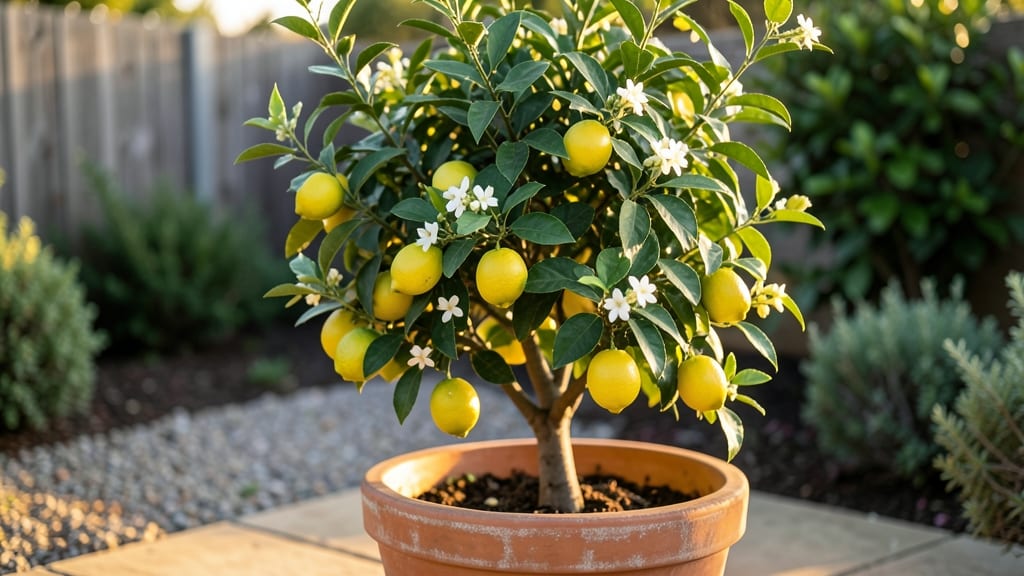
Patio lemon tree care can produce fruit year after year with just a few simple adjustments. 🌿 The secret isn't complicated—it's about sunlight, water, and knowing when to prune. I've grown citrus in containers for over a decade, and these trees thrive when you mimic their natural Mediterranean environment in a pot.
Start with a 15-20 gallon container and well-draining soil mixed with sand or perlite. Place your tree where it gets 6-8 hours of sunlight daily, and water when the top inch of soil feels dry.
Overwatering is the #1 killer—citrus hate soggy roots. A balanced citrus fertilizer every 6-8 weeks keeps them blooming and fruiting.
Minimal pruning means cutting back only dead or crossing branches in late winter. This encourages new growth where you want it—right where the fruit forms. With this approach, you'll see bright yellow lemons by late fall, even in small spaces. The smell alone makes it worth the effort.
Watch for scale insects or spider mites—wipe leaves with soapy water at the first sign. Move containers indoors if temperatures drop below 30°F to protect tender roots. Most problems stem from overwatering or not enough light, so keep an eye on those two factors.
📚 In This Guide
- What you need
- Instructions
- Tips and common mistakes
- Wrapping up and next steps
What you need
- ● Patio Lemon Tree: A dwarf variety (like 'Meyer' or 'Improved Meyer') in a 15-20 gallon container (or larger if mature).
- ● Well-draining potting soil: A citrus-specific mix (or blend 60% potting soil + 30% perlite + 10% sand). Quantity: Enough to fill the pot (typically 10-20 lbs per 15-gallon container).
- ● Container with drainage holes: Size: At least 12" deep and wide (adjust for tree age). Material: Plastic, ceramic, or fabric grow bags.
- ● Fertilizer: Balanced citrus fertilizer (6-6-6 or 8-3-9 NPK ratio). Quantity: Follow label instructions (usually 1-2 tbsp per gallon of soil every 4-6 weeks in growing season).
- ○ Slow-release granules (optional for convenience).
- ● Pruning tools: Bypass pruners (for clean cuts on small branches).
- ● Loppers (for thicker branches, 1-2" diameter max).
- ● Sterilizing solution (70% isopropyl alcohol or bleach water) to disinfect tools between cuts.
- ● Watering supplies: Watering can with a rose attachment (for gentle, deep watering).
- ○ Moisture meter (optional but helpful for tracking soil hydration).
- ● Mulch: Organic mulch (like bark chips) to retain moisture and regulate soil temp. Quantity: 1-2" layer around the base (avoid touching the trunk).
- ● Support stake: A 4-6 ft tall bamboo or metal stake if your tree grows tall (tie with soft plant ties).
- ● Citrus food supplements: Epsom salt (for magnesium, 1 tbsp per gallon of water monthly).
- ● Lemon-specific micronutrients (like iron chelate for yellowing leaves).
- ● Pest control: Neem oil (for aphids or mites).
- ● Yellow sticky traps (to catch flying pests like whiteflies).
- ● Winter protection: Frost cloth (for temps below 30°F/-1°C).
- ● Heat mat (if growing in a cooler climate).
Step-by-step instructions for patio lemon tree care
Here’s how to keep your dwarf lemon tree thriving year-round with simple, effective techniques.
🪴 Step 1: Select the Right Container and Drainage
Choose a 5-gallon or larger container with drainage holes—lemon trees hate soggy roots. I use unglazed terra cotta pots because they breathe and prevent root rot. If your pot lacks holes, drill 2-3 additional ones near the bottom. Place a 2-inch layer of gravel or broken pottery at the base to improve drainage and prevent soil compaction.
This setup mimics the tree’s natural Mediterranean environment, where roots need air and quick-draining soil. Without proper drainage, roots suffocate, and the tree’s growth stalls. I always test drainage by filling the empty pot with water—if it drains within 10 minutes, it’s ready for planting.
☀️ Step 2: Provide Full Sun and Consistent Warmth
Patio lemon trees need 6-8 hours of direct sunlight daily. Place your pot on a south- or west-facing patio where it gets afternoon sun. If shade covers part of the day, supplement with a grow light for 12-14 hours daily—lemon trees are light-hungry and won’t fruit without enough brightness.
Temperature matters too: keep the tree between 60-85°F. Below 50°F, growth slows, and leaves yellow. I move my tree indoors near a sunny window during winter, but avoid drafts—cold air weakens the tree’s resilience. Watch for drooping leaves as a sign of temperature stress; adjust placement immediately.
💧 Step 3: Water Deeply and Maintain Moisture Balance
Water when the top 2 inches of soil feel dry—stick your finger in to check. Lemon trees prefer consistent moisture but despise soggy soil. I water deeply until water runs out the drainage holes, then let excess drain completely. Overwatering causes root rot, which is silent until the tree suddenly wilts.
In summer, I water every 2-3 days, while winter slows watering to once a week. Use room-temperature water—cold water shocks roots. Mulch the soil surface with 1 inch of organic mulch (like straw) to retain moisture and regulate temperature. This simple step cuts watering frequency by 30% without stressing the tree.
✂️ Step 4: Prune for Shape and Airflow (Minimalist Approach)
Prune only to remove dead or crossing branches—lemon trees handle minimal pruning. Use clean, sharp pruners to cut just above a leaf node at a 45-degree angle. Avoid heavy pruning; it stresses the tree and reduces fruit production. I prune once in late winter (just before new growth) to shape the tree and open airflow.
Watch for suckers—shoots growing from the base or trunk. Remove them immediately with your fingers or pruners. Suckers drain energy from fruit production. After pruning, wipe tools with rubbing alcohol to prevent disease spread. This keeps your tree healthy and productive with minimal effort.
🌿 Step 5: Fertilize Seasonally for Peak Fruit Production
Feed your lemon tree every 4-6 weeks during active growth (spring and summer) with a balanced citrus fertilizer (like 6-6-6 or 8-3-9). I mix the fertilizer into the top 2 inches of soil and water deeply to distribute nutrients. Avoid over-fertilizing—too much nitrogen causes leafy growth at the expense of fruit.
In fall and winter, reduce feeding to every 8-12 weeks. Lemon trees rest during cooler months, and extra fertilizer just wastes money. Look for dark green, glossy leaves as a sign of healthy nutrition. Yellow leaves? Time to check your fertilizer balance or watering habits.
Tips & tricks for perfect patio lemon tree care
Took me years to figure out these lemon tree secrets—here’s how to avoid the mistakes that keep most patio trees from thriving.
Container Upgrade: The 5-gallon minimum is non-negotiable, but I’ve found that upgrading to a 7-10 gallon container every 2-3 years prevents root-bound stress. When repotting, choose a pot just 2-3 inches larger in diameter—too big creates moisture retention problems. Unglazed terra cotta remains my top choice because it naturally wicks away excess moisture, but if you prefer plastic, add extra drainage holes and use a lightweight potting mix. The 10-minute drainage test is your best quality check—if water pools after that, your setup needs adjustment.
Lighting Strategy: Those 6-8 hours of direct sunlight are critical, but I’ve learned that quality matters more than quantity. Morning sun (6am-10am) is gentler than harsh afternoon rays, so position your tree to catch the cooler morning light whenever possible. For grow lights, I recommend LED grow bulbs—they’re energy-efficient and emit the full spectrum of light lemon trees need. Place lights 6-12 inches above the tree for the 12-14 hour daily supplement, and adjust height as the tree grows to maintain proper distance.
Watering Wisdom: The top 2 inches dry test works, but I’ve found that checking soil moisture at the same time each day creates consistency. In summer, I water at 8am and 6pm to avoid evening moisture retention, while winter’s once-a-week schedule shifts to early morning only. Pro tip: Use a moisture meter for accuracy—it’s worth the $15 investment. And always water at soil level rather than pouring on leaves to prevent fungal diseases that thrive in damp foliage.
Pruning Precision: That late winter timing is perfect, but I’ve discovered the best time is actually when new growth begins—just as buds swell but before leaves unfurl. This minimalist approach preserves fruit production while removing only what’s necessary. For pruning cuts, I’ve found that using a sterile razor blade dipped in rubbing alcohol works just as well as pruners for small branches, giving you more control over clean cuts. Always cut at a 45-degree angle just above a leaf node to encourage proper healing and new growth.
Pro Tips for Patio Lemon Tree Care
- Took me years to figure out these lemon tree secrets—here’s how to avoid the mistakes that keep most patio trees from thriving.
- Container Upgrade: The 5-gallon minimum is non-negotiable, but I’ve found that upgrading to a 7-10 gallon container every 2-3 years prevents root-bound stress.
- Lighting Strategy: Those 6-8 hours of direct sunlight are critical, but I’ve learned that quality matters more than quantity.
Frequently asked questions
Got questions about keeping your patio lemon tree happy? You’re not alone! Here are some of the most common concerns—and their simple solutions—to help your citrus tree thrive year-round.
How often should I prune my patio lemon tree?
Prune your lemon tree lightly in late winter or early spring (before new growth) to shape it and remove dead branches. For container-grown trees, a light trim 1-2 times a year is enough—avoid heavy pruning, as it stresses the tree. Focus on air circulation and sunlight access!
Can I keep a lemon tree in a pot all year, even in winter?
Yes! Patio lemon trees are hardy in pots if you bring them indoors or protect them from frost (below 30°F/-1°C). Move them to a sunny windowsill, garage, or covered patio. If outdoors, wrap the pot in bubble wrap or use a frost cloth for extra protection. Pro tip: Reduce watering in winter—the tree’s growth slows down.
Why aren’t my lemon tree leaves turning yellow?
Yellow leaves usually signal overwatering, nutrient deficiency, or pests. Check the soil—it should be slightly moist but not soggy. Feed your tree with a citrus-specific fertilizer every 2-3 months, and inspect for aphids or spider mites (wipe leaves with soapy water if needed). Fix it fast: Adjust watering and trim affected leaves to encourage new growth.
How do I encourage my lemon tree to fruit?
Fruiting takes patience (2-5 years for container-grown trees!), but you can help by:
- Ensuring 6+ hours of sunlight daily (south-facing is ideal).
- Using a balanced citrus fertilizer (high in nitrogen early, then switch to bloom/fruit formula).
- Avoid over-pruning—too many cuts reduce flowering.
What’s a low-maintenance alternative to a lemon tree for small patios?
If lemons seem high-maintenance, try these easy-care citrus (or citrus-like) alternatives:
Tree
Why It’s Great
Meyer Lemon
Hardier than standard lemons, sweeter, and more forgiving for beginners.
Calamondin Orange
Dwarf size, fragrant flowers, and edible (tart) fruit—perfect for pots!
Dwarf Orange (e.g., ‘Improved Meyer’)
Thrives in containers, produces fruit faster, and tolerates cooler temps.
All three need similar care but with slightly more resilience!
Wrapping up and next steps
Caring for your patio lemon tree is all about patience, consistency, and a little love—no fancy tools or extreme pruning required! With the right balance of sunlight, water, and occasional trimming, you’ll enjoy fresh lemons and lush foliage year-round. 🌿✨
Now that you’re armed with the know-how, why not take the next step? Grab those pruning shears, give your tree a quick check, and watch it thrive even more. Happy growing—and may your harvest be bountiful! 🍋😊