
Watering
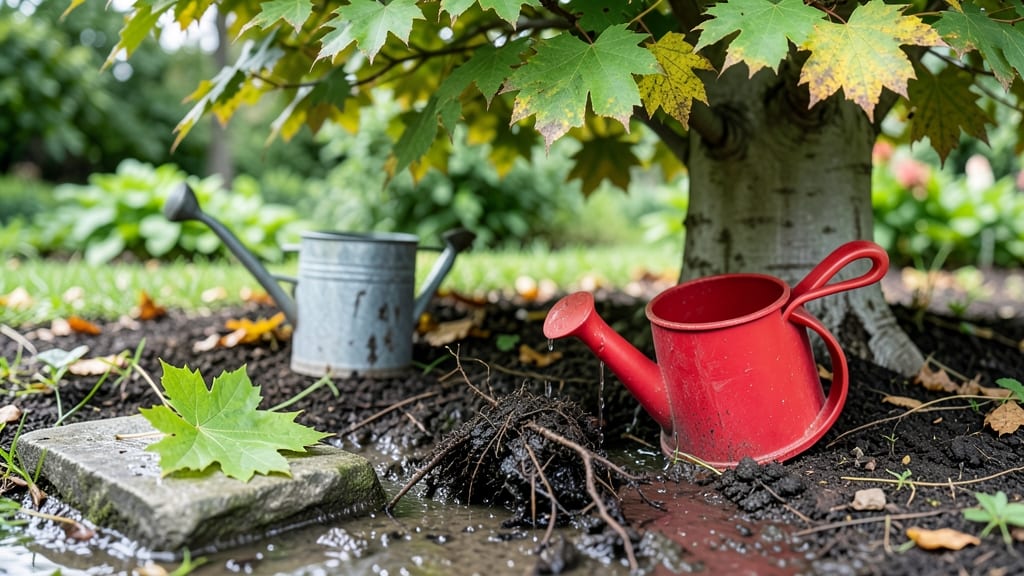
When the overwatered maple tree leaves turn yellow and droop, it’s almost always overwatering—something I’ve fixed more times than I’d like to admit. 🌿 The telltale signs are soft, mushy stems, yellowing between veins, and leaves that fall with the slightest breeze.
Most gardeners (myself included) overestimate how much water trees need, especially in clay-heavy or poorly drained soil.
The good news? Recovery is simpler than you’d think. Start by letting the soil dry out completely between waterings—stick your finger in the top 2 inches of soil. If it’s damp, wait.
Then, improve drainage by adding a 2-inch layer of compost or coarse sand to the root zone. This prevents water from pooling around roots, which suffocates them.
Next, prune any severely affected branches back to healthy growth. You’ll see new, vibrant leaves within 3-4 weeks if the roots aren’t permanently damaged. The key is consistency: maples prefer deep but infrequent watering once established, and they hate soggy feet.
This method works for both young saplings and mature trees, whether planted in the ground or containers. The secret is patience—overwatered trees bounce back faster than you’d expect once you adjust their care. Let’s get those leaves perky again!
Root Causes Behind Wet Maple Leaves
When your maple tree’s leaves start wilting, yellowing, or drooping despite your best efforts, the issue often traces back to excessive moisture disrupting the plant’s natural balance.
Understanding these root causes helps you adjust care routines and prevent long-term damage. Let’s break down the science behind why overwatering triggers these symptoms.
Maple trees thrive in well-draining soil, but compacted or clay-heavy ground acts like a sponge, holding onto water instead of allowing excess to escape. When roots sit in soggy conditions for too long, they struggle to absorb oxygen—a critical process called aeration. Without oxygen, roots suffocate, leading to:
- Root rot: Fungal pathogens like Phytophthora thrive in waterlogged soil, breaking down root tissues and cutting off nutrient transport.
- Nutrient starvation: Overwatered roots can’t uptake essential minerals (e.g., nitrogen, potassium), causing leaves to yellow (chlorosis) or develop brown edges.
- Weak structure: Roots weakened by rot fail to anchor the tree, making leaves droop or wilt even in light winds.
Actionable fix: Amend soil with organic matter (compost, perlite) or plant in raised beds to improve drainage. Test soil moisture by sticking a finger 2–3 inches deep—if it’s damp, wait to water.
Maple trees are not drought-tolerant, but they also cannot handle consistent sogginess. Frequent shallow watering (e.g., daily light sprinkles) encourages roots to stay near the surface, where they’re most vulnerable to moisture stress. Signs of overwatering include:
- Yellowing leaves: Excess water dilutes soil nutrients, causing iron deficiency (common in maples), which turns leaves pale green or yellow.
- Leaf drop: The tree sheds foliage to conserve energy, as wet leaves are prone to fungal infections (e.g., anthracnose).
- Mushroom growth: Fungal spores sprout in damp soil, signaling advanced root rot.
Actionable fix: Water deeply but infrequently—aim for 1–1.5 inches per week (including rain). Use a soaker hose or drip irrigation to deliver water slowly to the root zone, avoiding leaf wetness.
Maple trees in pots or small root balls face a double whammy: limited soil volume and no escape route for excess water. Containers without drainage holes become deathtraps, as roots drown in stagnant water. Symptoms include:
- Wilting despite wet soil: Roots can’t access oxygen, so the tree wilts from thirst even when the pot feels heavy.
- Blackened stems: Fungal infections spread from waterlogged soil to the trunk, causing stem rot.
- Stunted growth: Roots grow in circles (girdling), competing for space and nutrients.
Actionable fix:
- Ensure pots have drainage holes and use a well-draining mix (e.g., 60% potting soil, 30% perlite, 10% sand).
- Upgrade to a larger container (12+ inches in diameter) if roots are circling the pot.
- Water only when the top inch of soil is dry—stick your finger in to check.
Even with proper watering, external conditions can amplify overwatering damage. Maple trees are sensitive to:
- High humidity: Wet leaves + stagnant air = perfect fungal breeding ground. Look for black spots or tar-like streaks on leaves.
- Cold, wet soil: Temperatures below 50°F (10°C) slow root activity, making roots more susceptible to rot.
- Shade without airflow: Dense foliage traps moisture, creating a microclimate that encourages disease.
Actionable fix:
- Prune inner branches to improve airflow, especially in shaded areas.
- Avoid watering in the evening—wet leaves overnight invite fungal spores.
- Mulch sparingly (2–3 inches) to regulate soil temperature without smothering roots.
Reviving Your Maple Tree in 3 Steps
If your maple tree’s leaves are drooping, yellowing, or falling prematurely due to overwatering, don’t panic—your tree can bounce back with the right care. The key is to correct the watering routine, improve drainage, and support recovery while preventing future stress.
Below, we break down the fixes by cause, so you can take action fast.
Overwatering suffocates roots by cutting off oxygen, leading to root rot and nutrient starvation. Here’s how to stop the damage:
🔥 Adjust your watering schedule
- Stop watering for 3–5 days to let the soil dry out. This helps roots recover and prevents further rot.
- Water deeply but less often: Maple trees prefer consistent moisture, not soggy soil. Aim for 1–1.5 inches of water per week (including rainfall).
- Check soil moisture before watering: Stick your finger 2–3 inches deep—if it’s damp, wait. If dry, water slowly until it seeps 6–8 inches down.
🌡️ Improve soil drainage fast
Poor drainage is the #1 culprit for overwatered maple trees. Try these fixes:
- Add organic matter: Mix compost or peat moss into the top 6 inches of soil to improve aeration.
- Raise the root zone: If your tree is in a low spot, mound gravel or sand around the base (but not against the trunk) to encourage runoff.
- Aerate compacted soil: Use a garden fork to poke holes 6–12 inches deep around the drip line to help water drain.
🚰 Drain excess water from roots
If your tree is in a container or has a shallow root system:
- Repot if needed: Move the tree to a larger pot with drainage holes and fresh, well-draining potting mix.
- Create a French drain: Dig a shallow trench (4–6 inches deep) around the tree’s perimeter, fill it with gravel, and cover with mulch to redirect water away from roots.
Once you’ve stopped overwatering, help your maple tree recover with these recovery boosters:
🍃 Prune damaged foliage
- Remove yellow or black leaves (they won’t recover) to redirect the tree’s energy to healthy growth.
- Avoid heavy pruning—focus on thinning out crowded branches to improve airflow and reduce stress.
💪 Fertilize lightly (if needed)
Overwatered trees often lack nutrients. Use a balanced, slow-release fertilizer (like 10-10-10) only if the soil is dry and roots are healthy.
- Apply in early spring (not fall) to avoid further stress.
- Avoid high-nitrogen fertilizers—they can burn roots if the soil isn’t dry.
🌞 Optimize sunlight and airflow
- Ensure 6+ hours of sunlight daily (maples thrive in full sun).
- Space trees 15–20 feet apart to prevent humidity buildup, which worsens fungal issues from overwatering.
The best defense is a solid routine. Use these long-term fixes to keep your maple tree happy:
💡 Upgrade your watering system
- Use drip irrigation (set on a timer) for slow, deep watering at the base.
- Avoid overhead sprinklers—they wet leaves, increasing disease risk.
- Mulch properly: Spread 2–4 inches of mulch (wood chips or pine straw) 3 inches away from the trunk to retain moisture without suffocating roots.
🌧️ Monitor weather and soil
- Water in the morning (6–10 AM) to reduce evaporation and fungal growth.
- Use a moisture meter ($10–$20) to track soil moisture—aim for 40–60% moisture (not soggy).
- Adjust for seasons: Water less in winter (unless in a pot) and more in extreme heat.
⚠️ Watch for signs of stress
Keep an eye out for:
- Wilted leaves (even after watering) → Root rot may be setting in.
- Mushrooms at the base → Fungal infection (remove them immediately).
- Slow regrowth → Soil may still be too compacted (aerate again).
- Avoid compacting soil when walking near the tree—roots need room to breathe!
- If repotting, choose fast-draining mixes like 50% potting soil + 50% perlite/pumice.
- Young maples (under 5 years) recover faster than mature ones—give them extra TLC!
- Overwatered maples in pots? Move them to a shadier spot for 1–2 weeks to reduce stress.
With these steps, your maple tree should show signs of recovery in 2–4 weeks—think new green leaves and firmer branches! The key is patience and consistency. Once you’ve adjusted the watering routine, your tree will thank you with vibrant foliage for years to come. 🌳💚
Frequently asked questions
Why do my maple tree leaves turn yellow when overwatered?
Yellowing leaves (chlorosis) appear because excess water washes away nutrients like iron and nitrogen from the soil. Maple trees need well-draining soil to access these essential minerals. The yellowing often starts between leaf veins and spreads as roots suffocate from lack of oxygen.
How often should I water a maple tree after fixing overwatering?
Once recovered, water your maple tree deeply every 7-10 days during dry spells, aiming for 1-1.5 inches of water per week (including rainfall). Check soil moisture by sticking your finger 2-3 inches deep—water only when it feels dry. Young trees may need more frequent watering during hot weather.
Can I save my maple tree if mushrooms appear at the base?
Mushrooms indicate advanced root rot, but your tree may still recover with immediate action. Remove the mushrooms and any blackened roots, then improve drainage by amending soil with compost and creating a gravel trench around the base. Stop watering for 5-7 days to let roots dry out. If the trunk feels soft or hollow, the tree may be beyond saving.
What's the difference between overwatered and underwatered maple leaves?
Overwatered leaves appear soft, yellow, and mushy, often with brown edges, while underwatered leaves are crispy, dry, and curled at the edges. Another key difference: overwatered trees may have leaf drop and mushrooms at the base, while underwatered trees show wilting despite dry soil. Always check soil moisture first!
Will my maple tree recover if I've had overwatering issues for months?
Recovery is possible even with chronic overwatering, but it depends on how severe the root damage is. Start by stopping all watering for 10-14 days to let roots recover, then improve drainage. New growth should appear in 4-6 weeks if the roots aren't completely rotted. For mature trees, expect slower recovery—focus on preventing further damage while supporting new growth.