
Companion Plants
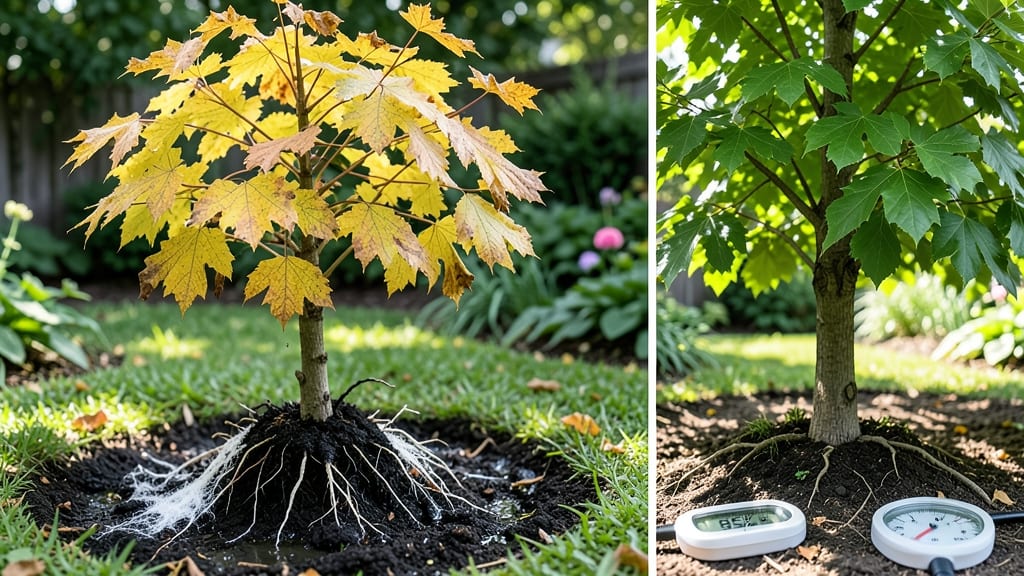
An overwatered maple tree looks like a sad, soggy mess—think yellowing leaves that cling limply to branches, mushrooms sprouting at the base, and roots that smell like wet socks. 🌳 I’ve seen this happen after weeks of heavy rain or when well-meaning gardeners overcompensate after a drought.
The real giveaway? Leaves turn yellow and stay yellow, unlike underwatered trees that brown at the edges.
The biggest red flag is mushy, gray roots—they’ll pull apart like wet spaghetti when you gently tug. Overwatered trees also develop drooping branches that don’t bounce back when you lift them, and the bark may look waterlogged or peel away in patches.
Confusingly, this mimics underwatering at first glance, but check the soil: if it smells like a swamp, you’ve got the wrong problem.
Fixing it starts with stopping water immediately and letting the soil dry out for a week. Amend heavy clay soil with compost to improve drainage, and consider raising the tree slightly with a mound of gravel or sand.
Within a few weeks, you’ll see new green growth pushing through—proof the roots are finally breathing again.
Pro tip: Stick a screwdriver into the soil near the trunk. If it slides in like butter, your maple’s drowning. If it resists, it’s thirsty. The difference is night and day for recovery.
Root Causes Of Overwatering
Overwatering a maple tree isn’t just about giving it too much water—it’s a chain reaction triggered by soil, weather, and even human habits. Understanding these causes helps you fix the problem before it’s too late. Here’s why your maple tree might be drowning in its own roots.
A maple tree’s roots need oxygen as much as water. If the soil doesn’t drain well, excess moisture suffocates them, leading to:
- Compacted soil: Heavy clay or tightly packed dirt traps water, preventing roots from breathing. Test it: Dig a small hole—if water pools after 30 minutes, drainage is poor.
- No organic matter: Sandy or rocky soil lacks nutrients and holds water like a sponge. Amending with compost or mulch helps, but only if the underlying layer drains.
- Low-lying planting spots: Maple trees planted in depressions or slopes naturally collect runoff, turning the root zone into a swamp.
💡 Pro Tip: If your soil is clay-heavy, mix in perlite or coarse sand (1 part to 3 parts soil) to improve aeration. For existing trees, consider French drains or swales to redirect excess water.
Even the most well-meaning gardener can fall into the trap of thinking, "More water = happier tree!" But maples are resilient—they evolved in temperate climates where rain comes in bursts, not steady drips. Common mistakes include:
- Watering on a schedule: Maple trees need 1–1.5 inches of water per week (including rain). Dumping a hose on them daily mimics a tropical downpour, while skipping weeks in dry spells stresses them.
- Ignoring the weather: Watering during heavy rain or high humidity (like summer afternoons) can drown roots faster than they can absorb moisture.
- Using the wrong tools: Sprinklers create a shallow, uneven watering pattern, while drip irrigation or soaker hoses deliver water directly to the root zone.
✨ Actionable Fix: Stick your finger 2–3 inches into the soil before watering. If it’s damp, wait. If it’s bone-dry, give it a deep watering (slow and steady) until water seeps 6–12 inches down.
Mulch is a gardener’s best friend—until it’s used incorrectly. The right mulch protects roots and regulates moisture, but the wrong approach turns it into a water trap:
- Piling mulch too high: A 3–4 inch layer is ideal. More than that suffocates roots and blocks oxygen, while too little leaves them exposed to temperature swings.
- Using the wrong material: Fresh wood chips or grass clippings decompose too quickly, creating a thick, waterlogged mat. Opt for shredded bark or pine straw instead.
- Mulching against the trunk: A 2–3 inch gap between mulch and the tree’s base prevents rot and pest infestations.
🔥 Quick Check: If your mulch looks like a volcano around the trunk or smells sour, it’s time to rake it back and refresh it.
Not all water comes from your hose. Mother Nature plays a big role in overwatering, especially in:
- Heavy rainfall seasons: Maple trees in Pacific Northwest or Gulf Coast regions get 20+ inches of rain annually. If your tree is in a low spot or near a downspout, it’s a magnet for standing water.
- Poorly sloped yards: Water pools where the land dips. A 5–10% grade away from the tree helps, but steep slopes can also erode soil, exposing roots.
- Irrigation system malfunctions: A leaky sprinkler or overlapping zones can deliver double the needed water without you noticing.
🌡️ Climate Hack: In rainy areas, plant maples on mounds or install French drains to redirect excess water. For dry spells, group trees with thirsty companions (like hydrangeas) to share moisture.
Most overwatering issues stem from a mix of these factors. The good news? Once you identify the root cause (pun intended), fixing it is often as simple as adjusting your watering routine or tweaking the landscape. Your maple’s revival starts with cutting off the excess—literally and figuratively!
Revive Your Maple Tree Naturally
Overwatering can turn your once-vibrant maple tree into a sad, soggy mess—but don’t worry! With the right steps, you can nurse it back to health. Below, we’ve matched common overwatering symptoms to practical fixes, plus prevention tips to keep your tree thriving.
Let’s get your maple’s roots back on track!
If your maple’s leaves are turning yellow or drooping, the soil may be too soggy, cutting off oxygen to the roots. Here’s how to help:
🔥 Step 1: Stop Watering Immediately
- Pause all irrigation (including rainwater if the ground stays muddy).
- Let the top 6–12 inches of soil dry out before watering again.
🍳 Step 2: Improve Soil Aeration
- Loosen compacted soil around the base (but avoid damaging roots).
- Mix in organic matter like compost or coarse sand to boost drainage.
- For severe cases, consider topsoil replacement (remove 2–3 inches of soggy soil and replace with well-draining mix).
👨🍳 Step 3: Prune Damaged Foliage
- Snip off yellow, brown, or mushy leaves to redirect energy to healthy growth.
- Avoid heavy pruning—focus on dead or diseased branches only.
💡 Pro Tip:
🌡️ Test soil moisture with your finger: If it’s damp deeper than 2 inches, wait longer before watering.
If you spot mushrooms, mold, or a foul smell near the base, your tree is battling root rot. Time to intervene!
⏰ Step 1: Trim Affected Roots (Carefully!)
- Gently dig around the root zone (1–2 feet from the trunk).
- Use sterilized pruners to snip black, mushy, or hollow roots.
- Do not remove healthy roots—they’re essential for recovery.
🔪 Step 2: Apply Fungicide (If Needed)
- Spray copper-based or phosphite fungicide on roots and soil to stop fungal spread.
- Avoid chemical fertilizers—they can stress the tree further.
🌱 Step 3: Elevate the Soil (For Severe Cases)
- If the trunk is partially submerged, mound well-draining soil around it to raise the root zone.
- Ensure the new soil level is slightly higher than the original.
✨ Prevention Tip:
🎯 Mulch properly: Use 2–4 inches of wood chips (keep it 6 inches away from the trunk) to regulate moisture without suffocating roots.
If your maple’s branches are limp or brittle, it’s likely nutrient-starved from poor root function. Here’s how to revive it:
📊 Step 1: Feed with the Right Fertilizer
- Use a balanced, slow-release fertilizer (like 10-10-10) in early spring.
- Avoid high-nitrogen fertilizers—they can worsen root stress.
- Water deeply after applying to help roots absorb nutrients.
💪 Step 2: Support Weak Structure
- If large branches are too heavy, prop them up with stakes and soft ties to prevent breakage.
- Avoid heavy pruning—let the tree focus on regrowing roots first.
🥗 Step 3: Monitor for Pests
- Overwatered trees attract borers or aphids. Check for:
- Sawdust-like frass (sign of borers).
- Sticky residue (aphid honeydew).
- Treat with neem oil or insecticidal soap if pests appear.
💡 Pro Tip:
🔥 Mulch again in late fall with aged compost to improve soil structure over time.
Once your maple is on the mend, keep these habits to avoid repeating the problem:
| Problem | Solution |
|---|---|
| Heavy clay soil | Amend with sand, perlite, or compost before planting. |
| Poor drainage | Plant on a slight slope or in a raised bed. |
| Overzealous watering | Use a moisture meter or stick your finger in the soil before watering. |
| Compacted soil | Aerate annually with a garden fork or core aerator. |
| Too much mulch | Keep mulch 2–4 inches deep and 6+ inches from the trunk. |
Final Thought: Patience is key—reviving an overwatered maple can take weeks to months, but with the right care, your tree will bounce back stronger than ever! 🌿💚
Frequently asked questions
How can I tell if my maple tree’s yellow leaves mean overwatering vs. underwatering?
Overwatered maples show uniform yellowing (chlorosis) across leaves that stay soft and droopy, while underwatered trees develop brown edges that crisp up. Check the soil: if it smells like a swamp or mushrooms pop up, it’s overwatered. For underwatering, the soil will be bone-dry and pull away from roots.
Will my maple tree recover if I stop watering immediately?
Yes, but recovery depends on how long the roots were waterlogged. Stop watering and let the top 6-12 inches of soil dry out completely. Within 2-4 weeks, you should see new green growth. For severe cases, you may need to prune affected roots and improve drainage to prevent recurrence.
Can I use a moisture meter to check if my maple tree is overwatered?
A moisture meter is perfect for diagnosing overwatering. Insert the probe 2-3 inches deep near the trunk. Readings above 30-40% moisture indicate overwatering, while below 20% suggests thirst. For maples, aim for 25-35% moisture in the root zone.
Are there any quick fixes for root rot in my overwatered maple?
Start by stopping all watering and gently loosening compacted soil around the roots. If you see black, mushy roots, trim them with sterilized pruners. Apply a copper-based fungicide to prevent spread. For severe cases, consider raising the tree slightly with well-draining soil to improve aeration.
How often should I water my maple tree to prevent overwatering?
Maples need 1-1.5 inches of water per week (including rain). Instead of daily light watering, give deep, infrequent waterings every 7-10 days during dry spells. Always check soil moisture first—water only when the top 2 inches are dry. Mulch properly (2-4 inches deep, 6 inches from trunk) to regulate moisture.