
Pruning
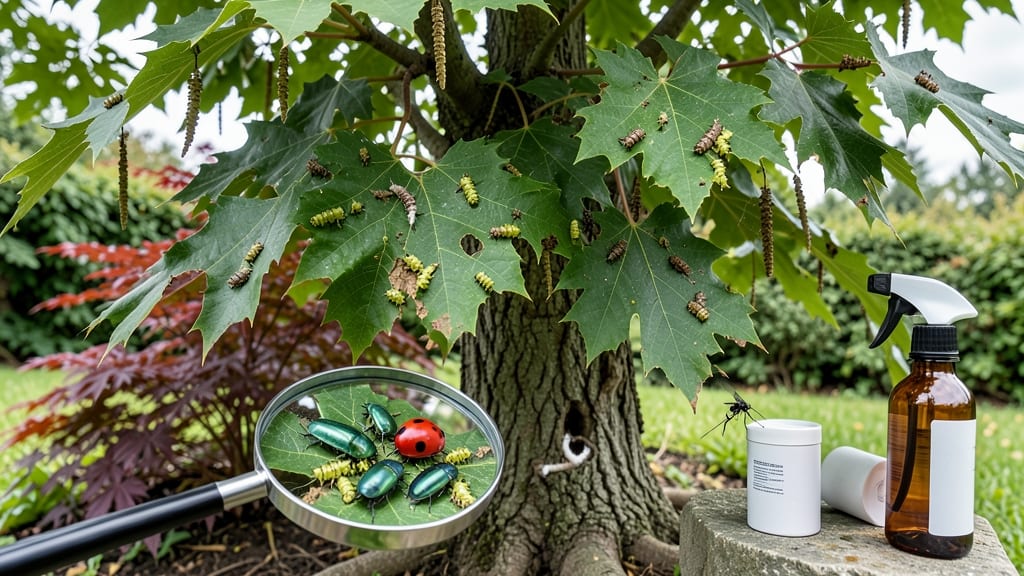
Maple tree pests turn vibrant foliage into skeleton leaves overnight. 🌳 I’ve watched my own maple’s canopy go from lush green to bare branches in just two weeks—aphids, Japanese beetles, and borers don’t wait for permission to strike.
The good news? You can fight back without harsh chemicals if you act fast and know what to look for.
Most damage starts small: sticky residue on leaves (aphids), chewed edges (beetles), or sawdust-like frass (borers). These pests thrive when trees are stressed—drought, poor soil, or past injuries make them easy targets.
My first year battling pests, I missed the early signs and ended up with a tree that struggled to recover. Now, I inspect leaves weekly during peak season (May–July) and treat at the first hint of trouble.
You’ll learn to use neem oil sprays for soft-bodied pests, beneficial nematodes for borers, and row covers for beetles—all without harming pollinators. The key is timing: early intervention means the tree can bounce back before pests take over.
By late summer, your maple should be back to its full, healthy glory, with fewer surprises next year.
This works for red, sugar, and silver maples, and the same principles apply whether you’re dealing with a young tree or a mature giant. Let’s get your maple’s defense plan in place before next season’s pests show up.
Root Causes Of Maple Tree Attacks
Maple trees are a staple in many landscapes, prized for their stunning foliage and hardy nature. But when pests strike, they can quickly turn from a prized asset into a struggling survivor.
Understanding why these attacks happen is the first step to protecting your trees. Here’s a breakdown of the key factors that make maples vulnerable—and how pests exploit them.
Pests don’t just appear out of nowhere—they’re drawn to trees that are already stressed. Maple trees weakened by poor nutrition, drought, or disease become easy targets. Here’s why:
- Nutrient Deficiencies: Maple trees need balanced nutrients (especially nitrogen, phosphorus, and potassium) to maintain strong bark and foliage. When soil lacks these, the tree’s defenses weaken, making it easier for pests like maple leaf cutter bees or maple borers to penetrate.
- Drought Stress: Prolonged dry spells force trees to divert energy to survival, leaving less for pest resistance. Aphids and scale insects thrive in drought-stressed trees because the sap becomes more concentrated—a tastier meal for them.
- Disease Vulnerability: Fungal infections (like tar spot) or bacterial issues can create entry points for pests. For example, maple wilt (caused by Verticillium fungus) weakens vascular systems, making trees more susceptible to borers that attack compromised wood.
💡 Pro Tip: Conduct a soil test every 2–3 years to check nutrient levels. Mulching with organic matter (like wood chips) and deep watering (1–2 inches per week) can restore resilience.
Maples with dense, tangled canopies create the perfect hiding spot for pests. Here’s how overgrowth plays a role:
- Shaded Branches: Thick foliage blocks sunlight from reaching inner branches, slowing growth and making leaves less bitter—a deterrent many pests avoid. Japanese beetles and gypsy moths prefer these shaded, tender leaves.
- Moisture Traps: Overlapping branches retain moisture, creating ideal conditions for maple scale and sooty mold (a fungal hitchhiker that thrives on pest honeydew).
- Limited Airflow: Stagnant air in crowded canopies slows evaporation, keeping pests like spider mites happy. These tiny arachnids multiply rapidly in humid, sheltered environments.
✨ Actionable Fix: Prune in late winter (before bud break) to open the canopy. Remove dead, crossing, or rubbing branches first—these are prime pest entry points.
Pests don’t attack randomly—they follow the maple tree’s life cycle. Understanding these patterns helps predict and prevent infestations:
| Season | Pest Threat | Why It Happens |
|---|---|---|
| Spring | Maple leaf cutter bees | New growth is soft and nutrient-rich, perfect for bees to chew circular sections from leaves for their nests. |
| Summer | Japanese beetles & gypsy moths | Warmth accelerates their life cycles. Beetles skeletonize leaves, while moth larvae defoliate entire branches. |
| Fall | Maple borers & aphids | Declining sap flow makes trees vulnerable to borers. Aphids feed on phloem, weakening the tree’s ability to store nutrients for winter. |
| Winter | Egg-laying pests (e.g., spider mites) | Many pests lay dormant eggs in bark crevices. If winter is mild, they hatch early, giving them a head start in spring. |
🎯 Prevention Strategy: Monitor your tree’s life stages. For example, apply neem oil in early spring to deter leaf cutters, or install pheromone traps for Japanese beetles in June.
Climate and human activity can turn a healthy maple into a pest magnet. Key factors include:
- Urban Pollution: Ozone and sulfur dioxide damage leaf surfaces, making them easier for pests like aphids to penetrate. Trees in cities often have weaker defenses due to air quality.
- Compaction & Root Damage: Heavy foot traffic or construction can harm roots, reducing the tree’s ability to fight off root borers or nematodes.
- Climate Shifts: Warmer winters allow pests like emerald ash borers (a maple-adjacent threat) to survive in new regions. Even if they don’t directly target maples, they can stress nearby trees, making them more susceptible to secondary pests.
🔥 Long-Term Solution: If your tree is in an urban area, consider mycorrhizal fungi treatments to boost root health. For compacted soil, aerate annually in fall.
Practical Fixes for Tree Troubles
When pests invade your maple trees, acting fast can save your canopy—and your sanity. Below, we break down cause-specific solutions to tackle the most common invaders, from aphids to borers, with easy-to-follow steps and prevention tips to keep your trees thriving.
Signs: Sticky honeydew, curled leaves, or tiny clusters of pests on stems.
🔥 Immediate Action: Blast Them Away
- Spray with Soapy Water 🍳 Mix 1 tbsp mild dish soap (like Castile) with 1 quart water in a spray bottle. Coat infested areas thoroughly—aphids hate the slippery film. Repeat every 3–5 days until gone.
- Introduce Beneficial Insects 👨🍳 Ladybugs and lacewings devour aphids like all-you-can-eat buffets. Buy them online or attract them with neem oil sprays (repels pests but won’t harm predators).
- Prune & Dispose ⏰ Snip heavily infested branches and bag them (don’t compost!). Burn or trash them to stop the cycle.
💡 Prevention Tips:
- Encourage Ants’ Enemies 🐜: Ants farm aphids—use diatomaceous earth around the tree base to deter them.
- Neem Oil Spray ✨: Apply every 2 weeks during peak aphid season (spring/fall) as a deterrent.
Signs: Ragged, notched leaves or pupae in rolled leaves (look like tiny cigars).
🔪 Handpick & Trap
- Collect Pupae 🔪 Wear gloves, then pick off rolled leaves and crush pupae in soapy water. Check morning and evening—they’re most active then.
- DIY Beer Trap 🍺 Bury a small cup filled with beer near the tree. The yeast smell lures them in—drowns them overnight.
- Prune Early ⏰ Trim infested leaves before pupation (late summer) to starve the next generation.
🌡️ Prevention Tips:
- Reflective Mulch 🌟: Wrap the trunk with aluminum foil (confuses their navigation).
- Late-Season Pruning 🎯: Remove all cut leaves by October to break their life cycle.
Signs: Sawdust-like frass, D-shaped exit holes, or oozing sap.
🛠️ Heavy-Duty Defense
- Scrape & Seal 🔨 Use a putty knife to scrape out larvae from holes, then fill with wood putty or caulk. Repeat weekly until no new frass appears.
- Beneficial Nematodes 🐛💥 Apply Heterorhabditis bacteriophora nematodes (sold at garden centers) to the soil around the base. They seek out and kill borer larvae naturally.
- Systemic Insecticide (Last Resort) ⚗️ If the tree is severely compromised, use imidacloprid granules (follow label rates). Water deeply to distribute it.
🔥 Prevention Tips:
- Keep Trees Healthy 💪: Water deeply during droughts and fertilize (balanced 10-10-10) to boost immunity.
- Wound Dressing 🎨: Seal pruning cuts with pruning sealant to block entry points.
Signs: Skeletonized leaves, clusters of copper-green beetles, and white grubs in soil.
🍳 Trap & Trap Again
- DIY Trap 🍺 Fill a bucket with soapy water and a funnel leading to it. Place near the tree—beetles fly in and drown.
- Handpick Daily ⏰ Shake leaves over a tub of soapy water in the early morning (they’re sluggish then).
- Neem Oil Spray 🌿 Spray every 5 days to disrupt their feeding cycle.
💡 Prevention Tips:
- Milky Spore 🌡️: Apply Bacillus popilliae to the soil—it kills grubs long-term.
- Plant Repellents 🌸: Surround the tree with garlic, catnip, or marigolds—beetles hate the scent.
- Mulch Right 🌿: Keep 3–4 inches of mulch (wood chips) 6 inches from the trunk—blocks pests and retains moisture.
- Inspect Monthly 🔍: Check leaves, bark, and soil for early signs of trouble.
- Avoid Overwatering 💦: Soggy soil attracts borers—water deeply but infrequently.
Pro Tip: 🎯 Act at the first sign—pests multiply exponentially. A little effort now saves years of damage later!
Frequently asked questions
What are the most destructive pests for maple trees?
The worst offenders include maple borers (which tunnel into bark), Japanese beetles (that skeletonize leaves), and aphids (which weaken trees with honeydew). Borers are particularly dangerous—they can kill trees by disrupting water flow. Start by checking for sawdust-like frass (borer sign) or chewed leaf edges (beetles).
How do I tell if my maple tree has scale insects?
Look for small, bumpy raised areas on branches (like tiny shells) or black sooty mold on leaves—this is fungal growth feeding on scale honeydew. Scrape off a few bumps: if they’re immobile and waxy, it’s scale. Use a magnifying glass for tiny infestations.
Can I use homemade sprays on my maple tree?
Yes! Try a soapy water spray (1 tbsp dish soap + 1 quart water) for aphids or neem oil mix (1 tbsp oil + 1 quart water + drop of soap). Test on a small branch first. For borers, beneficial nematodes in the soil are safer than chemicals. Avoid vinegar—it can burn leaves.
When is the best time to treat my maple tree for pests?
Early spring (before buds open) and late summer (after leaf drop) are critical windows. Apply neem oil in spring to deter new pests, and prune infested branches in late summer to break pest life cycles. Japanese beetles peak in June—set traps then if you see them.
Will my maple tree recover from heavy pest damage?
Young trees often bounce back with treatment, but mature maples may show permanent damage. Focus on removing all pests, improving soil health, and avoiding stress (like drought). If borers have tunneled deep, consult an arborist—the tree might need systemic treatment.