
Trees
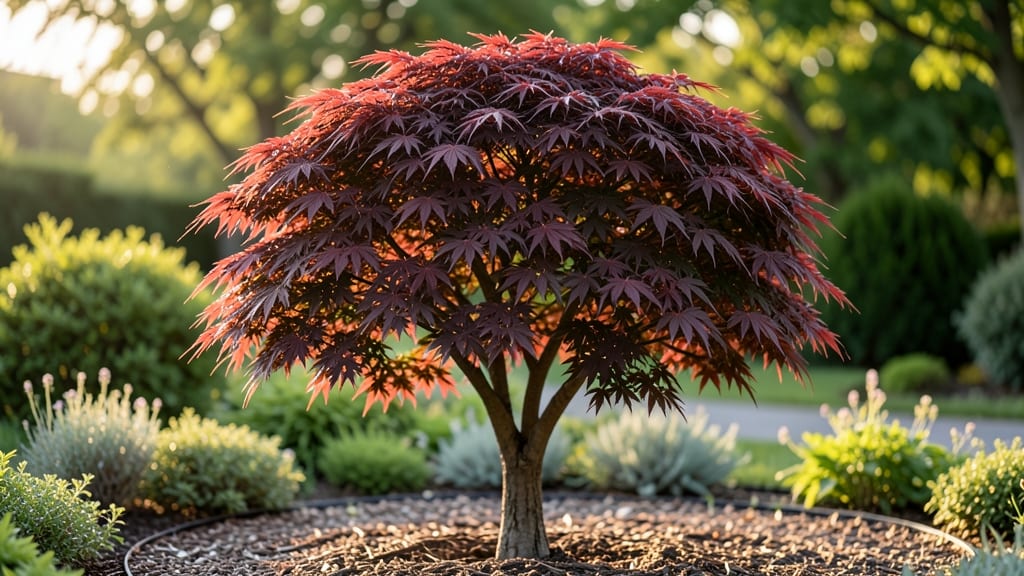
Burgundy leaves on a maple tree transform your garden into a living masterpiece. 🌿 The right variety—like Acer palmatum 'Bloodgood'—turns ordinary landscapes into dramatic focal points, especially when paired with complementary plants and seasonal color schemes.
This isn’t just about fall; it’s about year-round visual impact that makes neighbors stop and stare.
Start with placement: position your maple where its rich foliage contrasts with evergreens or white-barked birches. In spring, the fresh green leaves build anticipation, while winter’s bare branches create elegant structure.
For maximum effect, plant near seating areas or entryways—where the color will be enjoyed most. Even in small spaces, a single specimen can anchor the design.
Combine it with plants that echo its burgundy tones, like Cercis canadensis 'Forest Pansy' dogwood or Hydrangea macrophylla 'Endless Summer' in deep purple. Mulch with dark bark to deepen the color contrast, and add seasonal accents like white mums in autumn or silver foliage in summer.
The result? A garden that feels intentional, luxurious, and effortlessly stunning.
This approach works for residential backyards, urban courtyards, or public spaces—anywhere a bold statement is welcome. The key is balancing the maple’s dramatic foliage with supporting elements that let it shine without overwhelming the scene. Let’s make your garden unforgettable.
📚 In This Guide
- What you need
- Instructions
- Tips and common mistakes
- Wrapping up and next steps
What you need
- ● Fresh or faux burgundy maple leaves: At least 20–30 leaves (real: harvest from mature trees in fall; faux: opt for silk or high-quality artificial leaves for durability).
- ● Base structure: Option 1: Small to medium-sized maple tree branch (3–6 inches long, with a sturdy trunk).
- ● Option 2: Wire or foam core (1/8-inch diameter, 12–18 inches tall) for sculptural designs.
- ● Adhesive: Hot glue gun with glue sticks or craft glue (e.g., E6000 for outdoor projects).
- ● Pruning shears or sharp scissors: For trimming leaves/branches to size.
- ● Decorative accents: Twine, lace, or mini fairy lights for ambiance.
- ● Preservation spray: Clear acrylic sealer (for real leaves to extend longevity).
- ● Paint: Acrylic paint (burgundy, gold, or metallic) for aging faux leaves.
- ● Container: Ceramic pot, wooden slice, or moss-covered tray for display.
How to grow a stunning maple tree with burgundy leaves
Here's the proven method I use to cultivate maples with vibrant burgundy foliage that steals the show year-round.
🌱 Step 1: Select the Right Maple Variety for Deep Color
Not all maples produce true burgundy leaves—focus on proven cultivars like 'Armstrong' or 'Royal Purple' Japanese maples. These varieties develop rich, wine-red foliage that deepens through fall. I always check the mature leaf color in catalogs before ordering, because even 'purple' maples often revert to green unless you start with the right genetics.
For maximum impact, choose a specimen with a naturally weeping or compact form. The 'Bloodgood' maple, for example, grows upright but develops dramatic burgundy leaves that contrast beautifully against dark bark. Plant in a location where its mature height (20-30 feet) won't be obstructed by power lines or buildings.
☀️ Step 2: Plant in Full Sun with Well-Draining Soil
Maples with burgundy foliage need 6+ hours of direct sun daily to maintain their deep color. I plant mine in the southern half of the yard where they receive morning sun and afternoon shade in hot climates. The intense light actually enhances the anthocyanins that create the burgundy pigment—without it, leaves often revert to green.
Amend heavy clay soil with 3 inches of organic matter (compost or leaf mold) mixed into the planting hole. Japanese maples particularly dislike soggy roots, so ensure the planting site has good drainage. If your soil is compacted, create a raised mound of native soil mixed with sand to prevent root rot. Water deeply after planting to settle the soil around roots.
💧 Step 3: Water Deeply and Mulch to Protect Roots
Young maples need 1-2 inches of water weekly during their first two years. I check moisture by pushing a finger 3 inches deep into soil—if it feels dry, that's your signal to water. Overhead watering can cause fungal issues, so I use a soaker hose at the base of the tree. Once established, maples develop deep roots that tolerate brief dry spells better than most trees.
Apply 3 inches of mulch (wood chips or bark) around the base, keeping it 6 inches away from the trunk to prevent rot. The mulch layer should be thick enough to suppress weeds but not so deep it smothers roots. Replenish mulch annually in spring to maintain protection through summer heat waves.
✂️ Step 4: Prune for Structure and Color Enhancement
Prune in late winter or early spring before new growth begins. Remove any crossing branches or suckers growing from the base, as these divert energy from foliage color. I make cuts just outside the branch collar to prevent damage to the main trunk. For Japanese maples, I avoid heavy pruning—they respond poorly to aggressive cuts and may produce less vibrant foliage.
Shape the tree gradually to open the canopy to more sunlight. The goal is to create an airy structure where all branches receive adequate light for burgundy leaf development. Thin out dense areas by removing entire branches rather than just trimming back growth. This prevents the tree from becoming too shaded in its own crown.
🌿 Step 5: Fertilize Strategically for Vibrant Foliage
Apply a balanced 10-10-10 fertilizer in early spring when new growth appears. I use about ¼ pound per inch of trunk diameter, spread evenly in a circle around the dripline. Water thoroughly after application to prevent root burn. Avoid high-nitrogen fertilizers, which promote lush green growth at the expense of burgundy pigmentation.
For established trees, a slow-release organic fertilizer like composted manure or worm castings works well. I top-dress with 1-2 inches of compost in late winter, then lightly scratch it into the topsoil. This provides steady nutrients without the risk of over-fertilization, which can actually reduce the intensity of burgundy coloring.
Tips & tricks for stunning burgundy maple foliage
Here's how I've learned to push those burgundy leaves to their absolute peak—without the guesswork.
Variety Verification: Never assume a tree labeled "purple" will deliver true burgundy. I've seen too many "Royal Purple" maples revert to green after a few years. Always request a color sample from the nursery or check with the grower about the specific cultivar's mature leaf color. The 'Armstrong' Japanese maple, for instance, maintains its deep wine-red hue year-round, while others may disappoint after just one season.
Sunlight Strategy: The 6+ hours of direct sun in Step 2 isn't just a recommendation—it's non-negotiable for that rich burgundy pigment. I've found that morning sun (east-facing) combined with afternoon shade (west-facing) works best in hot climates. If your yard only gets afternoon sun, consider planting near a reflective surface like a light-colored wall or patio that bounces additional light onto the tree. This extra illumination can make the difference between dull green and vibrant burgundy.
Soil Science: That 3 inches of organic matter in Step 2 is crucial, but don't stop there. For heavy clay soils, I mix in an additional 10% perlite or coarse sand to improve drainage. Japanese maples are particularly sensitive to soggy roots, so if your soil stays wet for more than 24 hours after rain, consider creating a raised bed with a mix of native soil, compost, and sand. The goal is to mimic the well-draining conditions these trees prefer in their native habitats.
Pruning Precision: When shaping your tree in Step 4, focus on creating an open canopy rather than just removing dead branches. I use a technique called "selective thinning" where I remove entire branches that are crossing or growing inward. This not only improves air circulation but also ensures every leaf gets maximum sunlight exposure. Remember, the more light that reaches the leaves, the more intense that burgundy color will be. And always make your cuts just outside the branch collar—this healing technique prevents unsightly wounds that can invite disease.
Pro Tips for Maple Tree Burgundy Leaves
- Here's how I've learned to push those burgundy leaves to their absolute peak—without the guesswork.
- Variety Verification: Never assume a tree labeled "purple" will deliver true burgundy.
- Sunlight Strategy: The 6+ hours of direct sun in Step 2 isn't just a recommendation—it's non-negotiable for that rich burgundy pigment.
Frequently asked questions
Got questions about cultivating or styling your maple tree burgundy leaves? You’re not alone! Here are answers to the most common queries—from timing to troubleshooting—to help you keep those stunning foliage hues all year long.
When do maple trees develop burgundy leaves?
Burgundy leaves typically emerge in late spring to early summer, with peak color lasting through fall. For year-round burgundy, opt for cultivated varieties or preserved leaf displays (like dried arrangements). Cold snaps can intensify color—just avoid frost damage!
How long do burgundy maple leaves last before falling?
In nature, burgundy leaves last 4–8 weeks in autumn before dropping. To extend their life, harvest early (when fully colored but firm) and store in a cool, dry place. For artificial displays, use preserved leaves or silk replicas that mimic the hue.
Can I force a maple tree to keep its burgundy leaves longer?
Unfortunately, no—maple trees naturally shed leaves in winter. However, you can prune strategically to encourage denser foliage or use leaf preservatives (like glycerin) for temporary displays. For indoor decor, try dried leaf garlands or pressed burgundy leaves in frames.
What if my maple leaves turn brown instead of burgundy?
Brown leaves often signal stress from overwatering, pests, or nutrient deficiency. Check soil moisture and fertilize with iron (common in maples). For artificial burgundy, ensure your silk or dyed leaves are UV-resistant to prevent fading.
Are there alternatives to real burgundy maple leaves for decor?
Try these low-maintenance options:
- Silk leaves: Lightweight, fade-resistant, and reusable.
- Dried leaves: Preserve real leaves with glycerin or wax.
- Fabric or paper: Paint or dye materials to match burgundy hues.
- Artificial garlands: Pre-made options with maple-like shapes.
Wrapping up and next steps
Transforming your space with maple tree burgundy leaves is a rewarding way to embrace nature’s beauty year-round! Whether you’re crafting wreaths, pressed art, or seasonal decor, these vibrant leaves bring warmth and elegance to any setting. 🌿✨
Now that you’ve got the materials and answers to common questions, roll up your sleeves and get creative! Try experimenting with different arrangements or even gifting your handmade pieces—your green thumb (or artistic flair) will shine. Happy crafting!