
Pruning
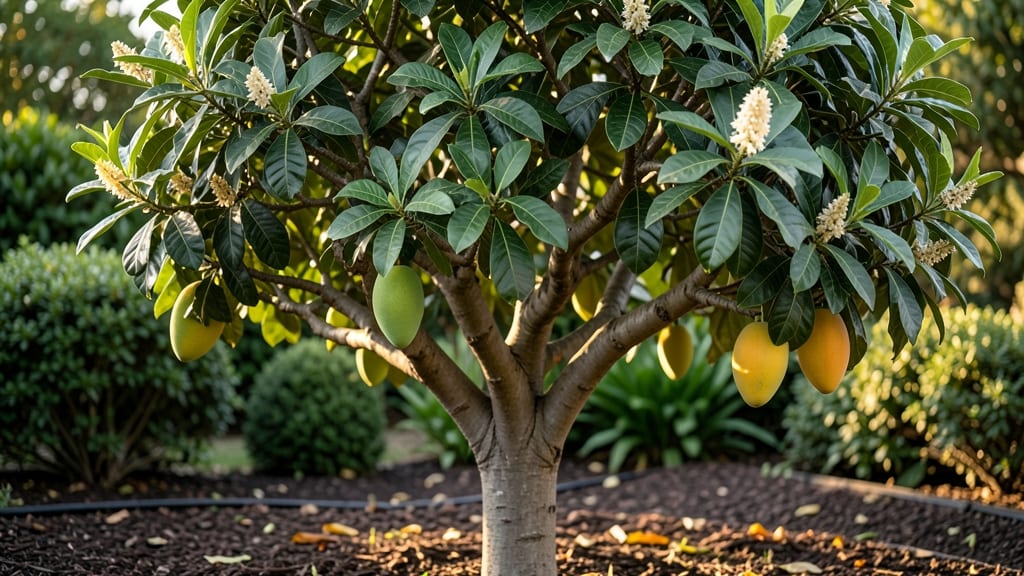
Growing a mango tree in Cali means year-round pruning for fruit-heavy branches. 🌱 I've learned the hard way that skipping this step leads to leggy trees with few mangoes, but the right cuts transform your tree into a productive powerhouse.
The key is timing—California's mild winters and long summers create unique opportunities for shaping your tree without stressing it.
You'll need sharp pruning shears, a ladder for higher branches, and a clear day to assess your tree. Focus on removing dead wood first, then thin out crowded branches to improve airflow—this prevents fungal diseases that thrive in California's humid summers.
The goal is an open center that lets sunlight reach all fruit, while maintaining a shape that fits your space.
By summer's end, you'll see the payoff: smaller, more manageable branches heavy with fruit. Pruning at this time encourages new growth that ripens just as California's fall temperatures drop, giving you perfect timing for harvest.
The tree stays compact enough for home gardens while producing enough mangoes to share with neighbors.
This method works equally well for container-grown trees or in-ground plantings. For California's coastal areas, you might prune slightly later to avoid spring frosts, while inland regions can follow a more traditional schedule. Either way, you'll end up with a tree that's both beautiful and productive year after year.
📚 In This Guide
- What you need
- Instructions
- Tips and common mistakes
- Wrapping up and next steps
What you need
- ● Pruning shears: Bypass pruners (sharp, 6–8" blades) for clean cuts on branches up to ½-inch thick.
- ● Loppers: Bypass or anvil type (10–14" blades) for branches ½–2 inches thick.
- ● Pruning saw: Curved-tooth saw for branches 2+ inches thick (avoid pinching bark).
- ● Gloves: Heavy-duty, cut-resistant gloves (mango thorns are no joke!).
- ● Disinfectant: 70% isopropyl alcohol or bleach solution (1 part bleach to 9 parts water) to sterilize tools between cuts.
- ● Heavy-duty trash bags: 3–5 gallon size for collecting pruned branches and debris.
- ● Step ladder or stool: Sturdy, non-slip (ensure it supports your weight + tools).
- ● Safety glasses: Protect your eyes from sap, debris, and stray branches.
- ○ Sealant: Pruning sealant (optional for large cuts >1 inch in diameter to prevent disease).
- ● Marking twine: Colored twine to tag branches for future reference.
- ● Extension pole: For high branches (attach loppers/saw to reach safely).
- ● Pruning rope: ¼-inch nylon rope to support weak branches temporarily.
- ● Notebook & pen: To sketch your tree’s structure or note pruning decisions.
- ● Timing: Prune during the dry season (Dec–Feb) in Cali’s climate for minimal stress on the tree.
- ● Weather: Choose a cloudy day to avoid heat stress on the tree or yourself.
- ● Research: Study your mango tree’s growth habits (e.g., ‘Cogshall’ vs. ‘Keitt’ varieties may need different approaches).
- ● Safety first: Wear long sleeves/pants to protect against thorns and sap irritation.
Step-by-step guide to pruning your mango tree in California
California’s warm climate turns pruning into your secret weapon for a fruit-laden mango tree.
☀️ Step 1: Time Your Pruning for California’s Climate
Prune your mango tree during late winter or early spring, just as new growth begins but before buds swell. In California, this typically falls between February and March—when temperatures hover around 60-70°F. Avoid pruning in summer heat, which stresses the tree and invites fungal infections.
Look for new leaf buds along branches as your signal. These tiny green swellings indicate the tree’s readiness to respond well to pruning. If you prune too early, you’ll cut off potential fruiting wood. If you wait too late, you risk removing next season’s flower clusters.
✂️ Step 2: Remove Dead, Diseased, and Crossing Branches
Start by inspecting your tree for dead wood—branches that are brittle, brown, or snap easily when bent. Use clean, sharp pruners to make cuts just outside the branch collar (the swollen area where the branch meets the trunk). This ensures the wound heals properly and prevents disease entry.
Next, remove any branches that cross or rub against each other. These create wounds that invite pests and diseases. Focus on branches growing inward or downward—they block sunlight and air circulation, which weakens fruit production. Cut these back to a healthy outward-facing bud or lateral branch.
🌿 Step 3: Thin the Canopy for Better Airflow and Sunlight
Mango trees thrive in full sun, so aim to open the canopy to let light reach the inner branches. Remove 20-30% of the foliage by selectively trimming back overcrowded branches. Start at the outer edges and work inward, prioritizing branches that compete for sunlight with the tree’s main structure.
Watch for suckers—vigorous shoots growing from the trunk or roots. These divert energy from fruit production. Snip them off at the base with clean pruners. You’ll know you’ve done well when you can see light filtering through the canopy and no dense clusters of leaves blocking airflow.
🪴 Step 4: Shape the Tree for Balance and Fruit Production
California’s mango trees benefit from a modified central leader shape—a strong central trunk with well-spaced scaffold branches. Prune to encourage 3-5 main branches that spread evenly around the trunk. These branches should originate within the first 2 feet of the tree and grow at a 45-60° angle from the trunk.
If your tree has become top-heavy, prune the upper branches slightly more than the lower ones. This redistributes weight and prevents storm damage. Always cut back to a bud or lateral branch—never leave a stub. You’ll know your shaping is working when the tree looks balanced and open, with no branches growing straight up or inward.
⏰ Step 5: Post-Pruning Care for a Strong Recovery
After pruning, water deeply to help the tree recover. California’s dry climate means newly pruned trees need extra moisture to support new growth. Apply 2-3 inches of water at the base, focusing on the root zone. Avoid wetting the leaves to prevent fungal issues.
Apply a balanced fertilizer (like 10-10-10) around the drip line to support regrowth. Monitor the tree for new shoots emerging from the pruned areas—these are your tree’s way of healing. If you notice any yellowing leaves or wilting, adjust your watering or check for pests, which are more likely to strike after pruning stress.
Tips & tricks for pruning mango trees in California
Here's what nobody tells you about keeping your mango tree thriving year after year.
Timing is Everything: The February-March window is critical because that's when your tree naturally transitions from dormancy to growth. If you're unsure about the exact timing, check for those tiny green leaf buds—when they're just starting to swell, that's your cue. I've learned the hard way that pruning too early can remove next year's potential fruit clusters, while waiting too late risks cutting off flower buds already forming.
Tool Prep Makes All the Difference: Before you even touch your tree, sterilize your pruners with rubbing alcohol to prevent spreading disease. I also recommend sharpening your blades first—dull tools crush branches instead of making clean cuts, which slows healing and invites infections. California's dry climate means wounds heal slower than in humid areas, so this step is even more important here.
The 20-30% Rule for Canopy Thinning: Removing just 20-30% of foliage might seem counterintuitive when you're looking at a dense canopy, but this is the sweet spot for California mango trees. Too little thinning blocks sunlight, while too much stresses the tree. Start with the outer branches first—these are the ones competing most for sunlight and air circulation. You'll know you've done it right when you can see light filtering through the canopy like a dappled pattern on the ground.
Post-Pruning Recovery Boost: After you've finished pruning, give your tree a recovery drink by applying 2-3 inches of water directly at the base. The key here is to water deeply but avoid wetting the leaves to prevent fungal issues. I also like to add a handful of compost to the soil surface around the drip line—this gives the tree an immediate nutrient boost while its roots recover from the pruning stress. Think of it as giving your tree a post-surgery smoothie!
Pro Tips for Mango Tree Cali
- Here's what nobody tells you about keeping your mango tree thriving year after year.
- Timing is Everything: The February-March window is critical because that's when your tree naturally transitions from dormancy to growth.
- Tool Prep Makes All the Difference: Before you even touch your tree, sterilize your pruners with rubbing alcohol to prevent spreading disease.
Frequently asked questions
Got questions about keeping your Mango Tree Cali healthy and productive? We’ve got answers! Here are some of the most common concerns—plus quick fixes to keep your tree thriving.
When is the best time to prune a Mango Tree Cali?
The ideal time to prune is during the dormant season (late winter to early spring) before new growth starts. However, light pruning to remove dead or diseased branches can happen year-round. Avoid heavy pruning during fruiting season—it stresses the tree and reduces yield.
How much can I prune without harming the tree?
Never remove more than 25-30% of the tree’s canopy in one session. Over-pruning weakens the tree, reduces flowering, and can even kill it. Focus on selective shaping—trim back overcrowded branches, remove dead wood, and open the center for airflow. Think “less is more” for long-term health!
Will pruning increase my mango harvest?
Yes—but only if done correctly! Pruning improves air circulation and sunlight exposure, which boosts fruit production. Aim to balance growth: Remove “water sprouts” (fast-growing vertical shoots) and thin out dense foliage. A well-pruned tree can yield 20-30% more fruit over time.
What should I do if my tree has pests after pruning?
Pruning creates fresh wounds, which can attract pests like mango hoppers or fruit flies. Seal cuts with pruning sealant (or even petroleum jelly in a pinch) and inspect leaves regularly. Use neem oil or insecticidal soap for organic pest control. Act fast—early intervention prevents infestations!
Can I prune a Mango Tree Cali in hot or cold weather?
Avoid pruning during heatwaves (above 90°F) or freezing temps (below 50°F). Extreme heat stresses the tree, while cold snaps slow recovery. Early morning or late afternoon pruning in mild weather is best. If you must prune in heat, water the tree deeply before and after.
Wrapping up and next steps
Growing a thriving mango tree in Cali is all about balance—pruning at the right times, using the right tools, and listening to your tree’s needs. 🌿 With the knowledge from this guide, you’re now equipped to shape your tree for healthier growth, better airflow, and a bountiful harvest every season.
Start small, stay consistent, and watch your mango tree flourish!
Ready to take the next step? Mark your calendar for your first pruning session—whether it’s trimming back winter growth or preparing for spring’s fruiting phase. Your future sweet, juicy mangoes will thank you!