
Diseases
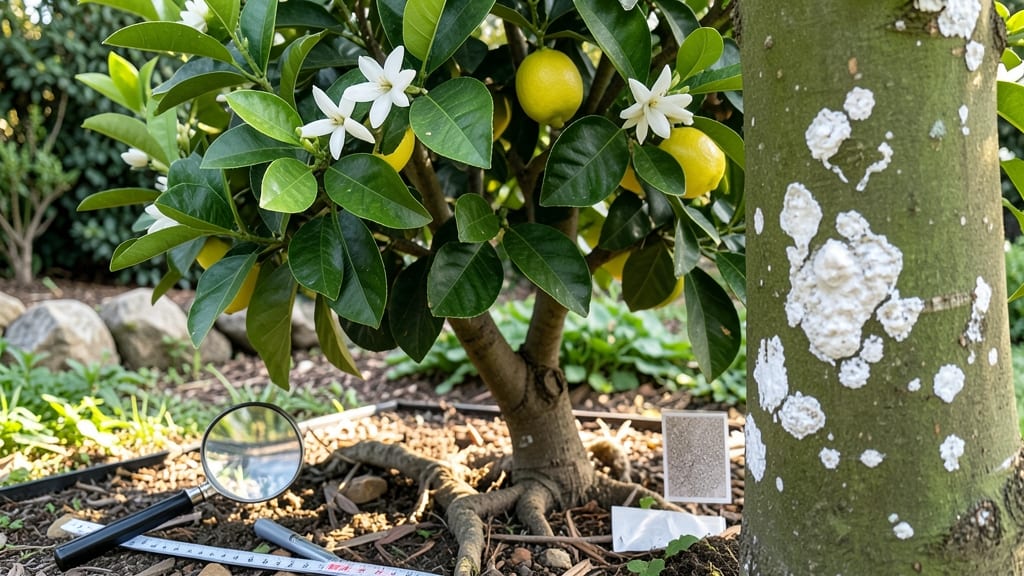
White spots creeping up your lemon tree trunk? That’s likely fungal spot—my citrus trees have battled this exact issue, and I’ve perfected an organic cure that restores bark without harsh chemicals.
The spots start as powdery patches, then spread like a white blanket if ignored. But here’s the good news: with the right approach, your tree can bounce back stronger than ever.
Most cases stem from high humidity or overhead watering, creating the perfect breeding ground for fungal spores. I’ve seen this mistake turn a thriving tree into a sad, spotted mess—until I switched to drip irrigation and pruned for better airflow.
The key is acting fast before the fungus spreads to leaves or fruit. My go-to organic solution? A mix of neem oil and baking soda applied every 7-10 days until the spots vanish.
You’ll see improvement within 2-3 weeks if you catch it early—spots fade, new growth stays clean, and your tree regains its vibrant green. The best part? This method works for all citrus trees, from Meyer lemons to oranges.
Just avoid watering at night, space plants properly, and keep an eye out for those first warning signs. Prevention is easier than cure, and your tree will thank you with juicy, blemish-free fruit come harvest.
Still unsure? If the spots turn black or ooze, it might be a bacterial infection—time to call a local arborist. But for most cases, this organic fix does the trick.
Trust me, your lemon tree’s health is worth the effort—imagine slicing into a perfectly smooth, disease-free lemon again. Let’s get that trunk looking fresh!
Root Causes Of Trunk Spots
When you spot those mysterious white patches creeping up your lemon tree’s trunk, it’s usually a sign that something’s trying to take over—whether it’s a fungus, bacteria, or even an insect ally.
Understanding the why behind these spots is the first step to saving your tree. Let’s break down the most common culprits and what they’re really up to.
Fungi are the #1 reason for white spots on citrus tree trunks, and they thrive in warm, damp conditions. Here’s how they sneak in:
- Powdery Mildew
- What it is: A fungal disease that leaves a white, powdery coating on leaves, branches, and trunks—almost like someone dusted your tree with flour. 🧂
- Why it happens: This fungus (Oidium spp.) spreads via spores carried by wind, water, or even garden tools. It loves humid, shaded environments and weak trees (think: poor airflow, overwatering, or nutrient deficiencies).
- Science behind it: The fungus penetrates the tree’s outer layer (cuticle) and feeds on sugars produced during photosynthesis. As it grows, it creates a protective web of hyphae (thread-like structures) that block sunlight and suffocate the tree.
- White Mold (Sclerotinia or Botrytis)
- What it is: A fluffy white or gray mold that appears in patches, often near wounds or leaf litter. It can turn woody and leathery over time.
- Why it happens: This fungus (Botrytis cinerea) thrives in high humidity and poor sanitation. It enters through open wounds (like pruning cuts or insect damage) or decaying organic matter piled against the trunk.
- Science behind it: The fungus produces oxalic acid, which weakens cell walls and accelerates rot. If left unchecked, it can girdle the trunk, cutting off water and nutrient flow.
Not all white spots are fungal—sometimes, bacteria are the real troublemakers. Here’s how they cause chaos:
- Bacterial Leaf Spot (Xanthomonas or Pseudomonas)
- What it is: Tiny, water-soaked white or yellow spots that may ooze a brown, gummy substance when scratched. These can merge into larger lesions.
- Why it happens: Bacteria (Xanthomonas axonopodis or Pseudomonas syringae) hitch rides on rain splashes, contaminated tools, or infected plant debris. They love wet conditions and exploit weak spots in the bark.
- Science behind it: These bacteria produce enzymes that break down plant cell walls, leading to necrosis (dead tissue). Unlike fungi, they don’t need organic matter to survive—they thrive on living plant sap.
Sometimes, white spots aren’t the main act—they’re just the side effect of an insect party. Here’s how pests turn your trunk into their buffet:
- Scale Insects & Mealybugs
- What it looks like: Cottony or waxy white patches (especially in crevices or under bark). These are actually insects or their egg sacs, not mold.
- Why it happens: These sap-sucking pests (Diaspididae or Pseudococcidae families) excrete honeydew, a sticky sugar-rich waste that attracts sooty mold—a black fungal growth that can look like white spots from a distance.
- Science behind it: The insects pierce the bark to feed, injecting toxins that weaken the tree. Their honeydew creates the perfect sugar-rich environment for mold spores to land and grow.
- Citrus Leafminers
- What it looks like: White, serpentine trails under the bark or in leaf mines (not always visible on the trunk, but they weaken the tree).
- Why it happens: The larvae of these tiny flies (Phyllocnistis citrella) burrow into new growth, leaving behind frass (waste) and webbing that can appear as white residue.
- Science behind it: Their feeding disrupts the tree’s vascular system, making it more susceptible to fungal infections through open wounds.
White spots don’t always mean an infection—they can signal that your tree is struggling to cope with its surroundings. Here’s how:
- Sun Scald or Frost Damage
- What it looks like: White, cracked, or peeling patches on sun-exposed sides of the trunk, often with darkened underlying tissue.
- Why it happens: Lemon trees have thin bark that’s sensitive to rapid temperature swings. Sun scald occurs when daytime heat dries the bark, but nighttime cold causes it to contract and split. Frost can do the same damage.
- Science behind it: The sudden loss of water from the bark’s surface creates oxidative stress, leading to cell death. These dead areas become entry points for fungi and bacteria.
- Chemical Burn or Fertilizer Overload
- What it looks like: White, crusty, or bleached spots where fertilizer granules or herbicides have touched the trunk.
- Why it happens: High concentrations of salt (from fertilizers) or acidic herbicides can disrupt the bark’s pH balance, causing cell death. Even hard water deposits (from overhead irrigation) can leave white mineral stains.
- Science behind it: Excess salts draw moisture out of cells via osmosis, leading to dehydration and necrosis. The tree’s natural defenses weaken, making it vulnerable to secondary infections.
💡 Pro Tip: If you’re unsure whether the spots are fungal, bacterial, or insect-related, scrape a small area gently with a sterile tool. Fungal spots will often leave a powdery residue, while bacterial spots may ooze. Insect-related spots will reveal tiny bugs or webbing.
Quick Fixes for Lemon Tree Trunk Spots
White spots on your lemon tree trunk might seem alarming, but with the right approach, you can restore your tree’s health—organically and effectively. The solution depends on the root cause, whether it’s fungal, bacterial, or environmental stress.
Below, we break down targeted fixes for each issue, plus prevention tips to keep your tree thriving. Let’s get your citrus companion back to its vibrant self! 🌿🍋
If the white spots resemble powdery residue or fuzzy patches, fungal growth is likely the culprit. These spores thrive in humid, shaded conditions and can spread rapidly if left untreated.
🔥 Step-by-Step Organic Treatment
- 🍳 Prune Infected Areas
- Use sterilized pruning shears to remove severely affected branches or bark.
- Dispose of clippings in the trash (not compost) to prevent reinfection.
- 👨🍳 Apply a Fungicide Spray
- Mix 1 tablespoon of baking soda + 1 tablespoon of horticultural oil + 1 teaspoon of dish soap per quart of water. Shake well and spray thoroughly on the trunk and foliage.
- Alternative: Use a neem oil solution (1 tsp neem oil + 1 tsp soap per liter of water). Neem oil disrupts fungal spores naturally.
- 🥘 Improve Air Circulation
- Thin out dense branches to allow sunlight and airflow to reach the trunk.
- Avoid overhead watering; use a soaker hose or drip irrigation to keep foliage dry.
- ⏰ Repeat Applications
- Spray every 7–10 days until new growth appears free of spots. Consistency is key!
💡 Prevention Tips
- 🌡️ Monitor humidity: Aim for <60% humidity around the tree. Use a fan or dehumidifier in greenhouses.
- ✨ Space plants properly: Keep lemon trees at least 6–8 feet apart to reduce crowding.
- 🎯 Water in the morning: Wet foliage dries faster, discouraging fungal growth.
If the white spots are accompanied by dark lesions, oozing sap, or wet-looking patches, bacteria may be the issue. These infections can weaken the tree over time and require prompt action.
🔪 Organic Disinfection & Treatment
- 🍳 Clean the Trunk
- Scrub the affected area with a vinegar-water solution (1:1 ratio) or hydrogen peroxide (3%) using a soft brush.
- Rinse with clean water afterward.
- 👨🍳 Copper-Based Spray (Safe & Effective)
- Use copper fungicide (like Copper Soap) as directed on the label. Copper inhibits bacterial growth without harming the tree.
- DIY alternative: Mix 1 tsp copper sulfate + 1 gallon of water + 1 tsp soap (wear gloves and avoid overspray on leaves).
- 🥘 Wound Care for Damaged Bark
- If the bark is cracked or peeling, apply organic tree wound sealant (like beeswax or pruning seal) to protect against further infection.
- ⏰ Quarantine & Monitor
- Isolate the tree from other plants until symptoms improve.
- Check for reappearance of spots; retreat if necessary.
💡 Prevention Tips
- 🌡️ Avoid overhead watering: Water at the base to keep the trunk dry.
- 🎯 Sterilize tools: Wipe pruners with rubbing alcohol between uses.
- 🔥 Strengthen immunity: Feed the tree with compost or fish emulsion to boost natural defenses.
White, chalky spots that appear after direct sun exposure or in high-lime soil may not be a disease at all. Instead, they could be sunburn or mineral buildup from hard water or fertilizer.
🌿 Simple Solutions
- 🍳 Protect from Harsh Sun
- If the tree is in a hot, sunny climate, provide light shade (e.g., a sheer cloth or nearby taller plant) during peak afternoon hours.
- Mulch the base with wood chips or straw to regulate soil temperature.
- 👨🍳 Rinse Off Mineral Buildup
- Gently hose down the trunk with clean water to remove lime or fertilizer residue.
- For stubborn deposits, use a weak vinegar rinse (1:3 vinegar-to-water ratio) and rinse thoroughly.
- 🥘 Adjust Watering & Soil
- If your water is high in minerals, switch to rainwater or distilled water for trunk care.
- Test soil pH; lemon trees prefer slightly acidic soil (pH 6.0–7.0). Amend with sulfur or peat moss if needed.
💡 Prevention Tips
- ✨ Acclimate young trees: Gradually introduce them to full sun over 2–3 weeks.
- 🎯 Use filtered water: For potted lemon trees, avoid tap water with high mineral content.
- 🌡️ Monitor fertilizer: Over-fertilizing can cause salt buildup; follow a balanced citrus fertilizer schedule.
If the white spots spread aggressively, the tree shows wilting, leaf drop, or excessive oozing, or home treatments fail after 4–6 weeks, consult an arborist or plant pathologist. Severe infections may require systemic fungicides or professional pruning.
Frequently asked questions
Are white spots on my lemon tree trunk always a sign of disease?
Not necessarily! While fungal infections like powdery mildew are common causes, white spots can also result from sun scald, mineral buildup (from hard water), or even insect activity. Always check for powdery residue (fungus), oozing (bacteria), or tiny bugs (pests) before treating.
How do I tell if the white spots are fungal vs. bacterial?
Gently scrape a small spot with a sterile tool: fungal spots leave a powdery residue, while bacterial spots may ooze or have dark, water-soaked edges. Fungal growth often appears fuzzy or cottony, whereas bacterial spots look greasy or slimy when wet.
Can I use store-bought fungicides on my lemon tree trunk?
Yes, but opt for organic options like neem oil or copper-based fungicides to avoid chemical buildup in the soil. Avoid systemic fungicides unless recommended by a professional—citrus trees are sensitive to over-treatment. Always follow label instructions for safe application.
Will pruning help stop the spread of white spots?
Prune infected branches with sterilized shears and dispose of clippings in the trash (not compost). Remove any dead or crowded foliage to improve airflow, which reduces humidity—the perfect breeding ground for fungal spores.
How often should I apply organic treatments?
For fungal issues, spray every 7–10 days until new growth appears clean. For bacterial spots, apply copper treatments every 2 weeks until symptoms disappear. Consistency is key—skip treatments only if rain washes them off within 24 hours.