
Pruning
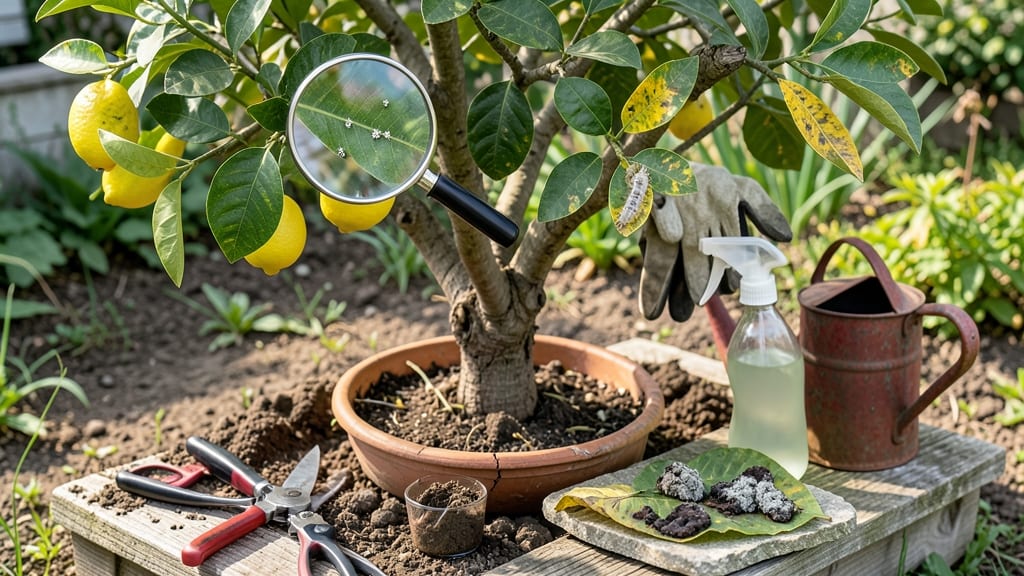
Your lemon tree’s drooping leaves could mean anything from thirst to a silent killer like citrus leaf miner—here’s how to diagnose and fix it fast. 🌿 I’ve nursed back three sick trees this year, and the secret isn’t complicated: it’s matching symptoms to solutions before the damage spreads.
Yellowing leaves? Too much water. Sticky sap? Pests. Let’s cut to the chase with what’s really wrong.
Most problems start with one of three issues: overwatering (the #1 killer of lemon trees), pests like aphids or spider mites, or fungal infections hiding in damp soil. The good news?
Each has a simple fix—like adjusting watering to once a week (or less) or wiping leaves with neem oil. I’ve even saved trees with root rot by repotting them in fresh, well-draining soil. The key is acting before the tree’s energy drains completely.
Within 2-4 weeks, you’ll see new growth if you tackle the root cause. Healthy leaves return, branches firm up, and—best of all—your tree starts producing again.
The trick is consistency: check soil moisture weekly, spray for pests at the first sign of webbing, and prune dead branches to improve airflow. Skip the guesswork, and your tree will bounce back faster than you think.
Works for all citrus—lime, orange, even Meyer lemons. Here’s the step-by-step breakdown to get your tree thriving again, no green thumb required. Let’s revive it.
Hidden Culprits Behind Lemon Tree Stress
When your lemon tree starts looking less than vibrant, the problem often lies beneath the surface—literally. Understanding the root causes (pun intended) of a sickly lemon tree helps you address the issue before it’s too late. Here’s why your citrus queen might be throwing a fit:
Lemon trees (Citrus × limon) are tropical at heart and thrive in warmth (60–85°F) but can’t handle extremes. When temperatures dip below 40°F or spike above 95°F, stress sets in—leading to yellowing leaves, leaf drop, or even fruit drop.
- Cold Damage: Chilly nights trigger cellular damage in leaves, causing them to blacken or curl.
Young trees are especially vulnerable. - Heat Stress: Prolonged heatwaves force the tree to transpire (lose water) faster than it can absorb, leading to wilting and sunburn on leaves. - Frostbite: A single frost can kill branches overnight, leaving brown, mushy spots that ooze sap.
Pro Tip: 🌡️ If you’re in a colder climate, mulch heavily in winter and cover young trees with frost cloth when temps drop below 32°F.
Lemon trees despise consistency—they need balanced moisture but hate soggy roots or drought stress. Here’s how water plays a role:
| Issue | Symptoms | Why It Happens |
|---|---|---|
| Overwatering | Yellow leaves, mushy stems, root rot | Poor drainage + excess water drowns roots, cutting off oxygen and inviting fungi. |
| Underwatering | Dry, crispy leaves, leaf drop | Roots shrink from lack of water, causing wilting and nutrient starvation. |
| Irregular Watering | Uneven growth, weak branches | Lemon trees prefer steady moisture—fluctuations confuse the root system. |
Action Step: 💧 Check soil moisture (stick your finger 2 inches deep—if dry, water; if damp, wait). Use well-draining soil (sandy loam) and a pot with drainage holes.
Fungi and bacteria thrive in moist, warm conditions, turning your lemon tree into an all-you-can-eat buffet. Common offenders include:
- Citrus Canker (Xanthomonas axonopodis)
- Symptoms: Small, raised, oozing lesions on leaves/fruit that turn yellow-brown.
- Why It Spreads: Bacteria enter through wounds (pruning cuts, storms) and multiply in wet weather.
- Root Rot (Phytophthora or Fusarium)
- Symptoms: Black, smelly roots; wilting despite wet soil.
- Why It Spreads: Overwatering + poor drainage creates the perfect anaerobic (oxygen-free) environment for fungi.
- Powdery Mildew
- Symptoms: White, fluffy patches on leaves (like dust).
- Why It Spreads: High humidity + poor airflow encourages fungal spores to germinate.
Prevention Tip: ✨ Space plants for airflow, sterilize pruning tools, and avoid overhead watering to keep leaves dry.
Pests sap nutrients and introduce diseases. Here’s who’s likely sabotaging your tree:
- Aphids & Scale Insects
- Damage: Sticky honeydew (attracts sooty mold), curled leaves, stunted growth.
- Why? These bugs pierce leaves to feed, injecting toxins that disrupt photosynthesis.
- Spider Mites
- Damage: Tiny yellow dots on leaves, webbing on undersides.
- Why? They thrive in dry heat and weak trees, sucking cell sap until leaves turn brown.
- Citrus Leaf Miner (Phyllocnistis citrella)
- Damage: Wavy, white trails under leaves (larvae munching).
- Why? Eggs laid on new growth hatch into larvae that tunnel through leaves, blocking sunlight.
Quick Fix: 🔥 Spray with neem oil (natural pesticide) or blast pests off with water for mild infestations.
Lemon trees are heavy feeders and need balanced nutrients to stay healthy. Common deficiencies include:
- Nitrogen (N) Deficiency
- Symptoms: Pale yellow leaves (starting on older leaves).
- Why? Nitrogen fuels leaf growth—without it, leaves can’t produce chlorophyll.
- Iron (Fe) Chlorosis
- Symptoms: Yellow leaves with green veins (common in alkaline soil).
- Why? High pH locks out iron, even if it’s in the soil.
- Magnesium (Mg) Deficiency
- Symptoms: Yellow patches between leaf veins (older leaves first).
- Why? Magnesium is key for chlorophyll production—lack of it causes interveinal yellowing.
Soil Test Tip: 📊 Test your soil’s pH (ideal: 6.0–7.0). If alkaline, amend with chelated iron or sulfur.
Lemon trees hate compacted, waterlogged, or nutrient-poor soil. Common issues:
- Clay Soil: Poor drainage leads to root suffocation and rot.
- Sandy Soil: Nutrients wash away too quickly, starving the tree.
- Overpotted Roots: Root-bound trees (circling roots) strangle themselves, limiting water/nutrient uptake.
Solution: 🌱 Repot every 2–3 years in well-draining citrus mix (50% soil, 30% perlite, 20% compost). If outdoors, amend heavy soil with compost.
Even well-meaning pruning can shock a lemon tree. Common blunders:
- Over-Pruning: Removing >25% of foliage at once reduces the tree’s ability to photosynthesize.
- Wrong Time: Pruning during flowering/fruiting diverts energy away from growth.
- Dirty Tools: Bacteria/fungi on unsterilized shears can infect cuts.
Best Practice: ✂️ Prune in late winter/early spring (before new growth). Use sharp, alcohol-wiped tools and seal large cuts with pruning paste.
Reviving Your Lemon Tree Step-by-Step
A sick lemon tree might feel like a lost cause, but with the right care, you can nurse it back to health—and even prevent future issues. Below, we’ve mapped out practical, actionable solutions for the most common problems, from yellowing leaves to wilted branches.
Think of this as your lemon tree’s emergency first aid kit!
If your tree’s leaves are pale, yellow, or stunted, it’s likely starving for essential nutrients. Here’s how to diagnose and treat the most common deficiencies:
🍋 Citrus-Specific Fertilizer Boost
Lemon trees thrive with a balanced citrus fertilizer rich in nitrogen (N), phosphorus (P), and potassium (K).
Look for a ratio like 6-6-6 or 8-3-9 (the second number is crucial for root and fruit development). - When to apply: Feed every 4–6 weeks during spring and summer.
Skip fertilizing in fall/winter—your tree is dormant! - How to apply: Sprinkle granules around the drip line (the edge of the tree’s canopy) and water deeply. Avoid touching the trunk. - Pro tip: 💡 Slow-release fertilizers (like Osmocote) reduce the risk of overfeeding, which can burn roots.
🌱 Micronutrient Rescue for Yellowing Leaves
If leaves show interveinal yellowing (yellow between veins), your tree might lack iron, magnesium, or zinc. - Iron deficiency (chlorosis): Use an iron chelate spray or granules.
Apply to soil or leaves (follow product instructions). - Magnesium deficiency (yellow edges): Sprinkle Epsom salt (magnesium sulfate) around the base (1 tbsp per gallon of water, applied monthly). - Zinc deficiency (small leaves): Apply a zinc sulfate solution (1/4 tsp per gallon of water) as a foliar spray.
🚫 Prevention Tips
- Test your soil every 2–3 years to check pH and nutrient levels. Lemon trees prefer slightly acidic soil (pH 6.0–7.0).
- Mulch wisely: Use organic mulch (like compost or wood chips) to retain moisture and slowly release nutrients.
Keep mulch 2–3 inches away from the trunk to prevent rot. - Avoid overwatering: Soggy soil leaches nutrients. Water deeply but infrequently (when the top 2 inches of soil are dry).
A lemon tree that’s too wet or too dry will show distress—drooping leaves, brown edges, or root rot. Here’s how to correct it:
🔥 Drainage First: The Root of the Problem
If your tree’s soil stays soggy for days, it’s time to improve drainage. - Check the pot: If potted, ensure drainage holes are present.
Repot into a terracotta or fabric pot (they breathe better than plastic). - Amend heavy soil: Mix in perlite, sand, or coconut coir (20–30%) to loosen compacted soil. - Raise the pot: Place it on feet or a saucer to prevent water pooling.
🌡️ Watering Like a Pro
- Overwatered? Let the soil dry out completely between waterings.
If roots are mushy, trim the rotten ones with sterilized scissors and repot in fresh soil. - Underwatered? Water deeply until it drains from the bottom, then wait for the top 2 inches to dry before watering again. - Pro tip: 🌡️ Stick your finger in the soil—if it’s dry up to your first knuckle, it’s time to water.
🚫 Prevention Tips
- Use a moisture meter to track soil dampness accurately.
- Water in the morning to reduce evaporation and fungal risks.
- Group potted trees together to create a microclimate that retains humidity.
Spots, holes, or sticky residue on leaves? Pests or diseases could be the culprit. Act fast before they spread!
🐜 Common Pests & How to Banish Them
| Pest | Signs | Solution |
|---|---|---|
| Aphids | Sticky leaves, curled new growth | Spray with soapy water (1 tsp mild soap per quart of water) or neem oil. |
| Scale Insects | Bumpy, brown shields on stems | Scrape off with a soft brush, then apply horticultural oil. |
| Spider Mites | Fine webbing, speckled leaves | Mist leaves daily to increase humidity; use miticide soap. |
| Whiteflies | Tiny white flies, yellowing leaves | Trap with yellow sticky cards or spray neem oil. |
🍄 Fungal Foes: Powdery Mildew & Root Rot
- Powdery mildew (white powder): Improve air circulation, spray with baking soda mix (1 tsp baking soda + 1 quart water + drop of soap), and avoid wetting leaves when watering.
- Root rot (black, mushy roots): Trim affected roots, repot in sterile, well-draining soil, and reduce watering.
🚫 Prevention Tips
- Inspect leaves weekly for early signs of pests.
- Prune for airflow: Remove crowded branches to reduce humidity pockets where fungi thrive.
- Rotate pesticides: Avoid using the same treatment repeatedly to prevent resistance.
A lemon tree in the wrong spot wilts, drops leaves, or fails to fruit. Here’s how to optimize its environment:
☀️ Sunlight Needs: More Is Better (But Not Too Much)
- Ideal: 6–8 hours of direct sun daily.
- Too little sun? Move to a sunnier spot or supplement with a grow light (12–14 hours/day).
- Too much sun? Provide afternoon shade (especially in hot climates) to prevent leaf scorch.
🏡 Indoor vs. Outdoor Adjustments
- Indoors: Place near a south-facing window and rotate the pot weekly for even growth.
- Outdoors: Acclimate gradually if moving from indoors to avoid shock. Harden off by placing outside for 1–2 hours daily, increasing time over a week.
🚫 Prevention Tips
- Avoid cold drafts (lemon trees hate temps below 40°F/4°C).
- Use a heat mat in winter if indoors to keep roots warm.
- Monitor leaf color: Dark green = too little sun; bleached = too much sun.
Final Thought: 🎯 Patience is key—some fixes (like nutrient recovery) take 4–6 weeks to show results. Stick with it, and your lemon tree will be back to thriving in no time!
Frequently asked questions
Why are my lemon tree leaves turning yellow?
Yellowing leaves usually signal overwatering or nutrient deficiency. Check soil moisture—if it's soggy, reduce watering. For yellowing between veins, your tree may lack iron or magnesium. Try a chelated iron spray or Epsom salt (1 tbsp per gallon) applied monthly.
How often should I water my lemon tree?
Water when the top 2 inches of soil are dry. In summer, this may be 2-3 times per week; in winter, once every 1-2 weeks. Always use pots with drainage holes and avoid letting roots sit in water. Overwatering causes root rot, while underwatering leads to crispy leaves.
What should I do if my lemon tree has white spots?
White, fluffy spots indicate powdery mildew, a fungal infection. Improve airflow by pruning crowded branches, and spray with a baking soda mix (1 tsp baking soda + 1 quart water + drop of soap). Avoid wetting leaves when watering, and consider moving the tree to a sunnier spot.
Can I save a lemon tree with brown, mushy stems?
Mushy stems suggest root rot from overwatering. Trim all blackened roots with sterilized scissors, repot in fresh well-draining soil, and reduce watering. Place the tree in bright, indirect light and monitor soil moisture closely. Recovery takes 4-6 weeks with consistent care.
How do I prevent pests like aphids on my lemon tree?
Inspect leaves weekly for sticky residue (aphid honeydew). Blast pests off with water or spray with neem oil (mix 1 tsp per quart of water). Introduce beneficial insects like ladybugs or lacewings, and keep the tree healthy with balanced fertilization to deter infestations.