
How To
Here’s how to tell if your tree is overwatered—because drooping leaves might be screaming for help, not because it’s thirsty, but because you’re drowning its roots. 🌳 I’ve watched oaks and maples turn from vibrant to wilted in weeks from overwatering, and the signs are often overlooked until it’s too late. The key is learning the difference between thirst and suffocation, because roots can’t breathe when they’re sitting in soggy soil.
Start by checking the soil: if it smells like a swamp or feels mushy 2 inches down, you’re overdoing it. Look for yellowing leaves that stay soft even when dry, or mushrooms sprouting at the base—those are red flags.
Oak trees, in particular, hate soggy feet, while maples might show slow wilting instead of dramatic collapse. The worst part? Root rot spreads silently until the tree can’t recover.
Here’s the good news: you can often save your tree by adjusting watering to once a week (or less) and improving drainage with mulch or sand. Prune any blackened leaves to help the tree focus on recovery.
The sooner you act, the better its chances—because once roots rot, even the hardiest oak won’t bounce back.
This works for any tree in your yard, from young saplings to mature shade trees. The trick is patience: let the top 3 inches of soil dry out between waterings, and watch for the signs that say “I’m struggling.”
Trust me, your tree will thank you with stronger growth next season.
📚 In This Guide
- What you need
- Instructions
- Tips and common mistakes
- Wrapping up and next steps
What you need
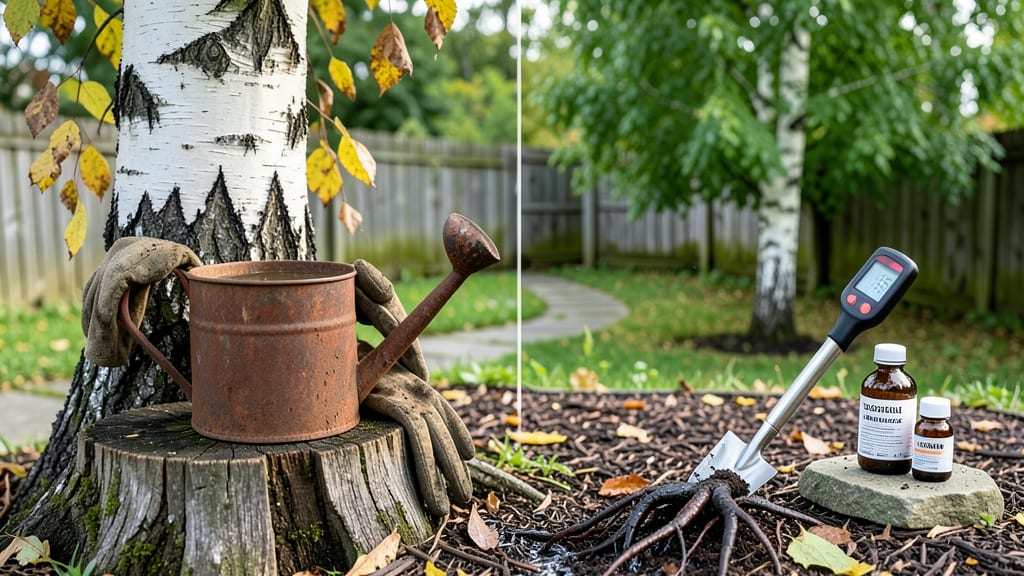
- ● Trowel or small shovel – For gently lifting soil or checking root health (6-inch blade recommended).
- ● Gloves – Protective, water-resistant gloves (e.g., gardening or nitrile) to shield hands from dirt and potential pests.
- ● Moisture meter – A digital soil moisture sensor (e.g., Xiaomi Mi Flower Care or Govee Soil Moisture Sensor) for precise readings.
- ● Notebook & pen – To record observations like leaf color, soil texture, and moisture levels over time.
- ○ Watering can or hose with adjustable nozzle – For testing drainage (optional but helpful for follow-up adjustments).
- ● Ruler or measuring tape – To assess root depth and soil compaction (12-inch tape is ideal).
- ● Camera or smartphone – To document symptoms (e.g., yellowing leaves, mold) before/after inspection.
- ● pH testing kit – If you suspect soil pH issues (e.g., Luster Leaf Rapitest kit).
- ● Pruning shears – For trimming severely damaged leaves or branches (sterilize with rubbing alcohol first!).
- ● Drainage test kit – A DIY setup (e.g., a clear plastic bottle) to measure how quickly water drains from the soil.
How to diagnose overwatered trees: visual and soil clues
Here's how to spot the subtle (and not-so-subtle) signs your tree is drowning in its own soil.
🌿 Step 1: Check Leaf Color and Texture for Yellowing or Wilting
Start by examining the leaves—overwatered trees often show yellowing between veins first, especially on older leaves. This "iron chlorosis" look means roots can't absorb nutrients properly. Run your fingers along the leaf edges: if they feel soft or mushy, that's a red flag. Healthy leaves should be firm with a slight crispness.
Look for drooping branches that don't perk up after watering. Unlike thirsty trees that revive quickly, overwatered ones stay limp because their roots suffocate. Check the undersides of leaves too—dark, moldy spots or white fungal growth mean excess moisture is creating the perfect breeding ground for pathogens.
💧 Step 2: Test Soil Moisture at the Root Zone
Stick your finger 2-3 inches deep into the soil near the tree's drip line. If it feels cool and slick (like wrung-out sponge), that's overwatering. Healthy soil should feel warm and slightly crumbly, like a damp sponge that holds its shape when squeezed but isn't dripping.
Use a trowel to dig a small hole (about 6 inches deep) and examine the roots. Healthy roots are white or tan with small hair-like extensions. Overwatered roots turn black, mushy, or smell foul—like rotting fruit. If you see gray, slimy areas, that's anaerobic soil where roots can't breathe.
☀️ Step 3: Observe Growth Patterns and New Leaves
Overwatered trees often show stunted growth or no new leaves despite plenty of water. Check the newest growth—if it's small, pale, or curled, that's a sign the tree isn't photosynthesizing properly due to root stress. Healthy trees produce dark green, vigorous new leaves every growing season.
Look for peeling bark or cracks near the base—this happens when roots expand unevenly trying to escape waterlogged soil. Also watch for mushrooms or toadstools sprouting at the tree's base. These aren't normal and indicate excess organic matter decomposing in waterlogged conditions.
⏰ Step 4: Assess the Timeline of Symptoms
Overwatering symptoms develop gradually over days to weeks, not overnight. If leaves yellowed within 24 hours of watering, it's likely salt buildup or chemical damage rather than overwatering. True overwatering shows up as slow, progressive decline—drooping first, then leaf drop, then root rot.
Pay attention to seasonal patterns. Trees overwatered in winter may show signs in spring when roots can't recover. In summer, overwatering can mimic drought stress—both cause wilting, but overwatered trees won't revive when you water them again. The key difference: overwatered trees stay soggy at the roots.
🪴 Step 5: Compare to Neighboring Trees
Walk around your yard and compare your tree to others of the same species and age. A healthy tree should have vibrant color, full canopy, and no bare patches. If yours looks paler, smaller, or sparse compared to neighbors, overwatering (or underwatering) is likely the culprit.
Notice which trees thrive in your microclimate—some species handle wetter soil better than others. For example, willows and bald cypress tolerate soggy conditions, while oaks and maples need well-draining soil. If your tree is struggling while others thrive, watering habits (not just species) are the issue.
Tips & tricks for diagnosing overwatered trees
Real talk: Overwatering is the silent killer of trees—here's how to spot it before it's too late.
Leaf Texture Test: In Step 1, when you're checking for yellowing, pay special attention to leaf edges. Healthy leaves should feel crisp along the edges, almost like paper. If they feel soft or mushy—like overcooked pasta—your tree is drowning. I learned this the hard way after losing a young oak because I ignored the subtle texture changes. The edges were the first clue before the yellowing really set in.
Soil Moisture Secret: For Step 2's soil test, use your thumb to press into the soil at the 2-3 inch mark. If it feels cool and slick** (like a wrung-out sponge), that's your warning sign. Here's a pro move: compare it to a damp kitchen sponge—healthy soil should feel like that sponge holds its shape when squeezed but isn't dripping. The difference between "damp" and "soggy" makes all the difference.
Root Examination: When you dig down 6 inches in Step 2, look for these three things in this order: color, smell, and texture. Healthy roots should be white or tan with fine hairs. Overwatered roots will be black, mushy, and smell like rotten fruit. I keep a small trowel dedicated to root checks—it's worth the investment to save your trees.
Seasonal Timing: The timeline in Step 4 is crucial—overwatering symptoms develop over days to weeks, not overnight. That 24-hour yellowing you might see is usually salt buildup or chemical damage, not overwatering. I've seen gardeners water again too soon after seeing quick yellowing, thinking they were helping, when they were actually making things worse.
Pro Tips for Tell If Tree Is Overwatered
- Real talk: Overwatering is the silent killer of trees—here's how to spot it before it's too late.
- Leaf Texture Test: In Step 1, when you're checking for yellowing, pay special attention to leaf edges.
- Soil Moisture Secret: For Step 2's soil test, use your thumb to press into the soil at the 2-3 inch mark.
Frequently asked questions
Got questions about overwatered trees? You're not alone! Here are some of the most common concerns—plus clear answers to help you keep your trees thriving.
How often should I water my tree to avoid overwatering?
Watering frequency depends on your tree type, soil, and climate. As a general rule, most mature trees need 1-2 inches of water per week, including rainfall. For young trees, check soil moisture first—stick your finger 2-3 inches deep. If it’s damp, wait before watering again. Overwatering is more common than you think, so when in doubt, wait!
What are the first signs of overwatered roots?
The earliest clues include yellowing leaves (not brown), mushy or foul-smelling soil, and roots appearing gray or mushy when dug up. If the soil stays soggy for days, roots suffocate from lack of oxygen—a classic overwatering red flag. Act fast to adjust your watering routine!
How long does it take for a tree to recover from overwatering?
Recovery time varies. If caught early, some trees bounce back in 2-4 weeks with proper drainage fixes (like aerating soil or adjusting watering). Severe cases may take months or even years, especially if roots rot. Prune affected leaves and improve airflow to speed up healing.
Can too much rain overwater my tree?
Heavy rain can drown roots just like overzealous watering. If your area gets consistent downpours, consider mulching (2-4 inches deep) to absorb excess water or installing a French drain around the base. Monitor soil moisture closely during rainy seasons.
What’s the difference between overwatered and underwatered leaves?
Use this quick guide:
- Overwatered: Yellow, soft, or wilting leaves (often with mushy stems). Soil smells sour or rotten.
- Underwatered: Brown, crispy edges (leaves may curl). Soil is dry and pulls away from the pot/ground.
Wrapping up and next steps
Now that you’re equipped with the signs of overwatering—like yellowing leaves, root rot, or moldy soil—you can confidently assess your tree’s health. Remember, balance is key: too much water can be just as harmful as too little! 🌱
Ready to take action? Adjust your watering routine based on your tree’s needs, and don’t hesitate to consult a local arborist if symptoms persist. Your tree will thank you with vibrant growth and a thriving canopy!